- Bow Valley Insider
- Posts
- Alberta Tourism Hits $15.2B in Visitor Spend, Two Years Ahead of Schedule
Alberta Tourism Hits $15.2B in Visitor Spend, Two Years Ahead of Schedule
From Fortress redevelopment to expanded winter events in Banff and Lake Louise, the Bow Valley sits at the centre of Alberta’s accelerated tourism push

Bow Valley Insider
February 19, 2026

Alberta’s tourism industry reached a milestone in 2025 that provincial planners originally expected to see in 2027.
According to a Feb. 18 press release from Travel Alberta, the province recorded $15.2 billion in visitor spending in 2025, surpassing its previous record and marking more than 6% growth in a year when Canada overall saw roughly 4% growth.
The figure is notable not only for its size, but for its timing.
In the province’s 2024 tourism blueprint, Higher Ground: A Tourism Sector Strategy, Alberta projected total visitor spending would reach $15 billion in 2027 as part of a long-term plan to grow the industry to $25 billion annually by 2035.
Based on the new figures, that benchmark appears to have been reached roughly two years earlier than forecast.
Travel Alberta cautions that 2025 spending data is derived from Destination Canada’s Lodging Aligned Spend Reporting, with final estimates expected in spring 2026. Still, the preliminary number signals momentum in a sector the province has increasingly positioned as central to economic diversification.
“Nearly two years after the launch of Alberta’s Higher Ground tourism sector strategy, we are continuing to see significant growth,” said Tourism and Sport Minister Andrew Boitchenko in the release. “Investing in tourism boosts our economy, by supporting thousands of jobs, attracting new investment, and creating opportunities for communities across the province.”
Tourism now represents the province’s fourth-largest driver of international trade and employs roughly 10% of Albertans, according to the release. In 2019, prior to the pandemic, travellers contributed $10.1 billion to Alberta’s economy.
The new $15.2 billion figure reflects a significant increase from those pre-COVID levels.
Growth Against the National Trend
One of the most striking elements in the release is Alberta’s relative performance.
While Canada as a whole saw a 2% decline in overseas arrivals in 2025, Alberta posted 3% growth in that segment. U.S. travel also diverged from national trends. Alberta recorded nearly 5% growth in American visitors, compared to a 6% decline nationwide.
That international lift aligns with a key premise of the Higher Ground strategy, which notes that air travellers from the U.S. and overseas stay longer and spend more, delivering outsized economic impact.
The strategy explicitly calls for expanding air access and investing in competitive marketing to grow U.S. and international opportunities.
Linda Southern-Heathcott, chair of the Travel Alberta board, framed the results as validation of that approach.
“We are one of the few destination management organizations in the world that have taken a holistic approach to all three key aspects of growth: strategic promotion, increased air access, and product development,” she said. “Our deliberate investment strategy, working as part of Team Alberta with partners and entrepreneurs, is paying impressive dividends.”
The 2035 target remains $25 billion annually in visitor spending.
If Alberta has accelerated the early milestones of that trajectory, it raises questions about how quickly the province may approach that longer-term goal and what kind of development will accompany it.
All-Season Resorts and Mountain Development
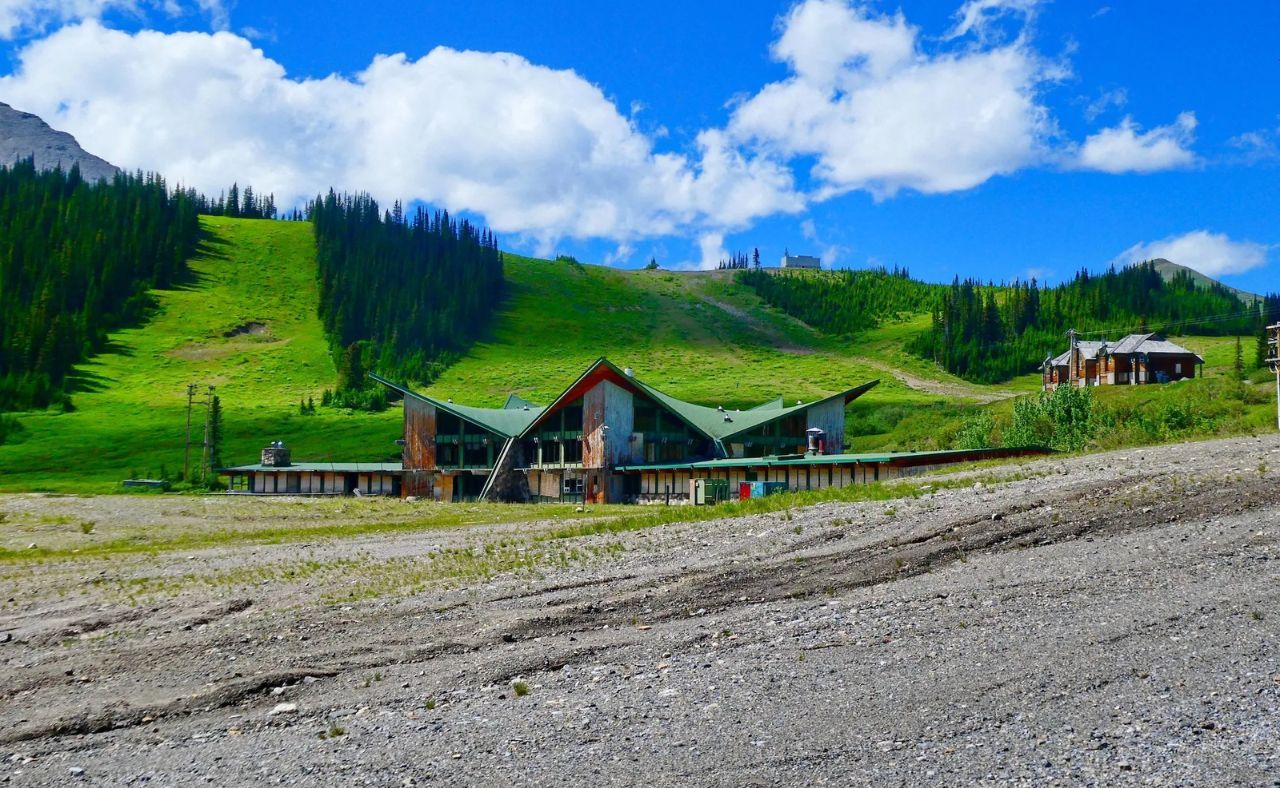
Fortress Mountain Resort, Kananaskis, AB
One of the clearest links between the provincial strategy and the Bow Valley is Alberta’s All-Season Resorts initiative.
Under the Higher Ground framework, the government committed to creating all-season resort development zones and expanding current seasonal recreational areas into year-round destinations.
In December 2025, Alberta formally designated Castle Mountain, Fortress Mountain, and Nakiska as the province’s first all-season resort areas.
The move allows those resorts to pursue year-round activities, redevelopment plans, and expanded tourism services. At Fortress Mountain near Kananaskis, proposed plans include phased development that could eventually support thousands of visitors at peak periods, along with new accommodation, attractions, and infrastructure.
Provincial officials have consistently tied these designations to the broader $25 billion goal, framing them as catalysts for private capital investment and long-stalled modernization projects. The Higher Ground strategy emphasizes increasing private sector investment and developing new, high-demand tourism products across the province.
In that sense, the Bow Valley is not just a beneficiary of tourism growth. It is central to the province’s long-term strategy.
Winter Demand and the Bow Valley Push
The growth story also intersects directly with Banff and Lake Louise.
Banff and Lake Louise Tourism’s 2026 business plan outlines a deliberate effort to protect summer revenue while growing winter demand, which it identifies as the destination’s greatest opportunity for expansion.
The organization has expanded its SnowDays Festival to four weekends, introducing new signature events such as Flying Canoë Volant, and increasing investment in winter marketing campaigns. The strategy is focused on generating overnight stays from November through April, encouraging longer visits and more stable employment during traditionally slower months.
That approach aligns closely with provincial goals. The Higher Ground strategy emphasizes year-round product development, expanded air access, and stronger marketing to international and U.S. visitors.
Together, provincial investment, resort redevelopment, and destination-level winter programming illustrate how the $15.2 billion figure connects to on-the-ground activity in the Bow Valley.
What Comes Next
If Alberta has reached its $15 billion benchmark two years ahead of schedule, attention now shifts to the larger goal of $25 billion annually by 2035.
The Higher Ground strategy lays out five pillars to support that growth, including competitive product development, workforce planning, expanded access, and investment in Indigenous tourism. Provincial leaders have framed tourism as both an economic engine and a diversification strategy.
In the Bow Valley, that growth is already visible through expanded winter programming, year-round resort development, and rising international visitation.
The latest numbers suggest the province’s tourism plan is advancing faster than expected. How that momentum unfolds, and how communities manage it, will shape Alberta’s path to $25 billion.
Reply