- Bow Valley Insider
- Posts
- Who Sets the Rules for Competition in Canada’s National Parks?
Who Sets the Rules for Competition in Canada’s National Parks?
A debate over ownership, regulation, and market concentration in Banff and Jasper

Bow Valley Insider
January 08, 2026
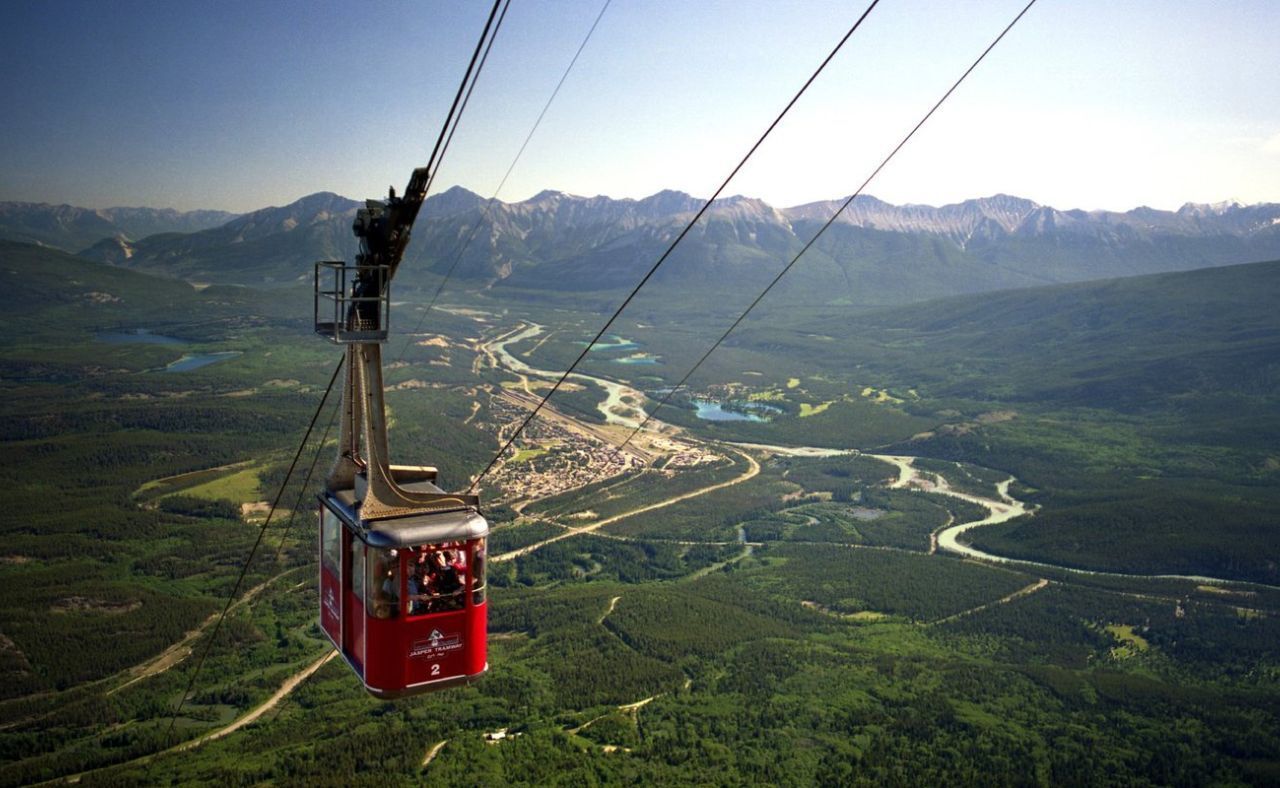
Jasper SkyTram (Credit: Travel Alberta, Website)
When visitors ride the Banff Gondola or the Jasper SkyTram, few stop to consider who owns those experiences, how that ownership came to be, or what rules govern competition inside Canada’s national parks.
But those questions are now at the centre of a broader policy debate about how national parks are regulated, how competition is defined within them, and whether current oversight adequately balances stewardship, accessibility, and market concentration.
The discussion was reignited late last year after the Canadian Anti-Monopoly Project (CAMP), a public policy think tank, released a report arguing that paid sightseeing attractions in Banff and Jasper National Parks have become highly concentrated under a single operator. The report has drawn responses from the company involved and political leaders, and renewed scrutiny of earlier regulatory decisions that shape how competition is governed in Canada’s national parks.
A regulated market, not a free one
National parks are not open markets in the traditional sense. All land inside Banff and Jasper National Parks is federally owned, and Parks Canada controls which businesses are allowed to operate, under what conditions, and for how long.
Private operators are permitted to offer services ranging from hotels and transportation to guided tours and paid attractions. Those permissions are governed through leases, licences, and approvals that prioritize conservation, visitor safety, and park management goals.
Competition policy, however, falls primarily under the federal Competition Bureau, which assesses mergers and acquisitions under the Competition Act. In regulated environments such as national parks, the Bureau typically defers to sector regulators where policy mandates overlap.
That division of responsibility is now under scrutiny.
The CAMP report and its claims
In its December brief, CAMP argues that Pursuit controls “over 90%” of the paid sightseeing attraction market in Banff and Jasper by visitor volume. CAMP also says Pursuit owns six of nine major paid attractions across the two parks, including the Banff Gondola, the Lake Minnewanka and Maligne Lake cruises, the Columbia Icefield Adventure and Skywalk, and the Jasper SkyTram. CAMP describes this level of concentration as an “extreme monopoly.”
The report also points to Pursuit’s ownership of hotels and Brewster Transportation, which provides bus service between Calgary and the parks, arguing that the company holds influence across how visitors arrive, stay, and experience Banff and Jasper.
At the centre of CAMP’s critique is not only market concentration, but regulatory design. The group argues that Parks Canada does not have an explicit mandate to promote competition or limit ownership concentration, and that the Competition Bureau has been reluctant to intervene in a context where land-use decisions ultimately rest with another federal authority.
The Competition Bureau’s decision
The immediate regulatory flashpoint is Pursuit’s 2024 acquisition of the Jasper SkyTram. Following complaints from competing operators, the Competition Bureau opened a review, then announced in 2025 that it would discontinue its inquiry.
In a statement at the time, the Bureau said it had examined market data and geographic considerations and determined that the transaction did not raise competition concerns warranting further action.
CAMP suggests the Bureau likely assessed competition using a broad definition of visitor experience, one that includes free activities such as hiking, sightseeing, and self-guided recreation. Under that view, visitors unhappy with paid attractions can substitute them with free alternatives, limiting the market power of any single operator.
The Bureau has not publicly detailed its full analytical framework, and it has not commented further on the decision.
Pursuit’s response
Pursuit rejects the idea that ownership of paid attractions meaningfully limits choice or competition inside national parks.
“With over 6.5 million visitors to Banff and Jasper annually, looking at competition solely through the lens of ownership of paid experiences doesn’t reflect how people actually engage with and travel within the parks, or consider the range of choices available to them,” said Stuart Back, Chief Operating Officer for Pursuit’s Banff Jasper Collection.
He noted that many visitors never participate in paid attractions at all, instead coming to hike, ski, paddle, or experience the parks independently. Pursuit argues that national parks are public places first, and that paid experiences represent one option within a much broader mix of activities that vary by season, interest, and accessibility.
Back said the Competition Bureau conducted an independent review of the Jasper SkyTram acquisition and concluded there were no competition concerns. With that review complete, he said, the company remains focused on operating within regulatory requirements and reinvesting locally.
Pursuit also points to visitor feedback as one measure of how its experiences are received. According to the company, guest satisfaction scores across its Canadian Rockies attractions average around nine out of ten year after year.
Beyond visitor experience, Pursuit emphasizes its economic footprint in the region. Tourism supports more than one in ten jobs in Alberta, and the company says its operations in the Bow Valley provide year-round employment for more than 1,200 people who live and work locally. Pursuit says profits generated in Canada are reinvested into maintaining and upgrading attractions, supporting local suppliers and trades, and contributing to community initiatives.
Following the 2024 Jasper wildfires, Pursuit joined other tourism partners in supporting the Jasper Tourism Recovery and Prosperity Fund, committing $3 million toward recovery and long-term resilience efforts in the community.
The company also emphasizes that although it is publicly traded and globally owned, its Canadian operations are governed by Canadian laws and leases, staffed by local teams, and accountable to Canadian regulators.
Political pressure and ownership questions
The issue has also drawn political attention, particularly around foreign ownership of tourism infrastructure in national parks.
William Stevenson, Member of Parliament for Yellowhead, has criticized federal policy for allowing what he describes as American corporate dominance inside Canada’s parks. In a statement, Stevenson said Parks Canada rules “effectively pick winners and losers,” and argued that ownership concentration above 50% should not be permitted.
Stevenson has framed the issue as inconsistent with broader federal messaging around supporting Canadian businesses, and has called for direction to Parks Canada to restore competition and encourage Canadian ownership. He has also expressed skepticism that change will occur without a change in government.
Those views reflect a political perspective rather than a regulatory finding, but they highlight how questions of ownership intersect with national identity, tourism policy, and economic strategy.
A broader governance question
For competition policy experts, the Banff and Jasper debate raises a structural issue: who is responsible for ensuring competitive outcomes inside spaces that are deliberately insulated from normal market dynamics.
Keldon Bester, executive director of the Canadian Anti-Monopoly Project, has argued that national parks are among the few places where the federal government has near-total control over market conditions, making regulatory inaction a policy choice rather than a constraint.
Pursuit, meanwhile, maintains that its operations exist within a tightly regulated framework designed to protect public access and environmental integrity, and that scale allows for consistent safety standards, accessibility, and long-term investment.
What remains unresolved is whether current governance adequately balances those objectives with competition, or whether the framework itself needs to change.
For now, Parks Canada continues to regulate access and operations, the Competition Bureau has closed its inquiry, and Pursuit continues to operate its attractions under existing approvals.
Reply