- Bow Valley Insider
- Posts
- New Trail Centre Proposal Raises Questions About West Bragg Creek’s Future
New Trail Centre Proposal Raises Questions About West Bragg Creek’s Future
A proposed two-storey hub would serve a 166-kilometre multi-use trail network popular with skiers, bikers and runners

Bow Valley Insider
February 02, 2026
West Bragg Creek Trails
A proposal to build a permanent trail centre at West Bragg Creek is now open for public feedback, and early reaction shows a clear divide between those who see it as overdue infrastructure and those who worry it represents unnecessary development in a heavily used natural area.
For many trail users, the first question is more basic: what exactly is West Bragg Creek, and what is being proposed there?
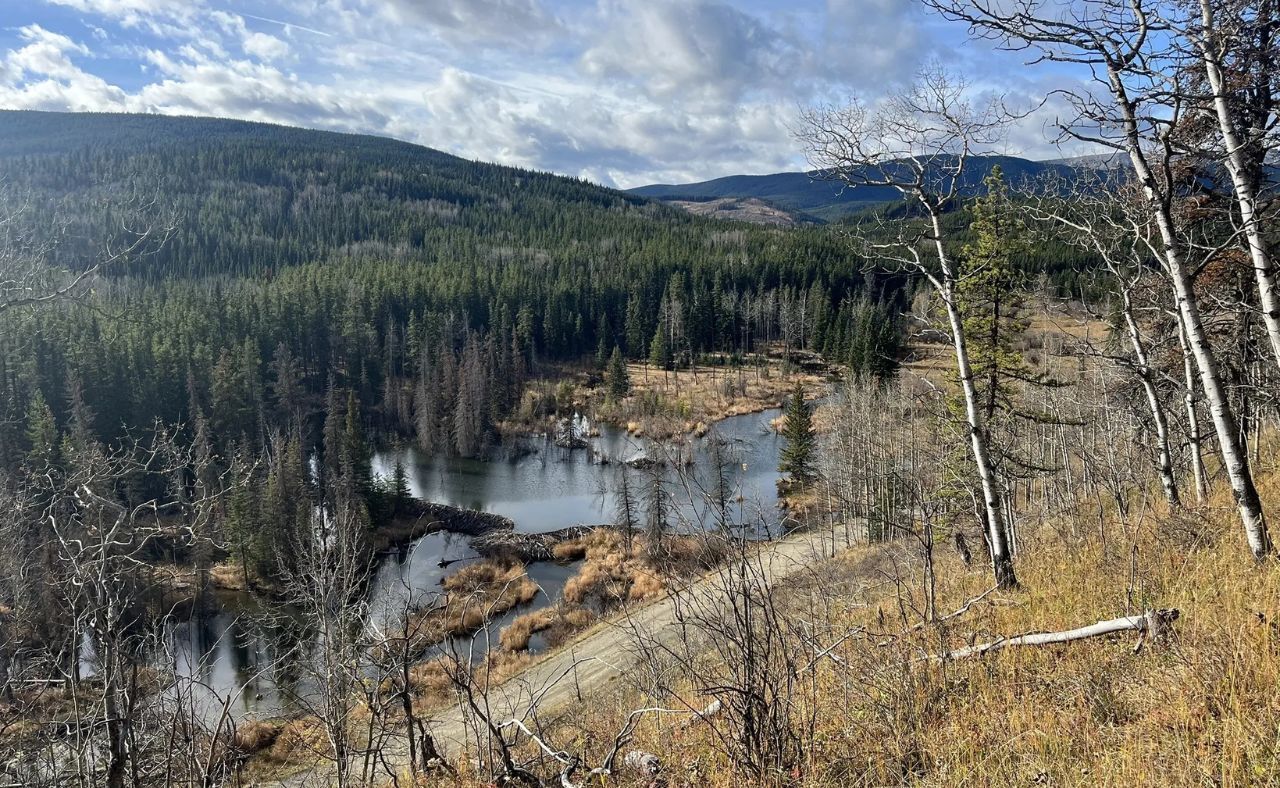
West Bragg Creek Trails is one of the most heavily used trail networks in Kananaskis Country, located about 45 minutes southwest of Calgary and roughly 10 kilometres west of the hamlet of Bragg Creek. The network includes about 166 kilometres of multi-use trails across rolling foothills terrain, with a mix of aspen and evergreen forest, wetlands, and open viewpoints. It supports cross-country skiing, mountain and fat biking, trail running, hiking, snowshoeing, and equestrian use.
The trail system has grown steadily since Kananaskis Country was established in 1977. Originally designed primarily as a winter cross-country ski network, the trails were gradually expanded and upgraded for year-round use through a mix of provincial investment and volunteer trail building. In recent years, West Bragg Creek has become one of the busiest non-motorized recreation areas in Western Canada, particularly popular with Calgary users looking for close-to-city access to multi-season trails.
According to the Bragg Creek Trails Association, about 265,000 trail users annually, with average growth of roughly 12% per year. Despite that demand, the site currently operates without a permanent trail centre building.
That gap is what the new proposal aims to address.
The West Bragg Creek Trail Centre Project was identified as a key action in the 2024 West Bragg Creek Trails Master Plan. A project committee was formed to plan and design a permanent facility intended to support trail users, volunteers, events, and educational programming.
Under the concept plan, the proposed building would be a two-storey structure of up to 3,750 square feet located near the existing West Bragg Creek parking lot, oriented toward Chickadee Meadow. The facility is described as a public access hub rather than a private club space.
Planned features include a large common gathering and warm-up area sized for up to 150 people, a meeting room for educational and organizational use, a small kitchen, office space for staff and volunteer trail hosts, an information and merchandise desk, indoor equipment storage, and indoor washrooms with four to six flush toilets.
The design package emphasizes that the building would be fully accessible and adaptive, intended to support users with physical and neurological challenges. It would also include running water from a licensed well, an on-site wastewater treatment and septic system, and a solar energy system designed to produce more electricity annually than the site consumes, combined with a ground-source heat pump for heating and cooling.
Project documents also state several things the plan does not include. It does not propose expanding the parking lot, and it does not introduce public user fees tied to the building. The centre is intended to operate without trail access fees and to maintain the existing parking footprint.
Supporters argue the facility would function as a warming space, trail information hub, volunteer base, and education centre, while enabling more non-profit programming and events. The proposal also cites a benchmarking study of 12 trail centres across Western Canada, concluding that West Bragg Creek is the largest high-use trail system in that group without a permanent centre and that the proposed building size is modest relative to user volumes.
But early public reaction, particularly in local outdoor recreation Facebook groups, shows significant skepticism alongside support.
Opposition comments cluster around several recurring themes. Many critics argue that available funds should go toward trail maintenance, repairs, and expansion rather than a building. Some describe a trail centre as a “want” rather than a “need,” saying users come to West Bragg Creek specifically for a rustic, low-infrastructure experience. Others raise concerns about long-term operating and maintenance costs and worry that a permanent facility could become a financial burden that diverts resources from trail work.
Traffic and access are another major concern. Some commenters say the West Bragg Creek road and surrounding hamlet infrastructure already feel strained on busy weekends and worry that a new destination facility could increase vehicle volumes. Related concerns include potential wildlife disturbance, light pollution, and loss of the area’s dark-sky character.
A separate thread of concern focuses on future policy risk. Some users fear that adding more formal infrastructure could make it easier for governments to justify new or higher user fees later, even though the current proposal explicitly states that no public user fees are planned for the trail centre itself.
At the same time, supporters point to different priorities. Positive comments emphasize the value of indoor washrooms, winter warming space, better volunteer coordination, and expanded programming capacity for clubs and youth events. Some note that comparable trail centres in other regions function well as multi-use hubs and help organize education, safety training, and stewardship programs. Others argue that with usage continuing to grow, some level of permanent infrastructure is reasonable and overdue.
For now, the project remains in the engagement phase. No final design or construction decision has been announced. Organizers are collecting feedback through a public survey and say responses will help guide next steps in planning and refinement.
Trail users, local residents, and anyone who recreates at West Bragg Creek can review the proposal materials and submit feedback through the official survey link until February 28.
Reply