- Bow Valley Insider
- Posts
- Town of Banff to Provide Nearly $300,000 to Support Winter Festivals
Town of Banff to Provide Nearly $300,000 to Support Winter Festivals
The funding would come through waived fees and town services for SnowDays and other winter and shoulder-season festivals.

Bow Valley Insider
January 13, 2026
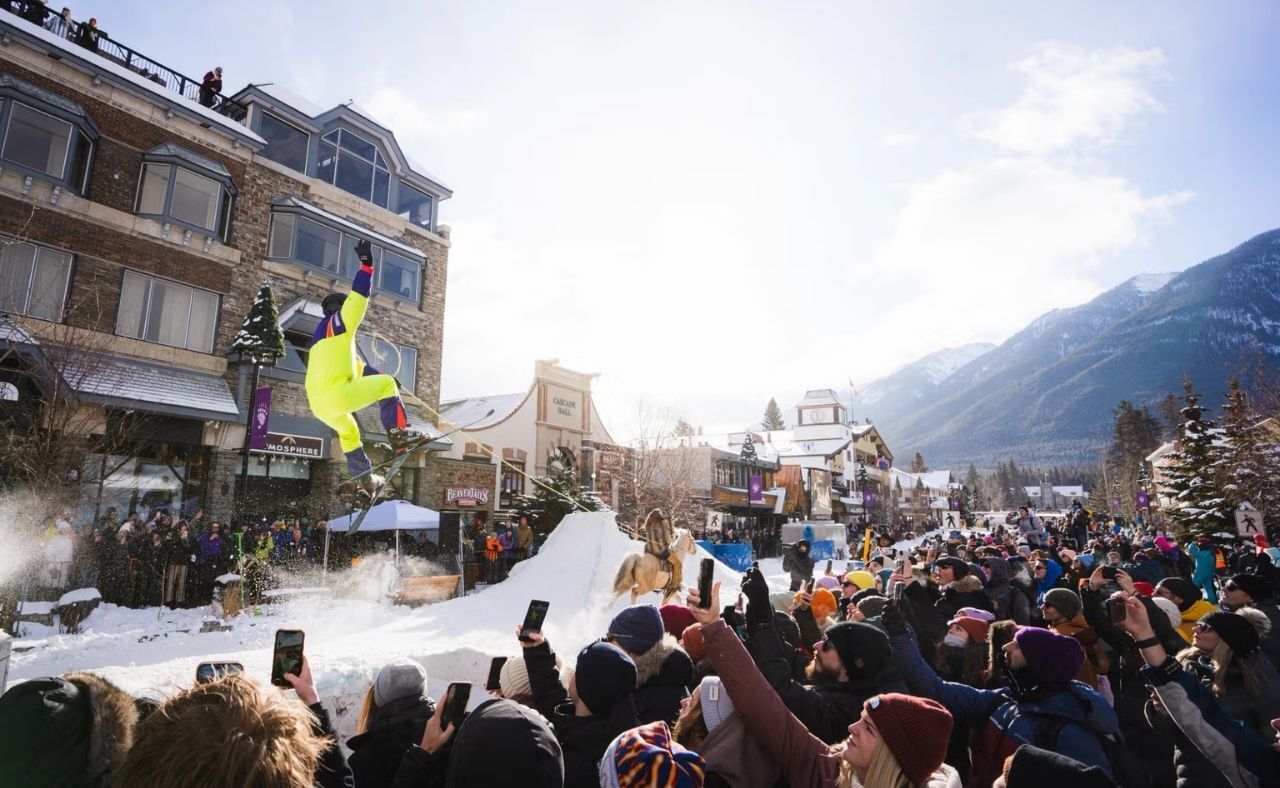
The Town of Banff is preparing to commit nearly $300,000 in municipal services and waived fees in 2026 to support an expanded slate of winter and shoulder-season festivals, a move that underscores the growing public cost of hosting large-scale destination events in a community already under pressure from tourism and traffic.
The proposed support, outlined in the Communications and Marketing service review presented to council on Nov. 27, would take the form of in-kind contributions rather than direct cash grants. It would cover road closures, traffic control, policing, emergency services, snow clearing, waste collection, power, signage, equipment rentals, permitting, and staff time required to safely stage major public events.
The total value of the requested support is $290,485.
Most of the support is tied to an expanded SnowDays festival, scheduled to run from Jan. 16 to Feb. 8, 2026, spanning four weekends of programming across Banff’s downtown and Central Park. Programming would include skijoring on Banff Avenue, centralized snow sculptures and family activities in Central Park, and multiple entertainment zones along Bear Street. The municipal services required for SnowDays alone are estimated at $238,800, reflecting the scale of street closures, crowd management, shuttle operations, and winter safety measures involved.
Several new or expanded events are also proposed for town support. They include a Banff edition of the Flying Canoe Volant winter festival, featuring French-Canadian and Indigenous storytelling and a lantern walk in Central Park and a new spring Banff Music Festival at the train station parking area. Continued in-kind backing is also sought for the Banff Christmas Market, Banff Pride, and the Craft Beer Festival.
Town staff and councillors said the Town is no longer focused on increasing summer visitation, when Banff is already operating at or near capacity. Instead, the strategy is to shift tourism activity toward winter and the shoulder seasons, using festivals and events to support local businesses during quieter periods while reducing pressure on infrastructure, housing, wildlife, and transportation during peak months.
At the same time, Parks Canada has been tightening environmental and wildlife protection requirements for events and commercial activity inside the national park, limiting where and how large gatherings can occur. That has had a spillover effect, pushing more programming into the townsite and increasing the operational burden on municipal departments responsible for roads, public safety, communications, and emergency planning.
As a result, the Town is increasingly responsible not just for permitting events, but for providing the infrastructure and services that allow them to operate at scale.
The in-kind package would cover a wide range of municipal functions, including police and bylaw presence, fire and medical access planning, traffic detours and barricades, snow and ice control, waste and washroom servicing, electrical hookups, event inspections, and public communications. According to the service review, many of the festivals would not be viable without that level of support.
The proposal also highlights a growing policy tension for council: how much public capacity should be devoted to facilitating destination events in a community facing housing shortages, congestion, and rising infrastructure costs, even as those events are promoted as tools to stabilize the local economy and shift visitation away from peak periods.
Reply