- Bow Valley Insider
- Posts
- Spring Warmth Pushes Wildfire Risk to ‘Moderate’ Across Bow Valley Region
Spring Warmth Pushes Wildfire Risk to ‘Moderate’ Across Bow Valley Region
No active fires reported, but officials warn drying vegetation could ignite quickly as snow melts

Bow Valley Insider
April 28, 2026
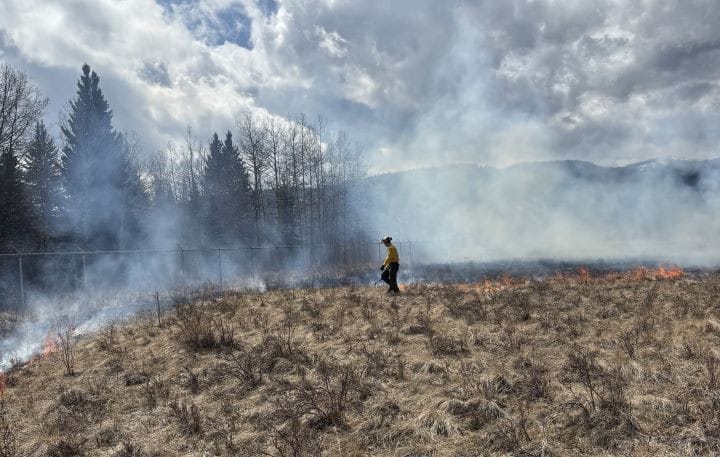
As spring conditions shift across southern Alberta, wildfire risk is beginning to rise again in the foothills and mountain regions west of Calgary, even as patches of snow still linger on the landscape.
Officials with Alberta’s forestry division say the wildfire danger in the Calgary Forest Area is now rated “moderate,” a designation that reflects a landscape in transition. Recent moisture and remaining snowpack have helped limit fire activity so far this season, but that buffer may not last long.
“Warm temperatures are anticipated this week which will continue to accelerate the snow melt and further dry out dead vegetation in already exposed areas,” said Anastasia Drummond, a wildfire information officer, in an email.
That combination, melting snow and drying grass and brush, creates what wildfire experts often describe as one of the most volatile periods of the year. Unlike mid-summer fires that burn through dense forest fuels, spring wildfires tend to move quickly through fine, dead vegetation left behind from the previous season. Those fuels ignite easily and can spread rapidly, particularly under warm, windy conditions.
“Spring wildfires can spread very quickly through dead vegetation and can be challenging for firefighters to extinguish,” Drummond said.
So far, the season has remained relatively quiet. Since Jan. 1, 14 wildfires have been recorded in the Calgary Forest Area, burning just over 20 hectares in total. There are currently no active wildfires reported in the region.
But officials say the focus right now is less on suppression and more on prevention.
Across the region, crews are preparing to carry out what are known as hazard reduction burns, intentionally set and carefully managed fires designed to remove dry, flammable material before it can contribute to a larger, uncontrolled blaze later in the season.
Early spring is considered one of the best windows for this type of work. Snowpack and cooler overnight temperatures can help crews maintain control, while still allowing enough dry fuel to burn effectively.
“Hazard reduction projects remove dead and dry vegetation to reduce risk around communities or infrastructure and support firefighting efforts later in the season,” Drummond said in the email.
Planning for these operations involves coordination across multiple jurisdictions. Forestry staff work alongside municipal governments, Indigenous communities and industry partners to identify priority areas, assess conditions and determine when burns can be carried out safely.
One such project is already in the works near Mînî Thnî, west of Calgary along Highway 1. Officials say crews are coordinating with Îyethka Îyârhe Nakoda First Nations, the MD of Bighorn and CPKC Rail on a hazard reduction burn aimed at lowering wildfire risk in the area.
If conditions line up, that operation could begin as early as April 29.
These burns serve a dual purpose. In addition to reducing fuel loads, they also provide training opportunities for firefighters early in the season, allowing crews to test equipment, refine coordination and build readiness before peak wildfire months arrive.
The broader concern, officials say, is how quickly conditions can change at this time of year.
A landscape that appears damp and partially snow-covered can dry out within days under sustained warmth. Once exposed, last year’s grasses and understory vegetation become highly receptive to ignition, whether from human activity or natural causes.
For residents and visitors, that means heightened awareness is needed even in the early weeks of spring. While no fire restrictions or bans were noted in the latest update, authorities typically monitor conditions closely and adjust advisories as risk increases.
Up-to-date information on wildfire activity, danger ratings and any restrictions is available through Alberta’s wildfire status tools, which track fires across the province in real time.
Reply