- Bow Valley Insider
- Posts
- Snow That Feeds the Bow River Is Becoming Less Reliable, New Study Finds
Snow That Feeds the Bow River Is Becoming Less Reliable, New Study Finds
Despite nationwide snow gains, key western headwaters saw snow water drop by more than 70% since 2000

Bow Valley Insider
January 29, 2026
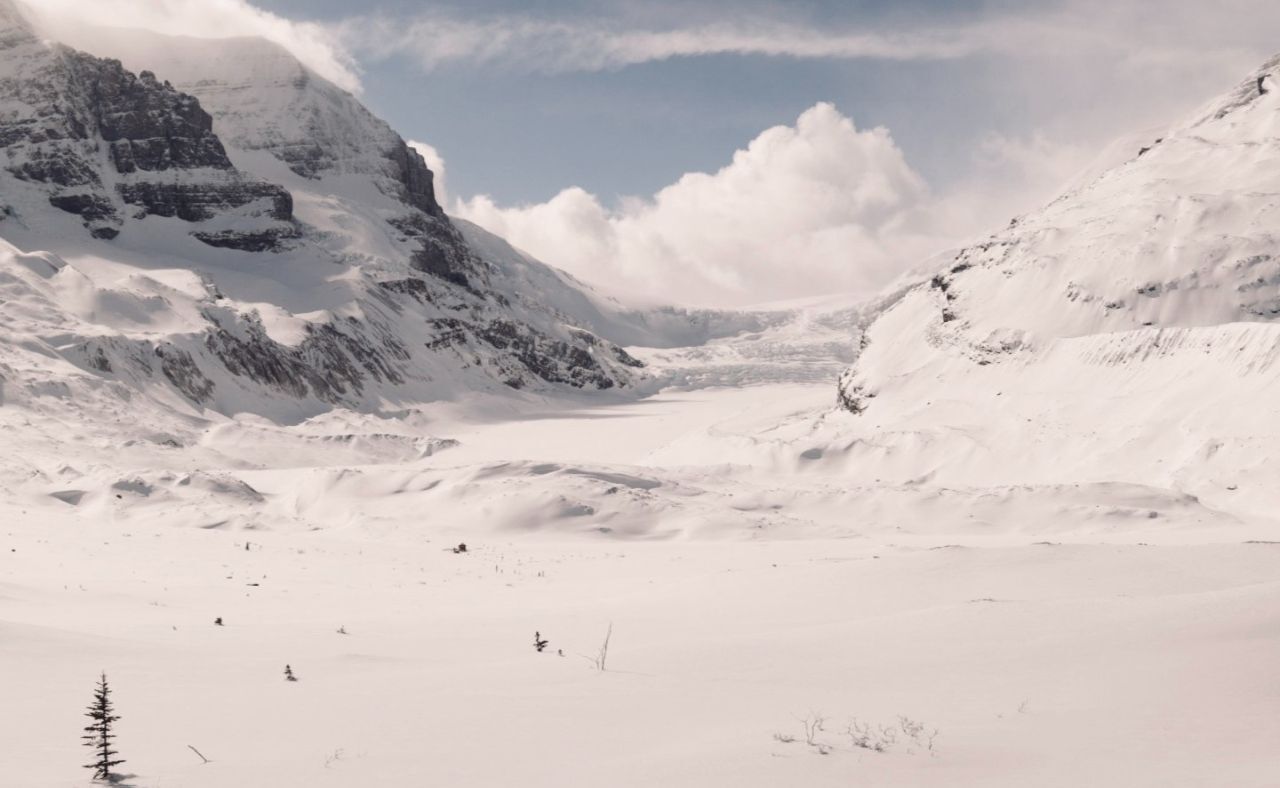
For decades, snowpack has functioned as the Bow Valley’s most important natural reservoir. Winter snowfall in Banff, Kananaskis, and the surrounding mountain ranges quietly determines how much water flows into the Bow and Elbow rivers months later, shaping everything from municipal water supply to ecosystems and recreation downstream.
A new peer-reviewed study published in Communications Earth & Environment suggests that this system is becoming less reliable in subtle but consequential ways.
The study, led by researchers at Concordia University and the University of California Irvine, introduces a new way of measuring how much usable water is actually stored in snow across Canada. The researchers call it Snow Water Availability, or SWA. Their findings show that while total snow water across Canada has increased overall since 2000, significant losses are occurring in specific regions that matter most for downstream communities, including mountainous headwaters in western Canada.
“Snow acts as a natural water reserve, storing cold season precipitation falling as snow,” the authors write. “In warmer months, when sufficient energy is available, snow melts and replenishes soil moisture, recharges groundwater, flows overland, and ultimately joins rivers that transport this vital resource to downstream areas.”
That seasonal process underpins water security in places like the Bow Valley. But the study finds that warming temperatures are changing not just how much snow falls, but how effectively snow stores water through the winter.
Why this study looks at snow differently
Traditionally, scientists track snowpack using a metric called Snow Water Equivalent, or SWE. SWE estimates how much water would be released if all the snow in an area melted at once.
The problem, according to the authors, is that SWE averages snow across large grid areas and ignores how patchy snow cover can become, especially in complex terrain and during warmer winters. A grid cell can show stable SWE even as snow disappears from large portions of the landscape.
Snow Water Availability tries to correct for that. Instead of averaging across the entire area, SWA measures how much water is stored specifically where snow still exists.
“This scaling makes SWA more responsive in patchy snow cover areas,” the study explains. “By revealing how much water remains where snow exists, SWA offers a sharper diagnostic of when and where snow water availability can lead to extreme thresholds both in terms of droughts and floods.”
In practical terms, this matters most in mountain regions like the Canadian Rockies, where snow cover is increasingly uneven and sensitive to temperature changes.
What the researchers found across Canada
Using multiple datasets, the researchers analyzed snow conditions across Canada and Alaska from 2000 to 2019. On average, they estimate that about 996 cubic kilometres of water were stored annually in snow across the study area during that period.
At first glance, the numbers appear reassuring. Total annual Snow Water Availability increased by roughly 90% between the early 2000s and the 2010s.
But that overall increase masks sharp regional differences.
Roughly 3% of the study area showed statistically significant declines in snow water availability, concentrated mainly in western and southern Canada and particularly in mountainous headwaters between 800 and 2,200 metres in elevation.
“These losses alongside insignificant decreases across southern Canada can threaten water supply in a quarter of the country, where about 86% of its population reside,” the authors write.
Those headwater losses matter because mountain snow feeds river systems far beyond where the snow actually falls.
Why this matters for the Bow Valley
The Bow Valley sits squarely within the North American Cordillera, one of the regions identified as especially vulnerable to declining snow water availability. The study shows that the likelihood of significant snow water losses increases with elevation, reaching as high as 14% in areas above 1,500 metres.
That elevation range includes much of Banff National Park, Kananaskis Country, and the surrounding front ranges that feed the Bow and Elbow rivers.
The researchers note that snow depth is the primary driver of declining snow water availability in these regions. In areas experiencing losses, decreasing snow depth coincided with snow water declines in 99% of cases.
This pattern reflects a shift toward thinner snowpacks that melt earlier or fail to accumulate consistently through the winter, even if total snowfall does not decline dramatically.
Lessons from past snow droughts
The study draws direct connections between declining snow water availability and past drought events in western Canada.
One example is the winter of 2015, when unusually low mountain snowpack led to widespread water shortages across British Columbia and Alberta. In some basins, snowpack dropped close to zero, forcing municipalities to take emergency water management measures.
The ecological impacts were severe. Warmer rivers contributed to mass die offs of sockeye salmon, while reduced runoff affected agriculture, hydropower, and reservoir levels far downstream.
The authors emphasize that snow droughts are often “creeping phenomena,” meaning their impacts accumulate gradually rather than arriving as a single catastrophic event.
“Compound impacts of insignificant snow water losses over a large area can lead to major consequences,” the study notes, highlighting how gradual declines can strain water systems long before they trigger formal drought declarations.
What changes as the climate warms
The study also examines links between snow water availability and large scale climate drivers. Global mean surface temperature emerged as the most influential factor, associated with both snow water gains in some northern regions and losses in mountain headwaters
That dual effect helps explain why total snow water across Canada can increase at the same time that critical headwater regions lose their capacity to store water.
In mountainous regions like the Bow Valley, warmer winters increase the likelihood of mid season melt and rain on snow events. These processes reduce the amount of water held in snow by the time spring arrives, even if snow still appears present on the landscape.
The study cautions that uncertainty remains, particularly in northern regions with limited monitoring data. However, the researchers note that areas showing significant losses tend to be relatively data rich, increasing confidence in the findings for western Canada.
A quiet warning for headwater communities
The authors are careful not to frame their findings as a prediction of immediate crisis. Instead, they present Snow Water Availability as a complementary tool that better captures how warming temperatures are reshaping the timing and reliability of snowmelt.
“SWA does not compete with SWE, but rather offers a complementary perspective, valuable during periods and in regions where snow cover evolves rapidly,” they write.
For headwater communities like those in the Bow Valley, the message is not that snow is disappearing altogether. It is that the role snow plays as a stable, slow release water source is becoming less predictable.
As winters warm and snow becomes thinner, patchier, and more vulnerable to mid season melt, the quiet buffering effect that mountain snowpacks have long provided may no longer be something communities can take for granted.
And because what happens in the Bow Valley does not stay in the Bow Valley, those changes ripple far beyond the mountains, shaping water security across southern Alberta and beyond.
Reply