- Bow Valley Insider
- Posts
- WATCH: Skier Triggers Large Slide on Backcountry Run Near Lake Louise, Escapes Injury
WATCH: Skier Triggers Large Slide on Backcountry Run Near Lake Louise, Escapes Injury
Parks Canada and Avalanche Canada say the slide broke to the ground on a west-facing slope and serves as a reminder that dangerous weak layers remain in the snowpack.

Bow Valley Insider
January 20, 2026
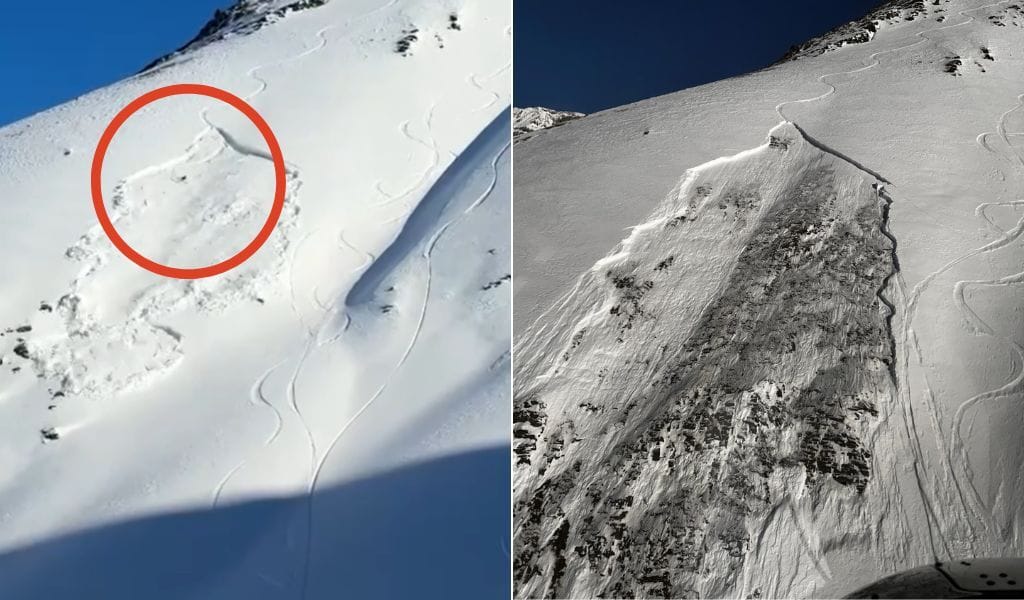
A skier triggered a significant avalanche Tuesday on a steep backcountry slope just outside the Lake Louise Ski Area, underscoring the continued presence of dangerous weak layers in the snowpack despite relatively low regional hazard ratings.
Viewer Discretion: Video Shows Skier Triggering Avalanche Near Lake Louise
According to Parks Canada, the avalanche occurred on a run known as “Vortex,” outside the ski area boundary in Banff National Park. A single skier triggered a Size 2 slide, a classification used by avalanche forecasters for an avalanche large enough to bury, injure or kill a person, on a west-facing slope at approximately 2,450 metres in elevation. The skier was carried to the bottom of the slope, partially buried to the waist, and lost both skis, but was not injured.
Parks Canada said the slide was a “deep persistent slab,” a particularly concerning type of avalanche that breaks on weak layers buried deep in the snowpack and can release large volumes of snow. In this case, the failure occurred near the ground on a layer of sugary, fragile snow crystals known as facets that formed around a crust in November.
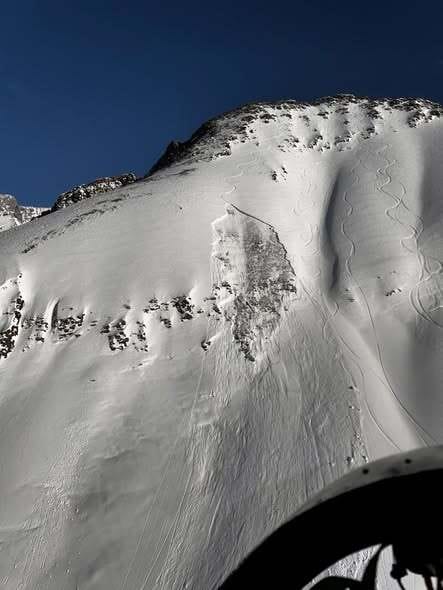
“Avalanches can happen anytime on any slope above 30 degrees, regardless of current danger ratings,” Parks Canada wrote in a public safety message accompanying photos and video of the crown line and debris. The agency urged backcountry users to check daily forecasts, carry rescue equipment, and make conservative terrain choices.
Avalanche Canada, through the Parks Canada Banff Avalanche Forecast, provided additional technical details, noting that the skier appeared to be the seventh person to descend the slope and likely triggered the slide after hitting a thin spot in the snowpack that allowed the fracture to propagate across the slope. The avalanche was estimated to be 40 to 70 centimetres deep and had been cross-loaded by wind, meaning drifting snow had accumulated unevenly, increasing stress on the weak layer.
At the time of the incident, the regional danger rating was Moderate in the alpine and Low in treeline and below-treeline terrain. Despite those ratings, forecasters said several persistent weak layers remain active.
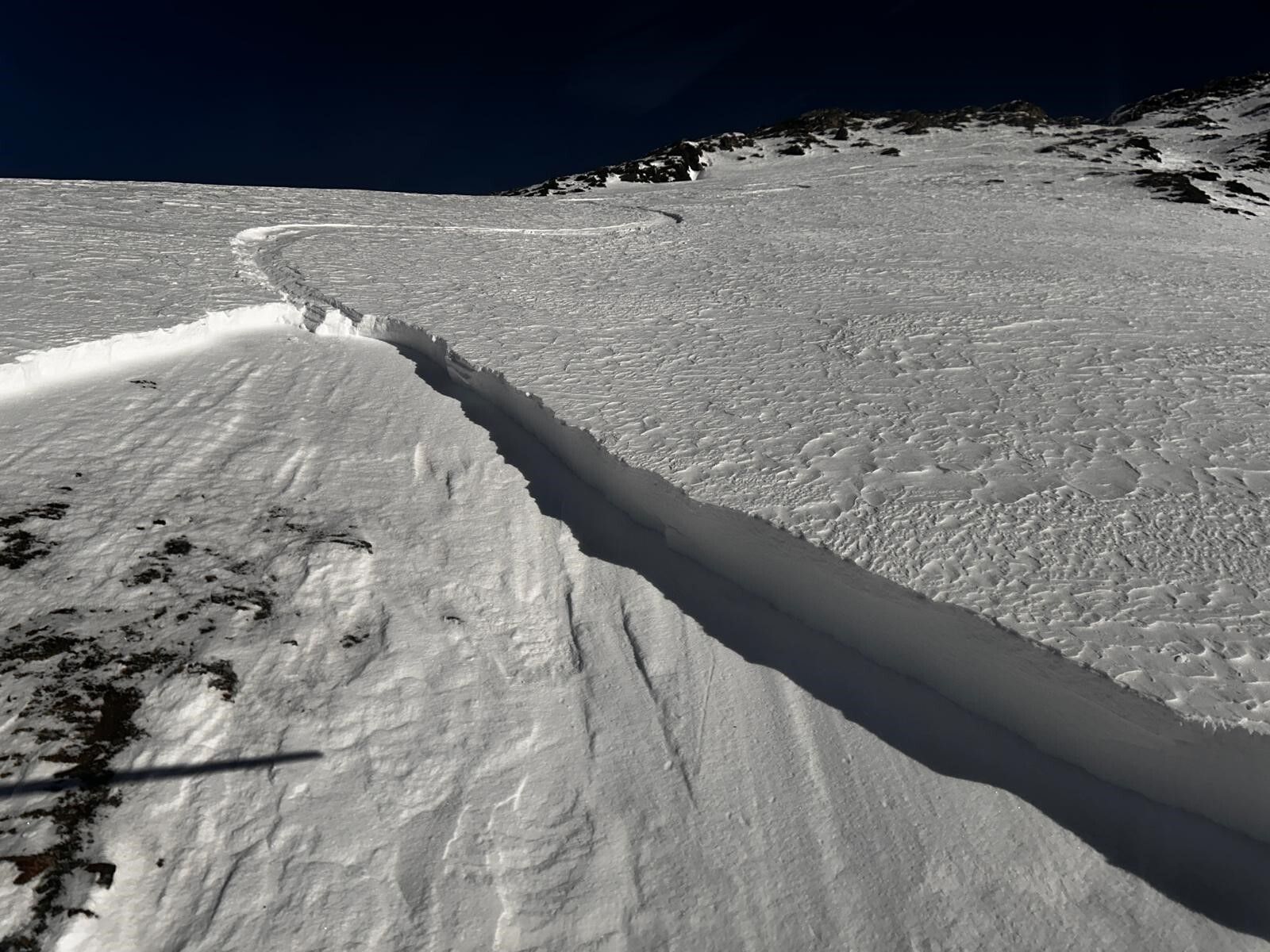
Parks Canada has not released details on whether the skier self-extricated or required assistance, and no information has been provided about a companion rescue or aerial response.
The incident, captured in images showing a sharp fracture line cutting across the slope and a broad slab of snow that slid to exposed rock below, illustrates how deep-seated weaknesses can be triggered even after multiple tracks and under seemingly manageable conditions.
“Be prepared with the right skills, equipment, and experience to analyze terrain and self-rescue if needed,” Parks Canada warned, emphasizing that persistent slab avalanches remain one of the most unpredictable and dangerous problems in the winter snowpack.
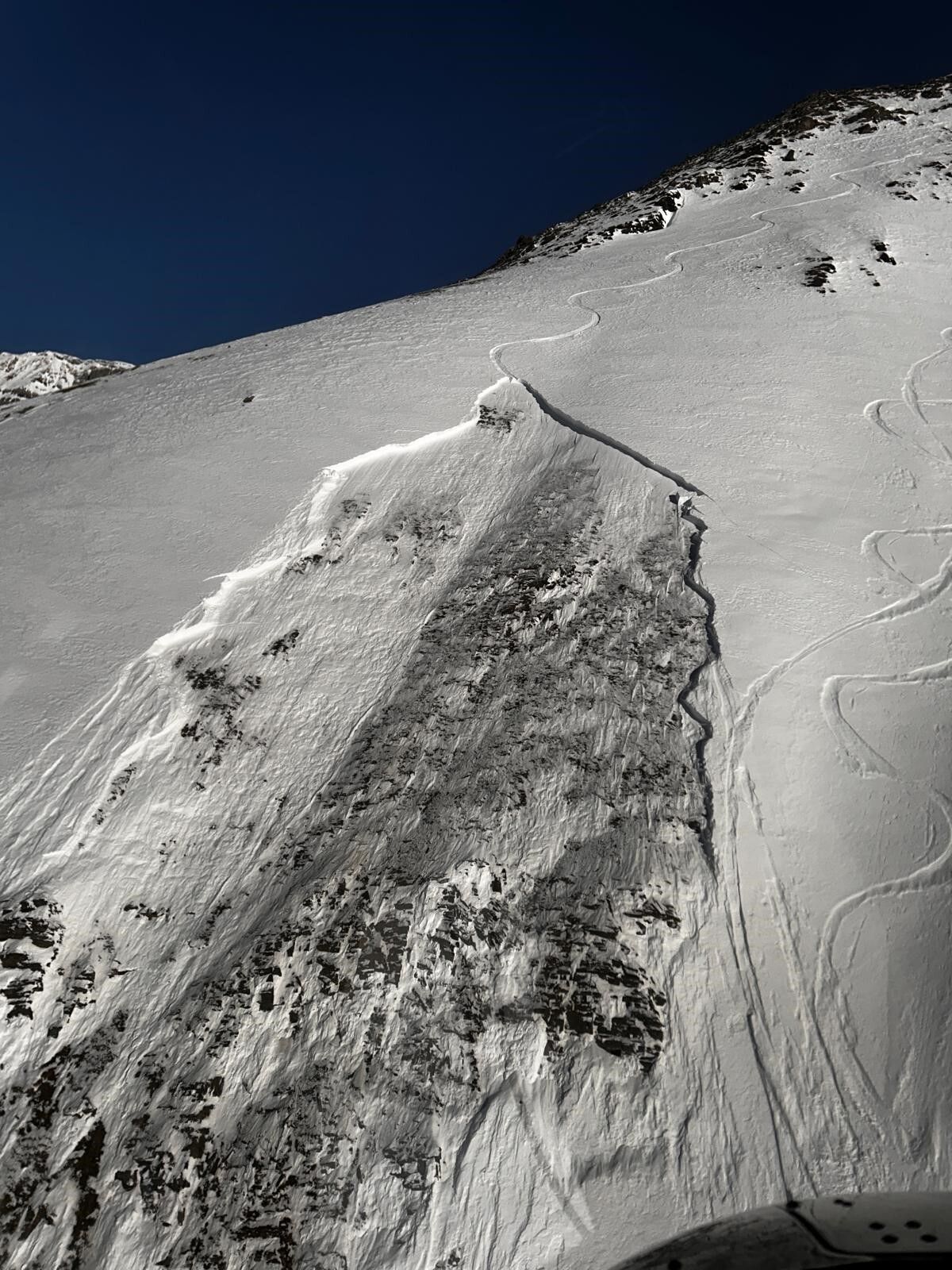
The video and images shared by Parks Canada also drew strong reactions from backcountry users online. One commenter wrote that they had just completed an avalanche safety course and found the footage “hard to watch,” adding that the skier was “so lucky” to escape without serious injury. Others echoed the sense that the outcome could easily have been far worse, given the depth of the slide.
Reply