- Bow Valley Insider
- Posts
- Six Final Designs Unveiled for Banff Avenue Redesign
Six Final Designs Unveiled for Banff Avenue Redesign
Concepts feature new visitor centres, public plazas, Indigenous gathering spaces and in some cases underground parking

Bow Valley Insider
February 02, 2026
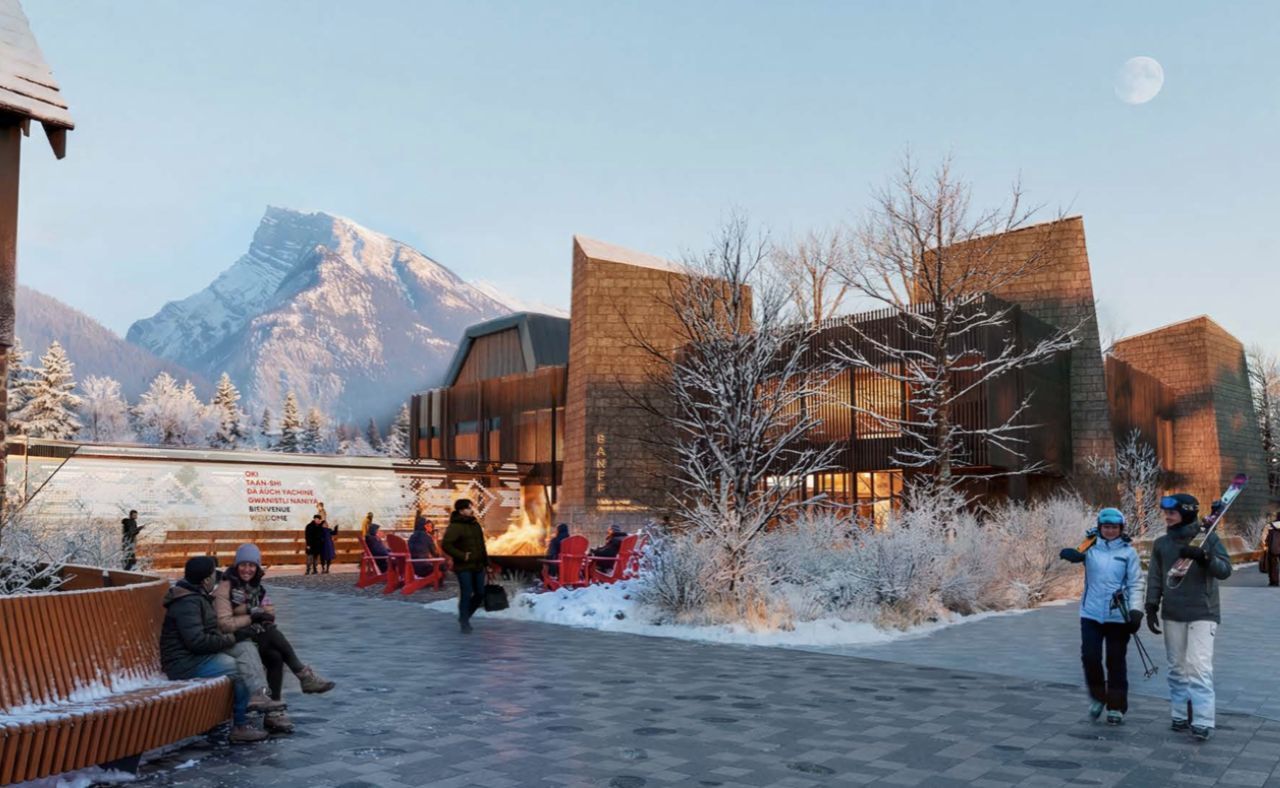
After years of planning, land assembly, and public debate, the future of one of Banff’s most visible downtown spaces is starting to take shape.
Parks Canada has released six finalist concept designs for the redevelopment of the 200 block of Banff Avenue, the stretch that includes the current visitor reception centre lands and adjacent lots between Wolf Street and Caribou Street. The concepts are the result of an international design competition run in partnership with the Royal Architectural Institute of Canada. Now, residents and visitors are being asked to review the proposals and provide structured feedback through a public survey.
This is not a public vote that determines the winner. Instead, the survey gathers reaction and sentiment on each design to help inform the independent professional jury that will recommend a final concept to Parks Canada.
Still, the moment is significant. The redesign will shape how millions of visitors first encounter Banff National Park each year and how locals experience a central piece of downtown for decades to come.
A Once in a Generation Reset for the 200 Block

The 200 block project has been in motion for more than two decades. Parks Canada gradually assembled the needed parcels and received federal funding in 2022 to advance detailed studies and public engagement. Since then, Indigenous groups, residents, stakeholders, and tourism organizations have been consulted on what the space should become.
The goal is to replace and expand aging facilities with a modern visitor centre and public space that better supports orientation, education, gathering, and connection to the park. Engagement summaries published by Parks Canada show recurring themes: reflect Banff’s character, create a welcoming and inclusive place, incorporate authentic Indigenous representation, modernize visitor services, and ensure the site remains flexible over time.
From that foundation, Parks Canada launched an international design competition. Teams first went through a pre qualification stage. Six were selected to produce full concept proposals.
Those six design teams are:
Alison Brooks Architects
EVOQ + Ryder
Kengo Kuma & Associates + Paul Raff Studio
KPMB Architects
Revery Architecture
Stantec Architecture
Each team was given the same site, program requirements, and engagement themes, but the resulting concepts differ in layout, architectural expression, landscape strategy, and how they interpret Banff’s identity.
What the Six Designs Propose

While the visual language varies, several common elements appear across most proposals.
All six designs include a new or expanded visitor centre function paired with the rehabilitation of the existing heritage building on site. Most proposals create a central public plaza or gathering space set back from Banff Avenue, designed for year round use, events, and informal gathering. Many emphasize strong view corridors toward Mount Rundle and other surrounding peaks, using building placement and roof forms to frame mountain views.
Indigenous design expression is also a visible theme. Multiple concepts include ceremonial circles, cultural gathering spaces, interpretive landscapes, tipi or pavilion areas, Indigenous language elements, and dedicated spaces for storytelling, education, and ceremony. Several proposals outline formal Indigenous advisory structures and ongoing collaboration frameworks as part of implementation.
Landscape design plays a major role in the concepts. Features across the proposals include rain gardens, permeable paving, native plant communities, bioswales for water management, fire circles, outdoor teaching areas, rooftop gardens, and covered outdoor structures intended to support programming in all seasons.
Some teams lean toward low, flowing, timber and stone buildings that blend into the landscape. Others propose more sculptural or mountain inspired forms, including clustered rooflines and tower elements that create lookout points and elevated terraces.
Housing also appears in multiple concepts, typically as staff or residential units integrated into the block behind or beside the visitor centre functions. That reflects earlier engagement feedback that asked designers to consider how the site could support community value, not only visitor services.
The Parking Question Returns
One of the most closely watched issues tied to the 200 block is parking.
Last year, tension emerged between Parks Canada and the Town of Banff over whether the redevelopment should include a new underground parkade. The Town’s long term transportation strategy has focused on intercept parking outside the downtown core and reducing vehicle pressure on Banff Avenue. Municipal rules strongly discourage adding new downtown parking supply. Parks Canada is not bound by those same rules.
Several of the finalist concepts include underground parking integrated beneath the site. In the design boards, this is typically paired with language about keeping the ground level pedestrian focused while placing vehicle storage below grade. Other proposals minimize or de-emphasize parking infrastructure in favor of mobility hubs, transit, bike facilities, and shuttle connections.
Because parking policy has been a flashpoint in earlier reporting and council discussions, the presence or absence of underground parking in the final selected concept will likely draw continued scrutiny.
How Public Feedback Works
Parks Canada is now inviting the public to review all six concepts and complete a structured survey by February 27.
For each design, participants are asked to rate their reaction and level of agreement with several statements, including whether:
The design reflects Banff National Park’s unique character
The design creates a welcoming space
The design incorporates authentic Indigenous representation
The design includes elements that support the local community
This feedback will be compiled and shared with the independent jury overseeing the competition. The jury, made up of architecture and design professionals, will evaluate the concepts alongside technical criteria and engagement input before making a recommendation to Parks Canada.
Additional public engagement sessions are expected as the process moves forward.
What Happens Next
The competition is scheduled to conclude in spring 2026. After the jury recommendation, Parks Canada will select a preferred conceptual design. That concept would then move into more detailed design, technical study, costing, and further consultation before any construction decisions are finalized.
In other words, the images now released are not final blueprints. They are high level concepts that show direction, priorities, and spatial ideas rather than finished construction plans.
Even so, they offer the clearest look yet at how dramatically the 200 block of Banff Avenue could change. For locals who have followed the project for years, and for newcomers seeing it for the first time, this is the most concrete moment yet to weigh in on the future shape of Banff’s front door.
Reply