- Bow Valley Insider
- Posts
- Poll Finds Locals Divided on Skijoring, but United on One Point: The Event Has Outgrown Banff Avenue
Poll Finds Locals Divided on Skijoring, but United on One Point: The Event Has Outgrown Banff Avenue
Responses show a narrow split on whether the winter spectacle should continue, but broad agreement that its scale now exceeds what the town’s main street can safely handle

Bow Valley Insider
January 25, 2026
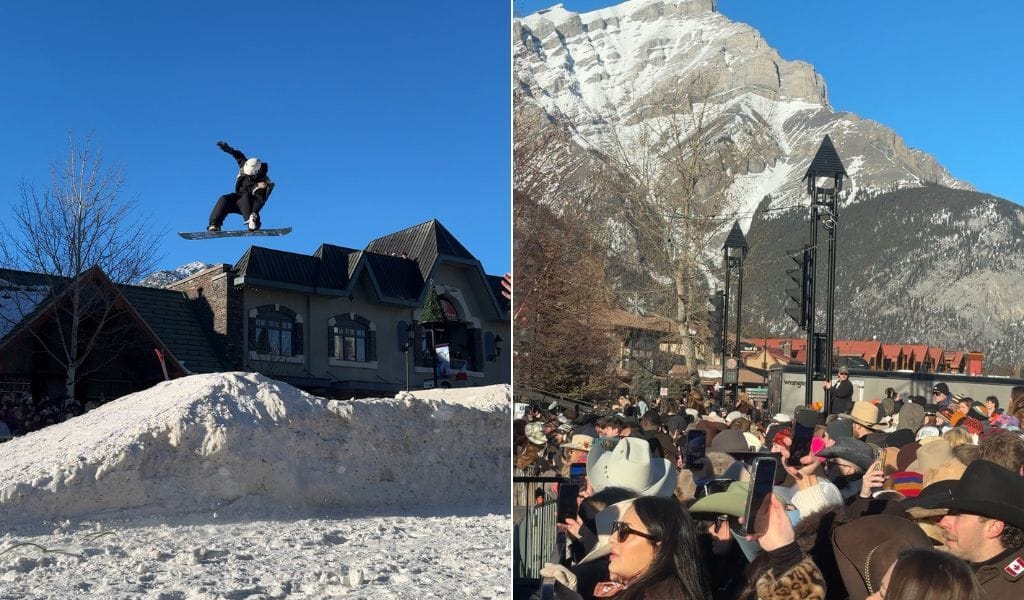
A Bow Valley Insider reader poll conducted in the days following the Banff skijoring weekend shows a community narrowly divided on whether the event should continue, but strikingly aligned on a deeper conclusion: whatever its future, the spectacle has outgrown the town’s main street.
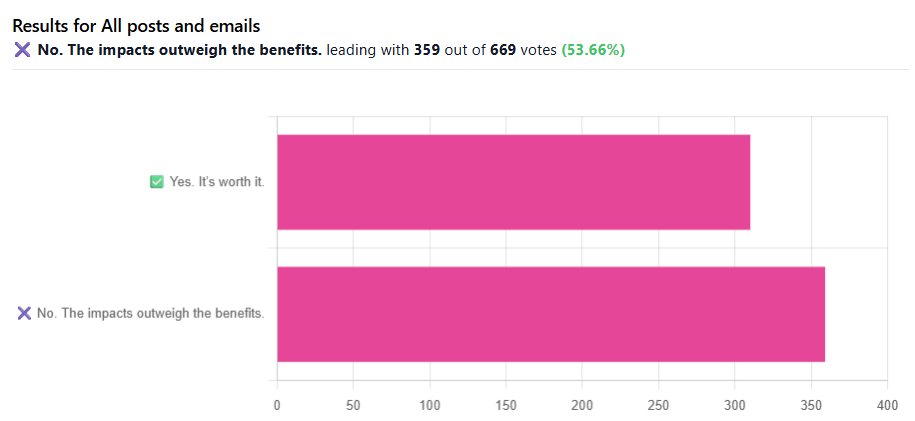
Of 669 respondents, 53.66% said the negative impacts of skijoring now outweigh the benefits, while 46.34% said the event is still worth it. The margin is slim. The themes in the accompanying comments, however, are not.
Across hundreds of responses from residents, visitors, and business owners, one idea appeared again and again, from both critics and supporters: the scale and popularity of the event now exceed what Banff Avenue and the surrounding townsite can safely and comfortably handle.
“It’s iconic,” one respondent wrote, “but it has outgrown downtown.”
Another put it more bluntly: “Great event. Wrong place.”
A community split, but not polarized
The numerical result reflects a community divided between two realities that Mayor Corrie DiManno described: a winter weekend that delivered exceptional economic activity, and, at the same time, tested the physical and social limits of a small mountain town.
Many respondents emphasized the economic lift, particularly in a traditionally slow month.
“Restaurants and hotels were full,” one business owner wrote. “For January, that is huge.”
Another called it “a uniquely Albertan event” that brought “exactly the demographic marketers dream of,” adding that the energy and spending were “a lifeline for workers in a quiet season.”
Several commenters framed the disruption as the price of living in a world-class destination.
“Banff is a tourist town,” one wrote. “It’s one weekend. The revenue matters.”
Yet even among those who supported the event, few argued that it should continue unchanged.
“Yes, but better traffic management is essential,” one respondent said. “Tickets, shuttles, seating, capacity limits. It cannot run like this again.”
Crowding, visibility and safety
One of the most consistent frustrations was not simply congestion, but the experience on the ground.
Dozens of people said they travelled to Banff only to find themselves unable to see the races at all.
“The only thing I could see was the back of people’s heads,” one visitor wrote. “People were climbing on signs and bus shelters just to get a view.”
Another said, “Watching a screen in the middle of a crush of people is not why I came. I could do that at home.”
This lack of viewing space fed into broader safety concerns. Multiple respondents described sidewalks that felt dangerously full, people spilling onto roadways, and anxiety about emergency access.
“If something serious had happened, I hate to think how vehicles would have moved,” one resident wrote. “The town was at a standstill.”
That concern echoed DiManno’s account that sidewalks, parking, and access lanes were nearing capacity by early afternoon, as well as Parks Canada’s confirmation that traffic control measures were taken at the east gate to preserve emergency access.
Public behaviour and enforcement also featured prominently. Respondents described open alcohol consumption, litter, and a party atmosphere that some felt clashed with both family expectations and national park norms.
“We are in a national park, not a street festival zone,” one wrote. “It felt more like a stampede crowd than a mountain event.”
A convergence on solutions
Despite sharp differences in how people weighed economic benefit against disruption, the proposed solutions were remarkably consistent.
Remote parking and frequent shuttle service from Calgary, Canmore, Stoney Nakoda lands, or outlying lots appeared in dozens of comments. So did calls for ticketing or capped attendance, both to control crowd size and to fund infrastructure such as seating, washrooms, security, and cleanup.
“Sell tickets, limit numbers, and move people by bus,” one respondent said. “Then the event could be great again.”
Relocation was another dominant theme. Many suggested the Fenlands Recreation Grounds, industrial lands, airfields, or rural venues where crowds and parking could be absorbed without constricting a narrow main street. Others proposed keeping the event in Banff but shifting it off Banff Avenue, or spreading it across multiple days or sites.
“It’s not that people hate skijoring,” one long-time resident wrote. “It’s that the corridor cannot handle that many bodies and vehicles at the same time.”
That conclusion mirrors the focus of the multi-agency review now being convened by the Town of Banff with Banff & Lake Louise Tourism, Parks Canada, Roam Transit, and emergency services, which will examine options such as ticketing, park-and-ride systems, crowd limits, and alternate venues.
National park values and the character question
A second, deeper fault line running through the comments concerned what kind of activity belongs in a national park town.
Some respondents argued that the spectacle and party atmosphere were out of step with the conservation and quiet-use values many associate with Banff National Park.
“This felt like a Grey Cup street party, not nature-based tourism,” one wrote.
Others countered that Banff has always hosted major events and that winter vibrancy is essential to sustaining the local economy and workforce.
“It’s two days of activity that support hundreds of workers,” another respondent said. “That matters too.”
Here again, however, the divide often led back to the same practical conclusion: if large-scale events are to continue, they must be designed around the town’s physical limits and the park’s mandate, not around viral popularity alone.
“It was far too successful,” one reader observed. “That’s the problem and the opportunity.”
From “whether” to “how”
The poll does not deliver a simple verdict on skijoring’s future. What it does reveal is a community that is not neatly split between supporters and opponents, but rather clustered around a shared recognition that the event, as currently configured, has surpassed the capacity of its setting.
In the language of urban planning and park management, the debate has shifted from “Should Banff host skijoring?” to “How, and where, can an event of this scale be hosted safely, sustainably and in a way that respects both residents and the national park?”
As one respondent summarized: “Don’t kill it. Fix it. And maybe move it.”
Reply