- Bow Valley Insider
- Posts
- The Ultimate Photography Guide to Banff and Canmore
The Ultimate Photography Guide to Banff and Canmore

Bow Valley Insider
November 09, 2025
Let’s get one thing straight. Banff and Canmore do not really have hidden secrets anymore. Between Instagram, Facebook, and a million travel blogs, every mountain, lake, and tree has been photographed from every angle.
You will not find a mystery lake from Reddit or advice to ride the Sulphur Mountain gondola for the same postcard shot that everyone already has. Instead, here are spots that are not exactly unknown, but still fly a little lower under the radar and give you more room to breathe, explore, and get something that feels fresh.
Highway 742, Spray Lakes Road, Smith Dorrien Trail
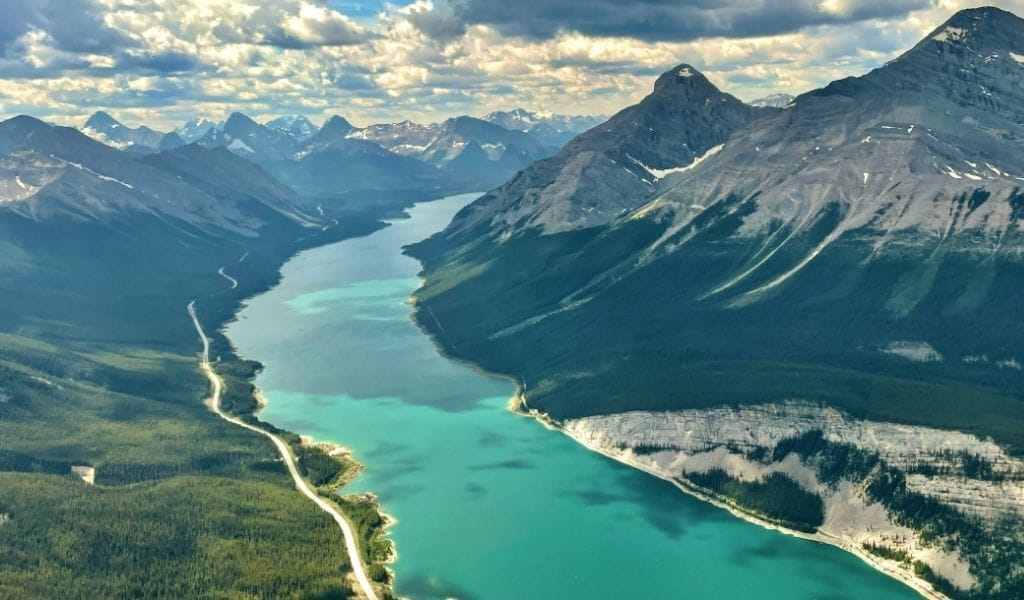
Just south of Canmore is a stretch of gravel road that sees a fraction of the traffic that pours down Highway 40. It stays unpaved partly because there is no real need to pave it, and partly to keep the Instagram crowds from rolling in too easily. A vehicle with decent clearance is recommended. If you are in a brand new sports car or a 50 year old camper, think twice.
If you make the trip, you are rewarded with big scenery and a solid chance at wildlife sightings. The steep ridgelines and dense forest create a natural corridor for moose, bears, and all the regulars that call the Rockies home. Moose are often seen wading at dawn or dusk. Bears forage for berries through summer. Bald eagles and osprey patrol the sky looking for their next meal.
This road has a proper backcountry feel. On calm mornings, fog creeps in from the reservoir which adds a bit of mood and mystery to your shots. The lack of traffic means you can slow down, scan the treeline, and actually soak in the moment. Bring a long lens and keep a safe distance. Wildlife is incredible to photograph, but it is not worth getting too close. Drive slowly, as sightings can happen without warning.
Quick Shot:
Getting there: Start in Canmore near Quarry Lake or from Highway 40 at the King Creek Trailhead.
Best time to shoot: Early morning for fog, or late afternoon for dramatic light. Summer for moose and osprey, fall for rutting season and foraging bears.
Photo tip: Patience pays off. Stay in your vehicle, give wildlife space, and wait for natural behavior.
Bankhead
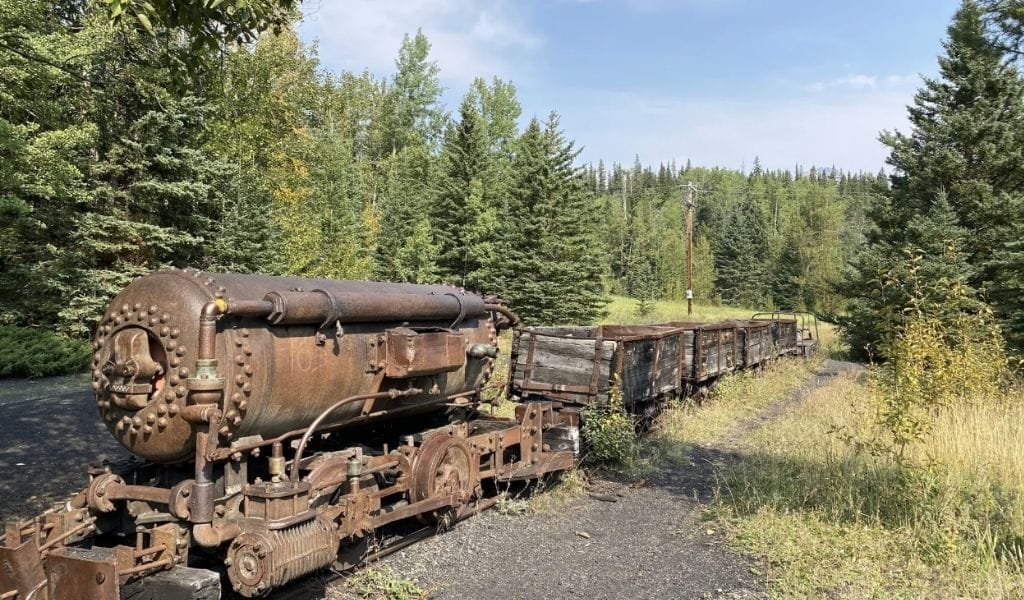
Most visitors drive the Minnewanka loop for the lake circuit. It is beautiful, but also packed once summer hits. Many people do not realize that right at the start of the loop is one of the most interesting historic stops in the area: the ghost town of Bankhead.
Once a bustling coal mining village with about a thousand residents, Bankhead shut down in the 1920s. Today, the remains are scattered through the forest. Crumbling foundations, rusted mining equipment, and interpretive signs paint an eerie picture of what used to be. Trees and wildflowers have started to reclaim the old structures which creates a striking contrast between industry and wilderness.
Bankhead offers a different photographic angle on Banff. You will not get classic lake reflections here. What you get instead is history, texture, and atmosphere. Early morning or evening light brings long shadows that enhance the abandoned feel. It is a rare chance to capture Banff without water or mountains as the main character.
Quick Shot:
Getting there: About 10 minutes from Banff, parking at Lower Bankhead.
Best time to shoot: Summer and early fall. Part of the loop is closed in winter which means a longer walk from Cascade Ponds.
Photo tip: Use Cascade Mountain as a backdrop. Frame the ruins with the peak behind them for contrast and scale.
Cascade Mountain
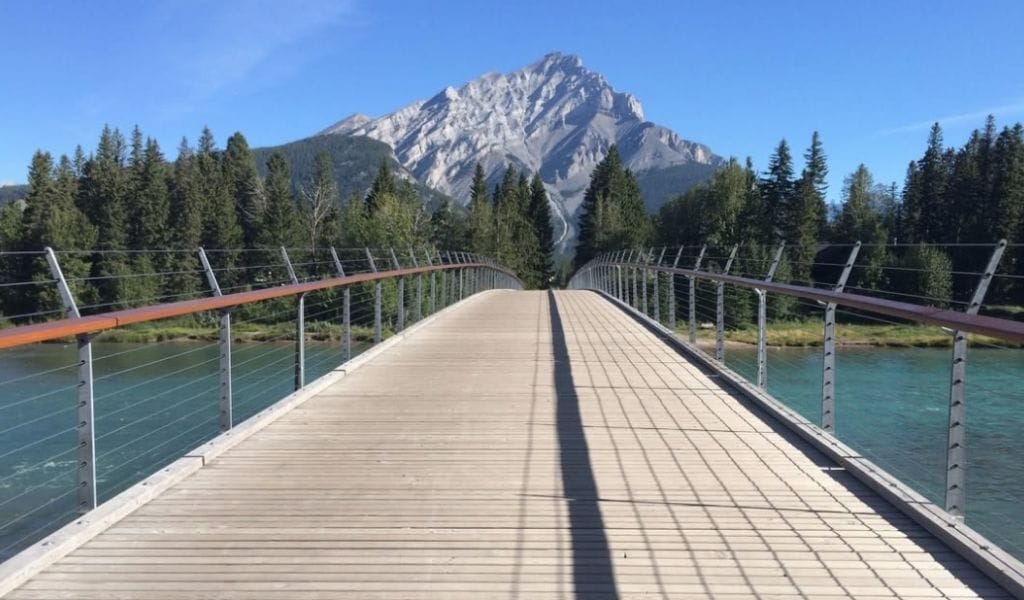
Everyone knows the classic Cascade shot lined up perfectly with Banff Avenue. The problem is that everyone wants that exact photo which means traffic, tour buses, and plenty of company.
Here is a small upgrade that helps both you and locals. Skip Banff Avenue and walk two blocks over to Muskrat and Buffalo Street. You get the same Cascade backdrop, but the street feels more like a small mountain town rather than a commercial strip. No McDonalds sign, no buses, fewer people to edit out of your frame.
Quick Shot
Getting there: One minute from the south end of Banff Avenue. Walk east up Buffalo Street.
Best time to shoot: First light or last light for soft mountain glow and less traffic. Fall is especially photogenic with golden leaves.
Photo tip: Cyclists use this road often. If one rides into frame, use them for scale and movement.
Eohippus Lake
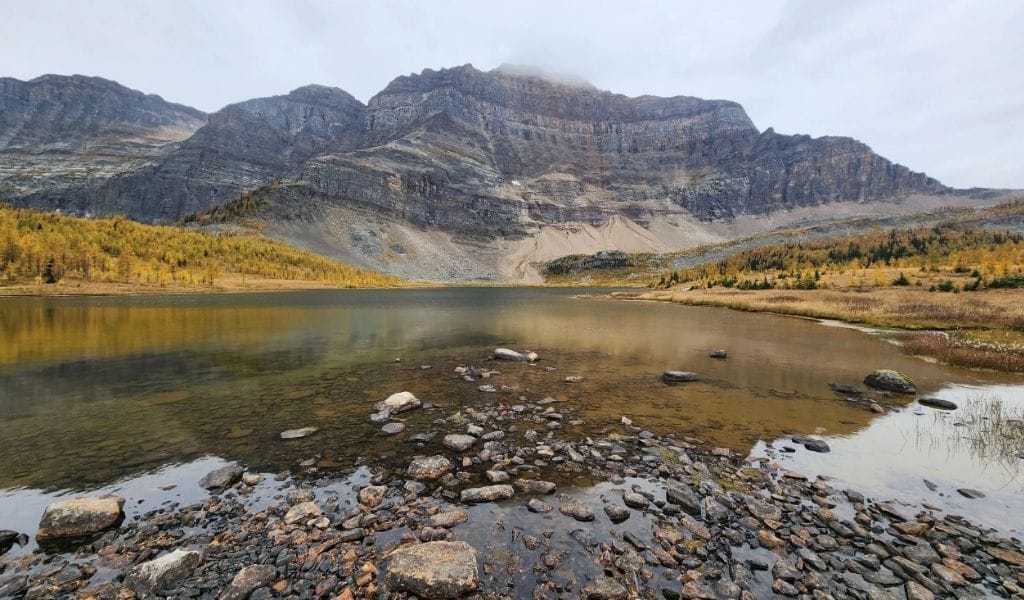
The Eohippus Lake Trail starts at Sunshine Village which is easiest to reach by gondola. If you want to save money or prefer a workout, take the Healy Pass trail from the base. This adds distance and elevation, but the scenery along the way is worth it and gives you plenty to shoot before you arrive.
This trail is a quieter alternative to the popular Healy Pass and Simpson Pass routes. It winds through meadows toward Eohippus Lake with The Monarch rising behind it. The farther you go, the more the landscape opens up and the more you feel like you have space to enjoy it without the crowds.
Peak photography seasons here are larch season when the hillside turns gold, and wildflower season when the meadows explode with color. Eohippus Lake is the star, with calm water, bright colors, and a dramatic mountain backdrop. It is one of those places where people who know the area go when they want beauty without the tourist rush.
Quick Shot:
Getting there: Take the Sunshine Village gondola, then follow the trail toward Simpson Pass. To skip the gondola and add distance, start from the base on the Healy Pass trail.
Best time to shoot: Late July through early August for wildflowers, and late September for golden larches.
Photo tip: The turnoff to Eohippus Lake can be easy to miss. Bring a map or GPS and look back often on the trail. Some of the best frames are behind you where the meadows stretch into the peaks.
Silverton Falls
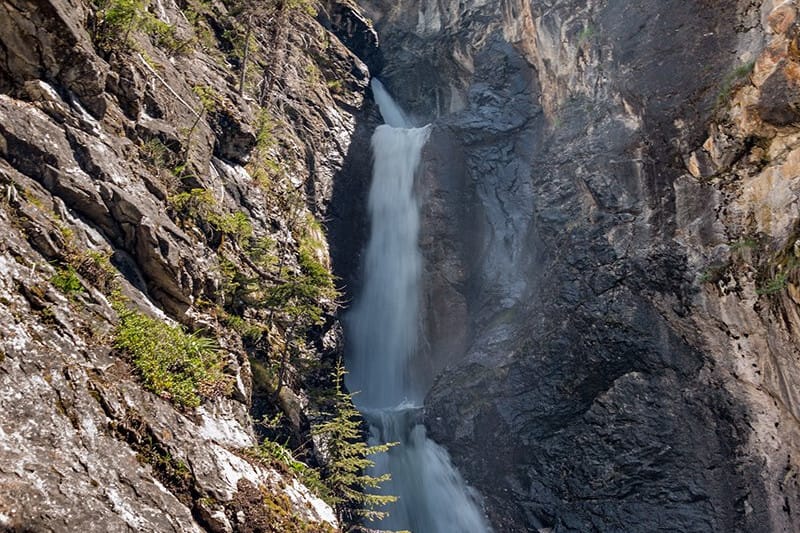
Thinking of Johnston Canyon but not excited about shoulder to shoulder crowds on the boardwalk. Silverton Falls is the local alternative. It sits right on the Bow Valley Parkway and is one more reason to choose the scenic route instead of the Trans Canada.
It is a short 2 kilometer round trip that gains enough elevation to make it feel earned but not exhausting. There are no fences or platforms, and the viewpoint feels intimate. If timing works in your favor, you might have the falls to yourself which is perfect for lining up your shot without people stepping into frame.
Quick Shot:
Getting there: About 25 minutes from Banff or 20 minutes from Lake Louise, directly off the Bow Valley Parkway.
Best time to shoot: Late spring and early summer for peak flow from snowmelt.
Photo tip: After the falls, stop to capture Castle Mountain. It is a local favorite and a short drive further along the parkway.
Morant’s Curve
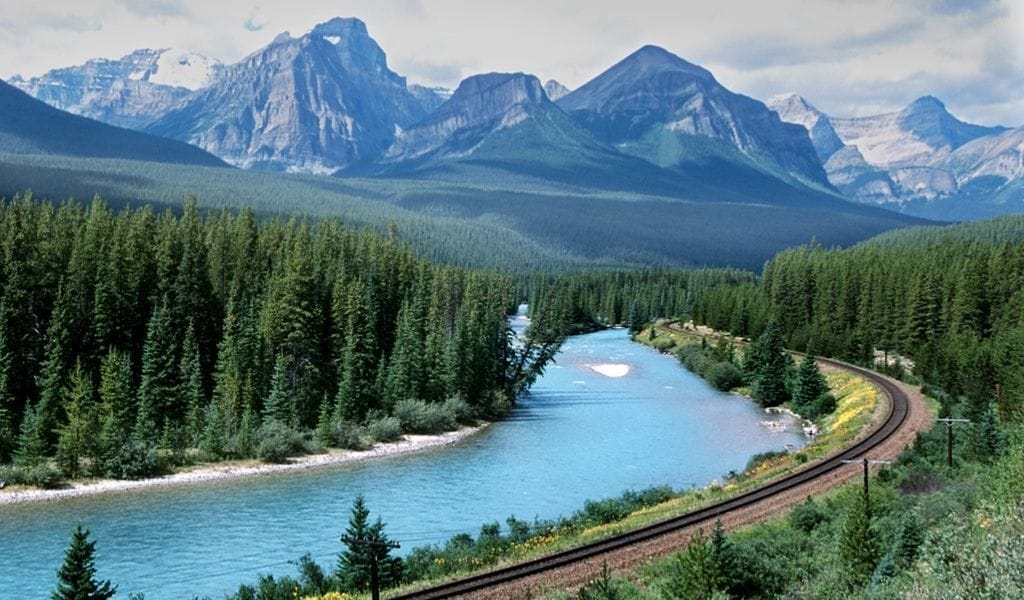
If you are heading to Lake Louise, you are close to one of the most iconic rail photography spots in the Rockies. Morant’s Curve is a bend in the tracks where freight trains snake through the valley with mountains stacked behind them. It is a classic scene that captures the meeting of nature and Canadian railway history. Without this line running west in the 1800s, Banff would likely look very different today.
There is no train schedule posted for obvious reasons, so this is a waiting game. Luckily trains pass fairly often. Bring a warm layer and enjoy the view while you wait.
Quick Shot:
Getting there: About 40 minutes from Banff or 6 minutes from Lake Louise. Accessible from Highway 1 or the Bow Valley Parkway.
Best time to shoot: Sunrise or sunset for warm light. Winter adds contrast with the bright train against snow.
Photo tip: Face north so the train travels toward you from Lake Louise. Try a long exposure to blur the train against the still mountains.
Waterfowl Lakes
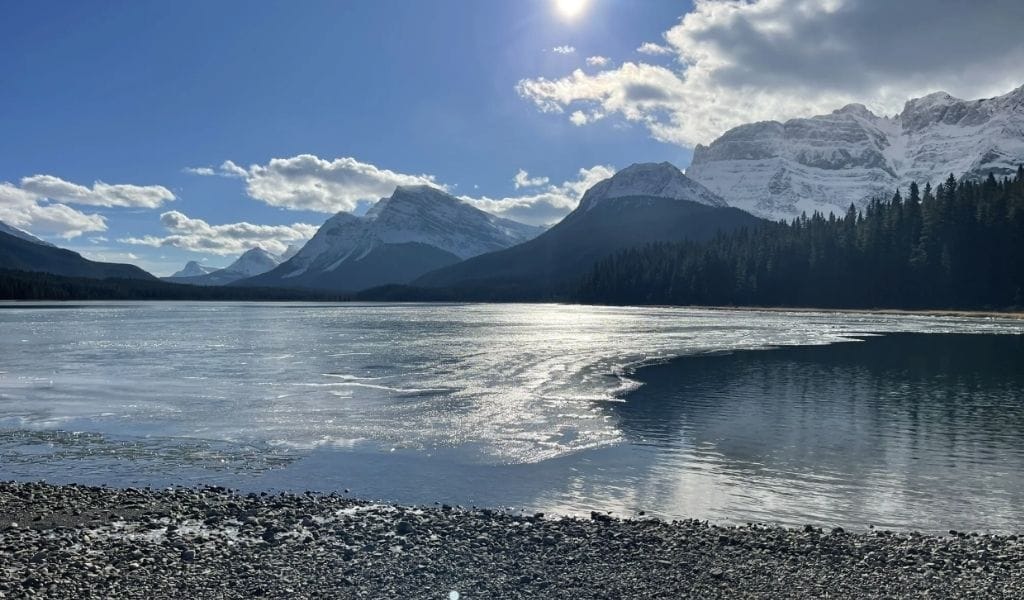
Most people know Peyto and Bow Lake. Fewer bother to stop at Waterfowl Lakes even though it sits under the dramatic peak of Mount Chephren and offers some of the best reflection photos on the Icefields Parkway.
On a calm morning, the lower lake becomes a mirror that reflects Chephren and the treeline perfectly. By midday the turquoise color pops under direct sunlight, so this is a place where hanging out pays off.
There is a campground here which makes it a great base for shooting at night. With no light pollution, stargazing is incredible and you can shoot the Milky Way above the lake and mountains.
Quick Shot
Getting there: About 1 hour and 20 minutes from Banff on the Icefields Parkway.
Best time to shoot: Early morning for reflections and late summer to early fall for night skies and color.
Photo tip: Bring a tripod and a wide, fast lens for night shots.
Crowfoot Glacier
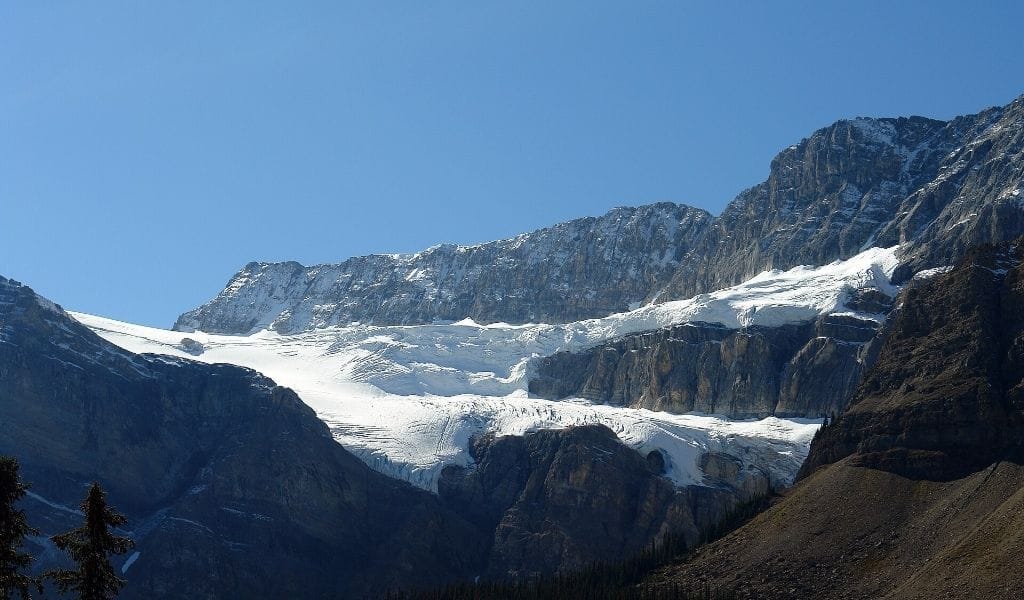
Another underrated Icefields Parkway stop is Crowfoot Glacier, a quieter option compared to the Columbia Icefield. It gets its name from the shape of a three pronged crow’s foot, although one section melted almost a century ago. It is a stark visual of how ice has receded and reshaped the landscape.
Bow Lake sits below and is a gift for photographers. With calm water, the reflections of the glacier and mountains are incredible. This is an easy pull off that rewards you quickly, and it is far less crowded than the more famous stops nearby.
If you are up for a challenge, the Crowfoot Mountain trail is a 21 kilometer hike that circles the lake and climbs to a panoramic summit view. It is a long day, but the scenes along the way are the kind that remind you why you carry a camera.
Quick Shot
Getting there: About 1 hour from Banff, right off the Icefields Parkway.
Best time to shoot: Sunrise or sunset for warm light. Late summer and fall for the hike.
Photo tip: Use a telephoto lens here. The wide shore shots are great, but zooming in on the glacier textures and ridgelines makes for powerful images.
Questions?
Leave a comment below!
Reply