- Bow Valley Insider
- Posts
- Parks Canada Weighs Car Ban at Lake Louise
Parks Canada Weighs Car Ban at Lake Louise
Reservations, timed entry, or shuttle-only access are now on the table for one of Canada’s busiest destinations

Bow Valley Insider
February 05, 2026
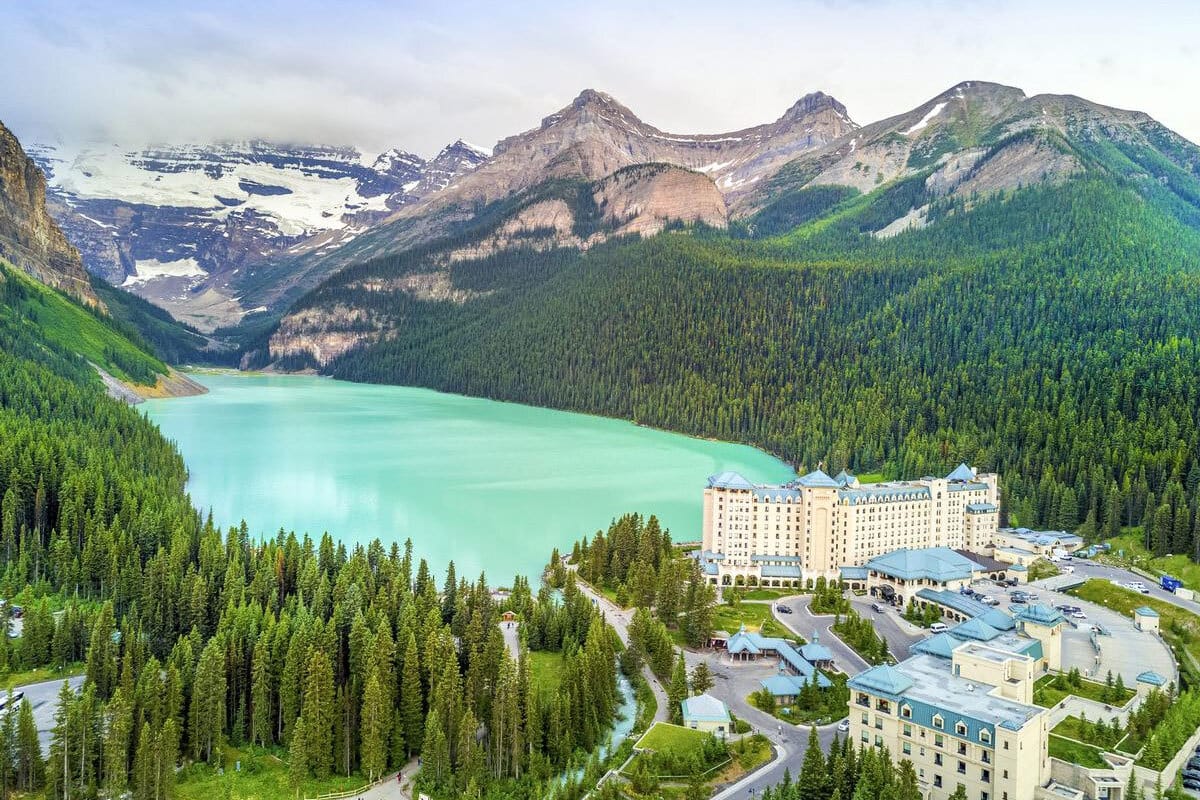
Parks Canada is weighing some of the most significant access changes ever proposed for Lake Louise, including parking reservations, timed-entry permits, and a full seasonal ban on personal vehicles to the lakeshore.
The options are laid out in the second phase of public engagement for the Lake Louise Visitor Use Management Plan, now open for feedback until March 9, 2026. The plan is designed to manage rising visitor pressure in one of Canada’s most visited and photographed destinations, where congestion, wildlife impacts, and safety risks have steadily increased over the past decade.
For visitors, the change under consideration is straightforward but consequential. The current roll-the-dice model where drivers try their luck at the Lake Louise parking lot could be replaced by a system where access is booked in advance or where private vehicles are no longer allowed during peak season.
For locals and regular Bow Valley users, it signals that the era of informal access control may be ending, replaced by formal caps and reservation systems.
From Early Arrival Strategy to Managed Access
The pressure behind the proposal is driven by numbers that have shifted sharply since 2010.
According to Parks Canada, traffic volumes on Lake Louise Drive rose more than 70% between 2010 and 2019, peaking at 2.1 million vehicles. Annual visitation to the Lake Louise area is now about 2.6 million people. Parking lots and facilities are typically full from 8 a.m. to 6 p.m. daily between May and October.
In summer 2025, roughly 75% of vehicles attempting to reach Upper Lake Louise were turned away because the lot was already full. Only about 1,000 vehicles per day successfully found parking at the lakeshore.
The result is a pattern that is familiar to anyone who has tried to visit on a summer morning. Drivers arrive earlier and earlier, idle or circle, queue along Lake Louise Drive, and often leave frustrated. Parks Canada says that pattern creates conflict, safety risks, blocked emergency access, facility strain, and added pressure on nearby wildlife corridors used by grizzly bears and other species.
Over the past decade, the agency has introduced paid parking, shuttle systems, traffic control, and reservation tools. Those measures have reduced vehicle volumes by about 23% since the 2019 peak while still accommodating more visitors overall. But officials say demand continues to grow and shuttles now book out quickly, forcing a new round of options.
Four Access Scenarios on the Table
As part of the engagement process, Parks Canada is asking the public to weigh in on four distinct scenarios for managing personal vehicle access to Upper Lake Louise during peak months.
All four assume that parking lot size will not expand and that shuttle and transit volumes would still be managed to avoid exceeding site capacity.
Scenario A: First come, first served paid parking
This is closest to the current system. Drivers can still attempt to reach the lakeshore and find a spot. Parking remains limited and often full for most of the day. Vehicles without a space are turned away. Parks Canada notes this model tends to push people into earlier and later arrival windows, increasing traffic during dawn and dusk periods that are important for wildlife movement. It also requires near constant traffic control.
Scenario B: Parking reservations, no entry restrictions
Under this model, drivers would need to reserve a parking spot in advance during peak months and hours. Reservations would be released ahead of arrival dates and expected to sell out quickly. Those with a reservation could arrive anytime within the daily window and stay as long as they want. Those without one would be turned around at a checkpoint or gate. Some congestion is still expected at first as visitors adjust to the system.
Scenario C: Parking reservations with timed entry and fixed length of stay
This goes further by assigning both an arrival window and a maximum stay, likely in the three to five hour range based on historical visit data. The goal is to spread arrivals and departures more evenly through the day and reduce crowding spikes. Overstays could trigger penalties. Visitors wanting longer visits would be steered toward shuttle, transit, or commercial transportation options.
Scenario D: No personal vehicles, shuttle and transit access only
This is the most restrictive option. From May to October, personal vehicles would not be permitted on Lake Louise Drive. Visitors would reach the lakeshore by Parks Canada shuttle, regional transit, commercial operators, bike, or on foot. Exceptions would be made for people with mobility needs, hotel guests and staff, contractors, and essential services where shuttle service cannot meet the need. Road traffic would drop sharply, improving conditions for wildlife movement and reducing congestion, but all visitors would need to plan ahead and secure transportation.
Part of a Broader Visitor Use Strategy
The Lake Louise access scenarios are one piece of a wider visitor use management framework that also covers Moraine Lake, Paradise Valley, transportation corridors, and area wide strategies.
Across the broader plan, Parks Canada is proposing actions that include managing congestion and access, prioritizing mass and active transportation, protecting wildlife corridors, and expanding education and trip planning tools.
The agency describes formal visitor capacity limits as a last resort tool, used only when other combined measures cannot achieve ecological and safety goals. No specific capacity numbers have been set yet for the lakeshore or other spots, but the plan signals that caps are being actively studied.
There are also firm boundaries around what cannot be proposed. Parks Canada says it cannot introduce local surge pricing, change national park fee structures, expand the developed footprint, or create preferential access rules for specific user groups under this plan. Legislative limits and national policy set those constraints.
What Happens Next
The current engagement phase focuses on strategies and actions rather than final decisions. Parks Canada is collecting feedback through three public surveys covering area wide strategies, Upper Lake Louise access options, and Moraine Lake and Paradise Valley measures. Each survey takes about 10 to 20 minutes to complete.
Public input will feed into feasibility, desirability, and viability assessments through 2026. A final Lake Louise Visitor Use Management Plan is expected later this year. Some measures could begin implementation as early as summer 2027, with the tourism industry promised 18 months notice before major access changes take effect.
For now, the question Parks Canada is putting to the public is direct. If the current model already turns most drivers away and produces daily congestion, what should replace it: better reservations, tighter time controls, or removing personal vehicles from the equation altogether.
Reply