- Bow Valley Insider
- Posts
- In Lake Louise, Snowbanks Are Hiding Parked Cars
In Lake Louise, Snowbanks Are Hiding Parked Cars
A Lake Louise resident describes four days snowed in and two hours of digging out

Bow Valley Insider
December 30, 2025
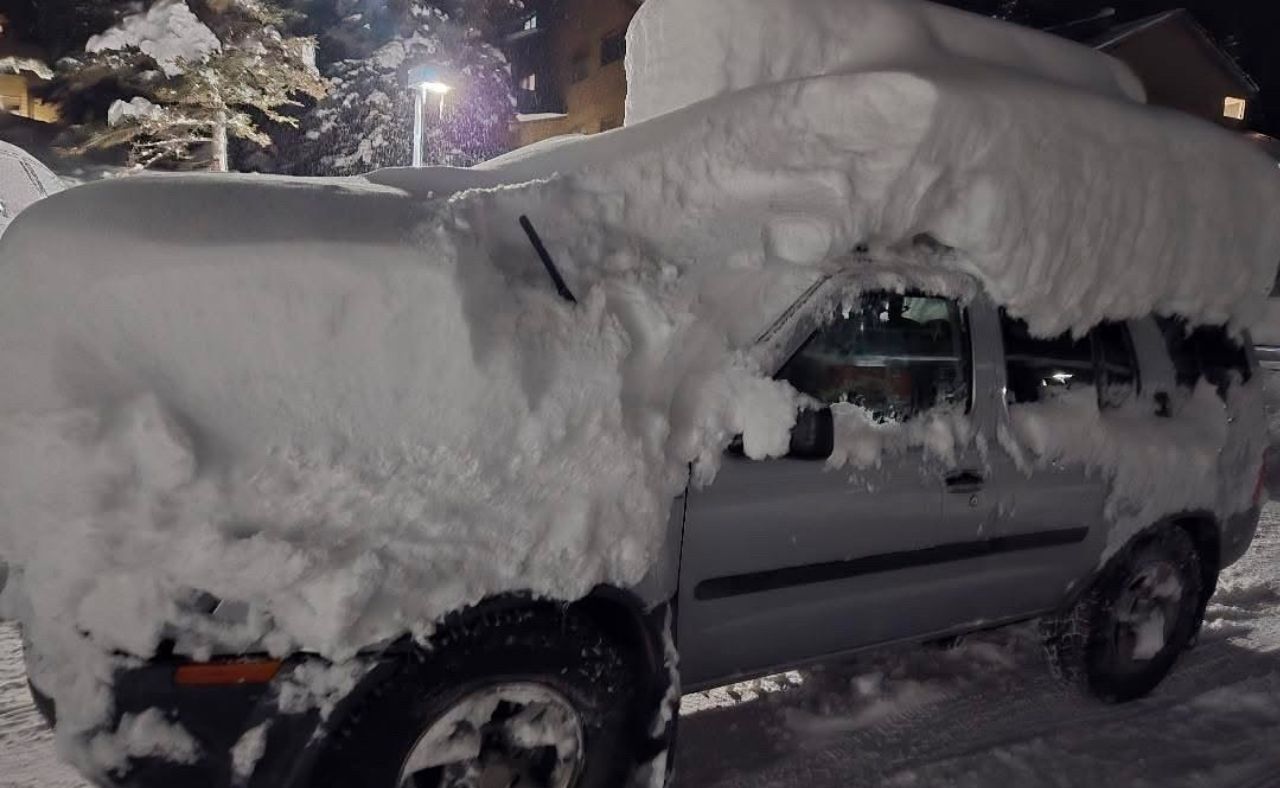
A parked car nearly disappears under more than a metre of snow in Lake Louise after days of steady December snowfall.
LAKE LOUISE - In parts of Lake Louise this December, snowbanks lining parking areas are not just piles left by plows. In several cases, they are parked vehicles completely buried under more than a metre of snow.
Local resident Sara Maglione said her car was left untouched for four days between Dec. 17 and 27 as successive storms continued to dump snow on the village.
“I feel like it’s common in Lake Louise to see cars this buried by February,” Maglione said. “But this has definitely been the craziest snowfall in December I’ve seen. It just didn’t stop.”
Maglione, who has lived in Lake Louise for four years and works as a waiter and interpretive hiking guide, documented the conditions in a series of photos showing vehicles almost indistinguishable from surrounding snowbanks.
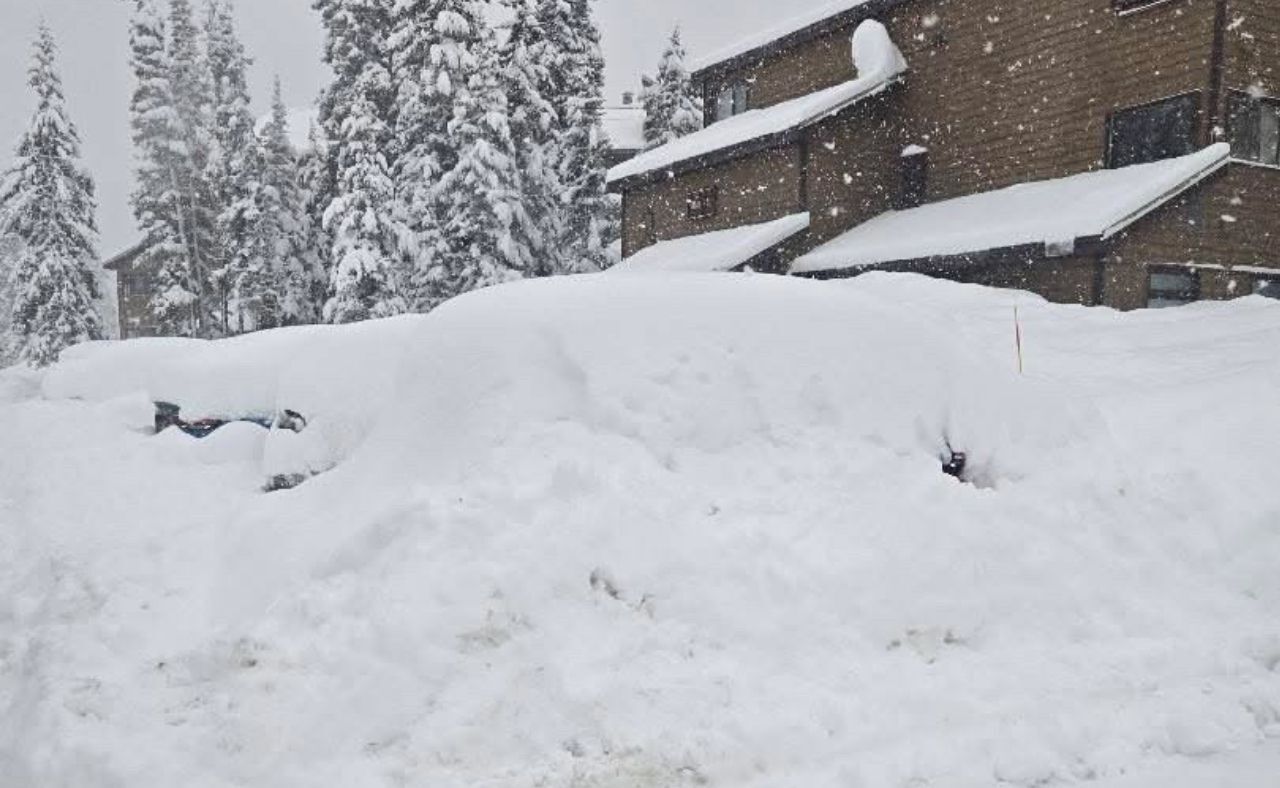
Several parked vehicles sit completely buried beneath what appears to be a single snowbank following relentless snowfall in Lake Louise.
She said there were days she would shovel for 30 minutes to an hour even when she had no plans to drive, simply to prevent the snow from piling up further.
“When you leave it too long, it becomes a much bigger job,” she said.
Digging her car out eventually took roughly two hours. Even then, limited space made fully clearing the vehicle impractical.
“I always clear my back window so I can see,” Maglione said. “But I don’t clear every window or the windshield before moving the car. There’s nowhere to put the snow, and if I do, I just end up having to shovel the parking spot again.”

Heavy snow continues to fall in Lake Louise as plowed snowbanks grow taller and parked cars become harder to distinguish from the landscape.
Snowbanks in the area have grown taller than most residents, leaving little room to stack additional snow either in front of or behind vehicles. Road crews manage the main travel lanes, but residents are left to navigate what remains in parking areas.
The conditions have also changed how people move around the Bow Valley. Maglione said she normally travels to Canmore weekly for groceries and errands but has only left Lake Louise twice this month.
“With all the snow and holiday traffic, it felt safer to stay put,” she said. “I walk to work, so that part was manageable.”
While the snow has created challenges, Maglione said it has also led to unexpected social moments. Shovelling often turns into an opportunity to check in with neighbours as people pass by on foot.

A partially uncovered vehicle shows just how deep the snow piled up, after Sara Maglione spent two hours digging her car out following four days without driving.
“You see a lot of folks you know,” she said. “People laugh, comment on how buried the cars are, and sometimes stop to help.”
She said informal help is common, whether it is a neighbour lending a shovel or locals towing vehicles out of ditches, particularly rental cars without winter tires.
Despite the effort required, Maglione said she does not mind the work itself.
“There’s something satisfying about finishing it,” she said. “The stressful part is when you leave it too late and you have to rush.”
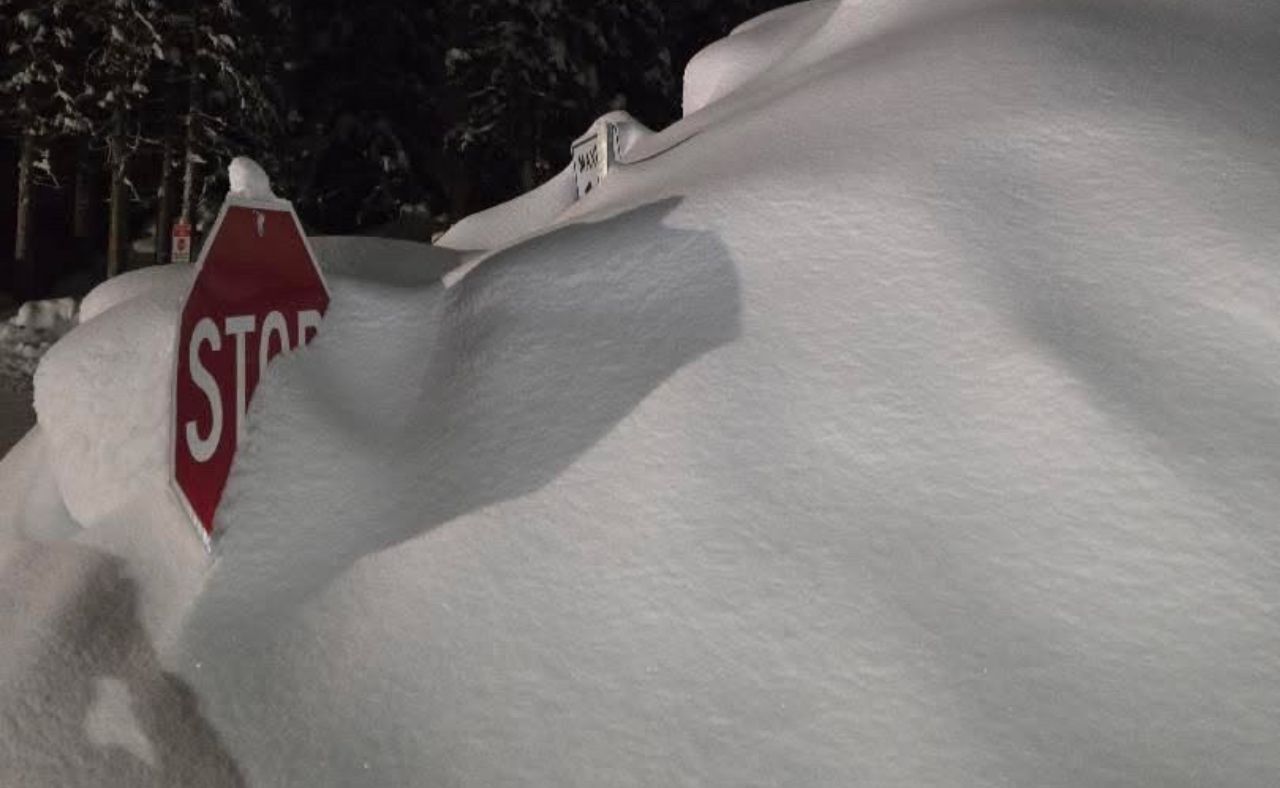
Deep snow nearly overtakes a stop sign in Lake Louise
The contrast with last winter has been striking. The region experienced record low snowfall last season, followed by what many residents describe as an unusually intense start to this winter.
“Seeing those extremes back to back makes climate change feel more real,” Maglione said. “At the same time, this snow is important. This area feeds major river systems, and we need that moisture.”
For now, heavy snow continues to shape daily life in Lake Louise, affecting everything from travel plans to how residents interact with one another. In some cases, what appears to be an ordinary snowbank is simply a reminder of how much has fallen in a short span of time.
Reply