- Bow Valley Insider
- Posts
- Watch: Avalanches Running to the Valley Floor on Icefields Parkway
Watch: Avalanches Running to the Valley Floor on Icefields Parkway
More than 170 centimetres of snow and large avalanches forced a 10-day closure between Lake Louise and Jasper

Bow Valley Insider
December 28, 2025
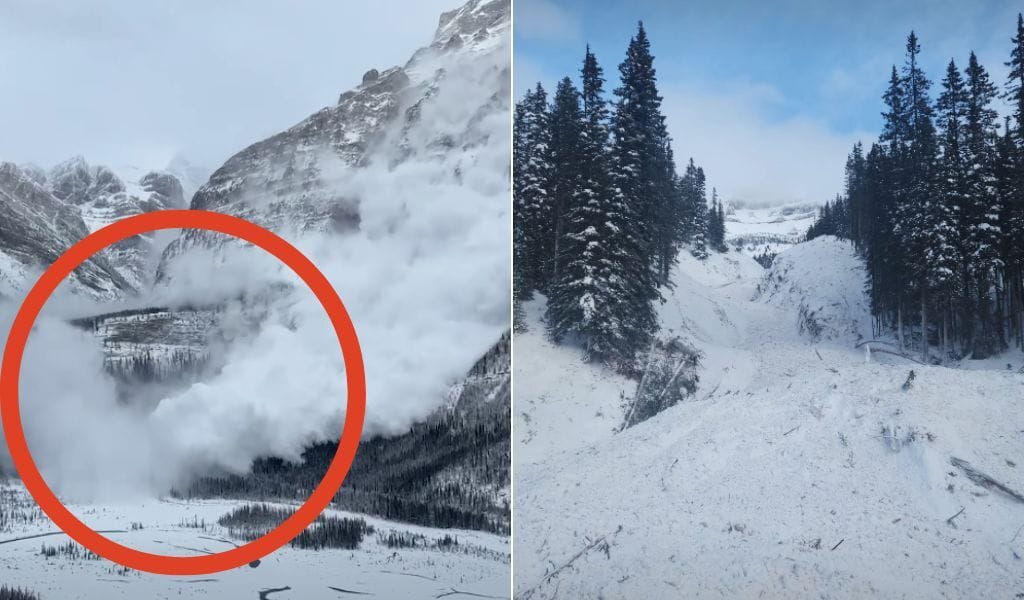
The Icefields Parkway between Lake Louise and Jasper reopened after a 10-day closure following an intense and unusually destructive avalanche cycle that dumped more than 170 centimetres of snow across the region.
The highway, also known as Highway 93 North, was closed on December 14 as Parks Canada crews carried out avalanche control missions and extensive snow clearing along the full length of the parkway. The prolonged closure stands out even by mid-winter standards for one of Canada’s most avalanche-prone highways.
A rare early-season shutdown
While temporary closures of the Icefields Parkway are common during storm cycles, a closure of this length in December is far less typical. According to Parks Canada, snowfall totals in parts of Jasper National Park have already matched amounts normally seen in April.
In a December 23 update, Parks Canada’s Jasper Visitor Safety team reported observing evidence of a widespread natural avalanche cycle during an aerial reconnaissance flight from the Jasper townsite south toward Mount Wilson. Several avalanches were rated up to size 3.5, with some running full path and breaking mature timber.
For context, avalanche size ratings describe how destructive a slide can be.
A size 3 avalanche is large enough to bury or destroy a vehicle and break trees. A size 4 avalanche is capable of destroying sections of forest and infrastructure and poses a serious threat to highways and buildings. Slides of this scale are uncommon early in the winter season.
On December 19, Jasper National Park conducted explosive avalanche control along Highway 93 North, triggering slides up to size 4.
Parks Canada described the start to the season as exceptional and record-breaking, warning that the early snowpack structure could increase the likelihood of large and destructive avalanches later this winter.
Avalanches reaching the valley bottom
One of the most striking aspects of this cycle was how far several avalanches travelled, reaching all the way to the valley bottom and across the highway.
A dramatic example came from Mount Hector, where an avalanche ran the full length of a path that typically does not reach the road until spring.
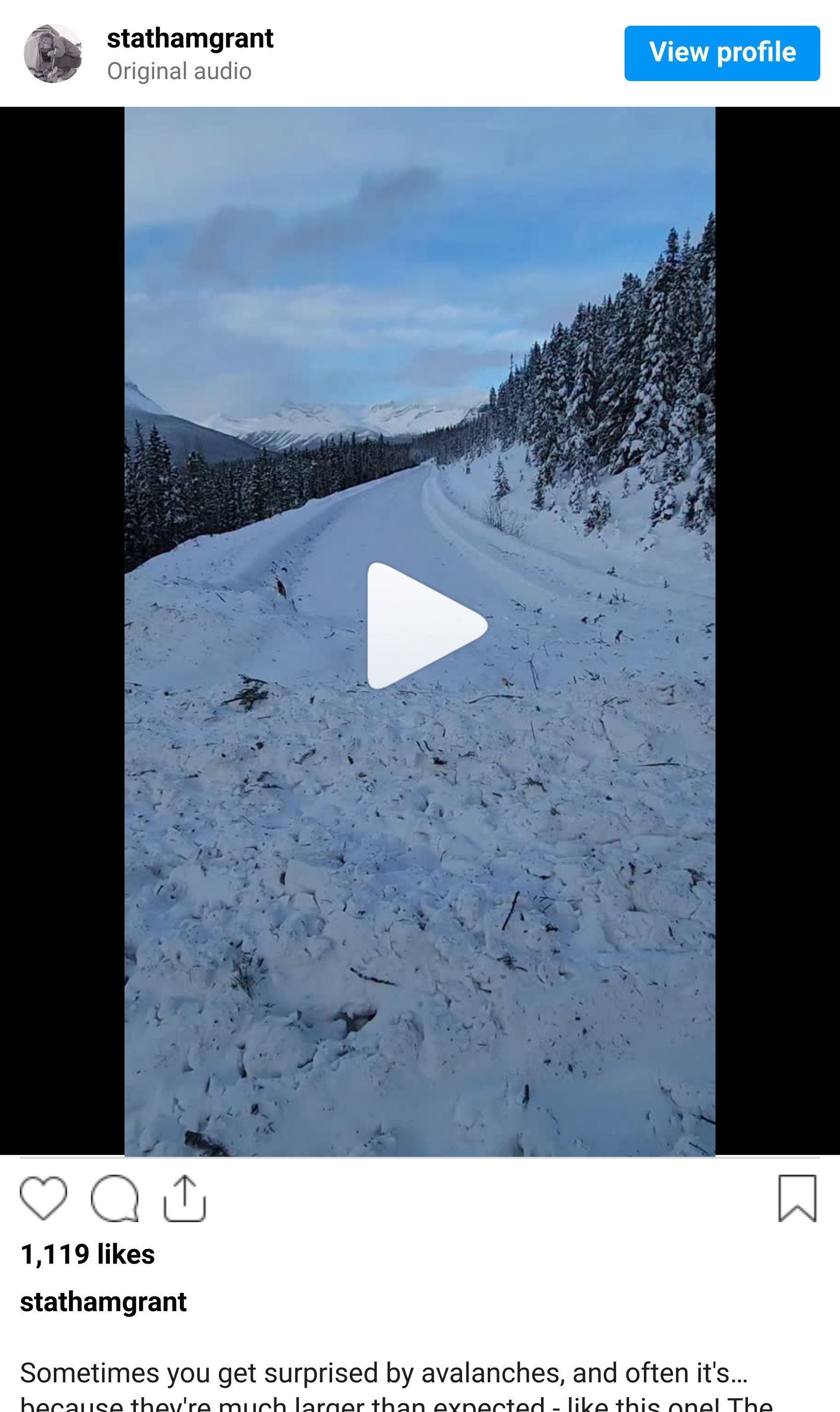
In a social media post, mountain guide and avalanche forecaster Grant Statham described the slide as far larger than expected for December.
“The Hector path typically hits the road in May as a big wet spring avalanche, so the size of this December dry slab was unexpected,” Statham wrote. “Two explosives dropped from the helicopter cleaned out the entire thing. The cracking sound of breaking timber was impressive.”
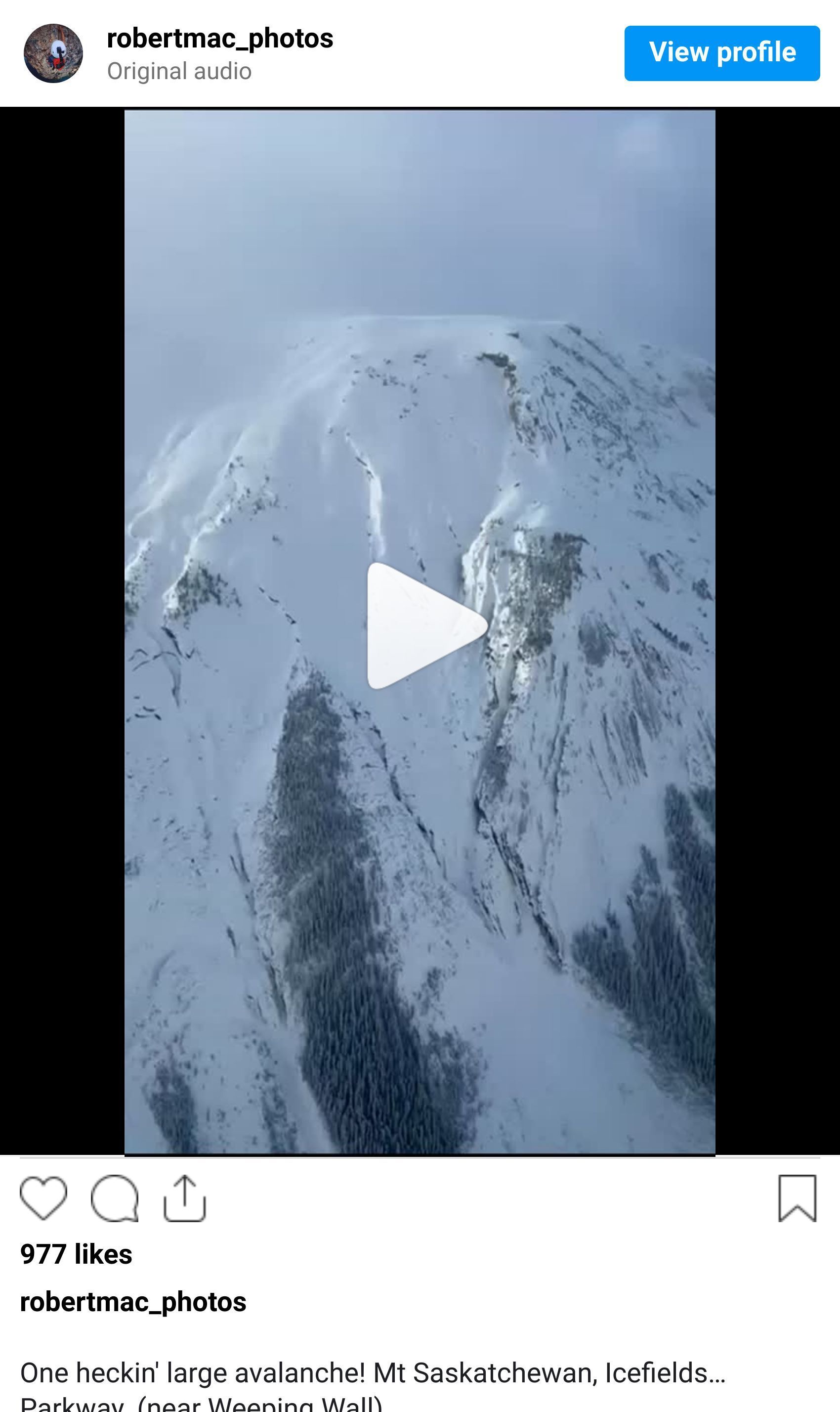
Similar full-path avalanches were also captured on Mount Saskatchewan, underscoring how widespread and powerful the cycle was.
Meanwhile, Near Sunshine Village and Canmore
The avalanche cycle was not limited to the Icefields Parkway.
On December 27, Avalanche Canada shared an update from the Banff National Park avalanche bulletin after an avalanche released near Sunshine Village.
According to the bulletin, Sunshine Village ski patrol reported Mount Bourgeau (the right-hand avalanche path) ran, reaching an estimated size 3. Patrol investigations suggested the slide was likely triggered by mountain goats.

Mount Bourgeau avalanche triggered by mountain goats
Further south, avalanche control operations also affected roads near Canmore.
On December 27, Kananaskis Public Safety temporarily shut down sections of Spray Lakes Road while crews conducted explosive avalanche control on Mount Buller and the East End of Rundle. Officials said the control work produced significant results, describing the Buller area as “hot with debris,” with avalanche debris reaching the roadway. The road was closed for several hours during cleanup before reopening.

This marked the second time avalanche control has been carried out on the East End of Rundle this month, following an earlier operation on December 16.
More closures are planned. On December 28, avalanche control is scheduled for the Big Sister slide path along Highway 742, which will again require temporary road closures. While Big Sister is officially designated as an intermittent avalanche control zone, some locals say they cannot recall previous closures for control work at that location, underscoring how unusual this December avalanche cycle has been across the region.
Why this matters
Parks Canada says the combination of heavy early snowfall and large natural avalanches suggests this winter may behave differently than usual. While skiing conditions in sheltered treeline areas are currently reported as excellent, higher alpine terrain has already been affected by strong winds, which are creating new layers of unstable snow.
For highway operations, the December closure is a reminder of how quickly conditions can escalate and why shutdowns are sometimes necessary, even outside of peak winter months. Travelers are encouraged to check Alberta 511 for the most up-to-date information on road closures and travel conditions before heading out.
Reply