- Bow Valley Insider
- Posts
- How Ski Biking Is Establishing Itself in the Bow Valley
How Ski Biking Is Establishing Itself in the Bow Valley
A Bow Valley entrepreneur is betting on the sport’s growth, working with local ski hills and building the foundations of a Canadian ski bike industry.

Bow Valley Insider
December 29, 2025

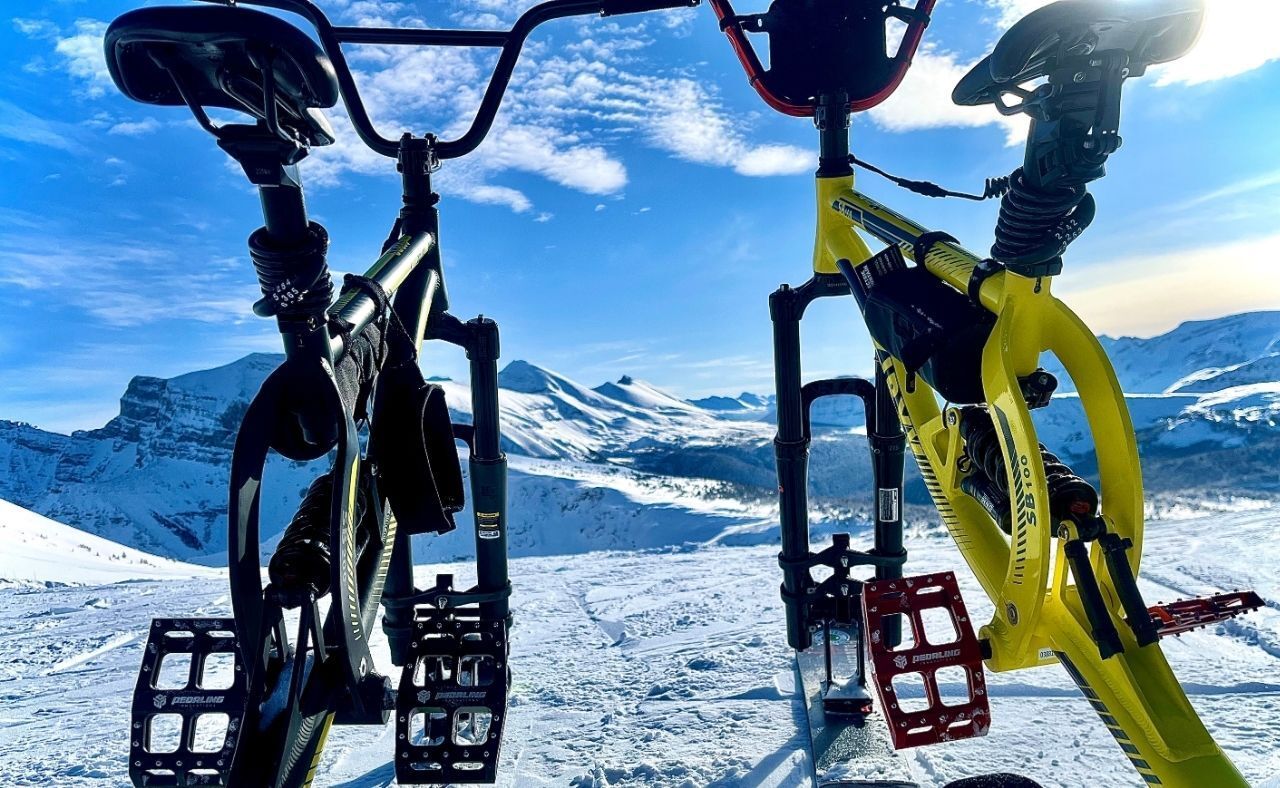
On ski hills in the Bow Valley, ski biking is still unfamiliar enough to draw stares. The equipment resembles a mountain bike mounted on skis, and for many skiers, it remains something they have only seen briefly online. For Jayden Paul, that unfamiliarity is the entire point.
Paul is the founder of Electric Mountain, a ski bike rental and advocacy operation that runs primarily out of the Bow Valley. He entered the business without a background in skiing or snowboarding and purchased his first fleet of 12 ski bikes before ever riding one himself.
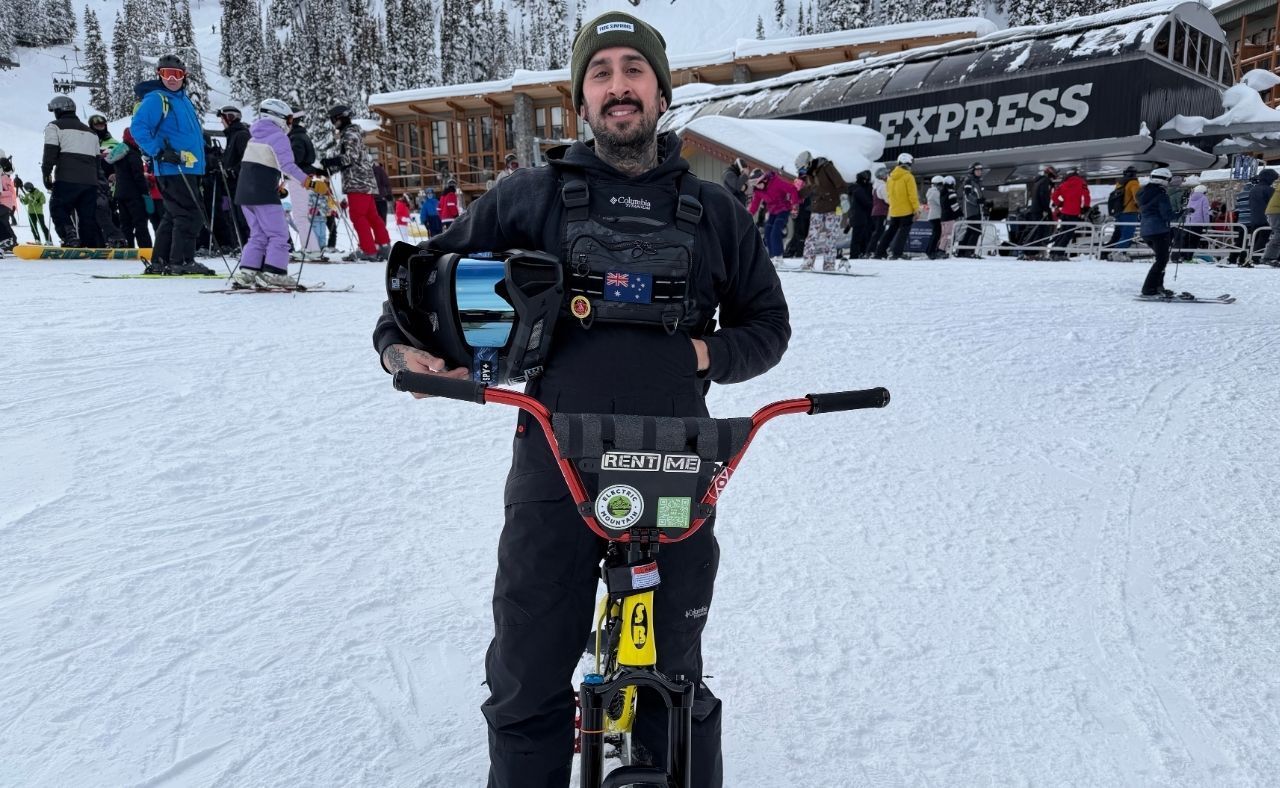
Jayden Paul, Founder of Electric Mountain
“I was literally jumping head-first into winter sports, on a bike,” Paul said. “But I believed in the potential of the experience and the demand that would come once people actually saw it and tried it.”
Ski biking, he explained, evolved from early experiments that placed skis under bike frames and relied on small skis worn on the feet for balance. Modern ski bikes use purpose-built frames and suspension systems designed specifically for snow.
“When you stand on the bike, your body position is much closer to a skier’s stance,” Paul said. “Paired with skis designed specifically for ski bikes, you can float, drift, and carve smoothly across a wide range of conditions.”
Paul describes the movement as a hybrid between skiing and mountain biking. Edge control, he said, is immediately familiar to most riders.
“I usually explain that the bike can be thought of as a single ski beneath you, with the added benefit of the front ski’s articulation and steering,” he said. “People always ask how you stop, and the answer is simple. The same way you do on skis or a board. We stop using our edges.”

The learning curve, according to Paul, is shorter than many expect.
“On a ski bike, I describe it like drifting,” he said. “We learn to drift to control speed, then with speed comes confidence. That drift starts merging into a steeper carve. I call it skiing with a walking frame. You use the handlebars to assist with leverage and angles.”
Most riders, he said, reach a breakthrough quickly.
“The breakthrough usually comes when we simplify it down to weight transfer,” Paul said. “Pressure on one foot versus the other, paired with small, controlled handlebar input. Once riders connect left turns and right turns smoothly, confidence switches on. Most people get that feeling on their first session.”
Paul grew up in Melbourne and spent seven years working as an electrician in Toronto before moving west. He said his decision to invest in ski biking was driven less by personal experience and more by market research.
“What stood out was how little infrastructure or visibility ski biking had in Canada compared to the U.S. and Europe,” he said. “A few people had introduced it here, but I could see an opportunity to build something real and lasting at a national level.”
After connecting with SkiByk founder Chris Schuler and securing an opportunity to become a rental partner and reseller, Paul committed fully.
“There wasn’t a clear blueprint,” he said. “I had to figure out my audience and build the market along the way.”
Learning the sport while simultaneously teaching it required an intensive first season.
“The first two weeks were intense,” Paul said. “I rode Sunshine Village every day, filmed myself constantly, and sent the footage for feedback. Everything from stance to handlebar positioning.”
Paul said his background in the trades helped him develop a structured approach to instruction.
“I’ve spent much of my career in leadership roles,” he said. “Breaking things down into simple steps came naturally once I had the technique locked in.”
As the business developed, Paul began to see ski biking’s potential for riders with injuries or mobility limitations.
“One rider had double knee reconstruction,” he said. “He hadn’t skied in years and had been told not to ski. By the end of the day, his goal was to share a run with his friends, and he did.”
Paul manages a knee condition himself and said those experiences shifted how he understood the sport. While most of his customers are still non-adaptive riders, he is working with Rocky Mountain Adaptive and hopes to expand partnerships with adaptive organizations.
The biggest barrier to growth, Paul said, remains unfamiliarity.
“Most people have never seen a ski bike before,” he said. “The first reaction is uncertainty. We’re not introducing something reckless. We’re introducing something unfamiliar.”
That uncertainty often surfaces in discussions with resorts.
“Often the word I hear is insurance,” Paul said. “But waivers already exist across ski hills. The real issue is unfamiliarity.”
Paul compares ski biking’s current position to snowboarding in its early years.
“The solution is education, demonstration, and clear standards that align with existing resort safety culture,” he said.

To help establish those standards, Paul helped form the Canadian Ski Biking Association alongside partners in Alberta, modeling its structure on the American Ski Bike Association.
“There was no ecosystem,” he said. “So we started building one.”
Running the business has meant adjusting to a different kind of pressure.
“There’s no guaranteed paycheck and no predictable routine,” Paul said. “Everything depends on execution.”
Despite that, he says the shift has been worth it.
“When I’m standing on top of the Great Divide at Sunshine looking across the Rockies, I’ll take those office views any day,” he said.
Looking ahead, Paul’s goal is normalization.
“By 2030, I want ski biking to be visible, legitimate, and widely accepted,” he said. “More resorts on board, a strong Canadian Ski Biking Association, and a real pathway for riders, especially adaptive riders.”
He hopes to work with major brands and athletes to bring broader visibility to the sport and eventually operate a permanent shop in the mountains.
“I see myself as a sport builder,” Paul said. “Someone helping people get more out of winter in a country where winter is long.”
“I’m just getting started.”
Reply