- Bow Valley Insider
- Posts
- Coyote Mating Season Begins in Banff and Canmore, Officials Urge Caution for Dog Owners
Coyote Mating Season Begins in Banff and Canmore, Officials Urge Caution for Dog Owners
Parks Canada says increased territorial behaviour and denning activity can bring coyotes closer to neighbourhoods and off-leash pets

Bow Valley Insider
January 21, 2026
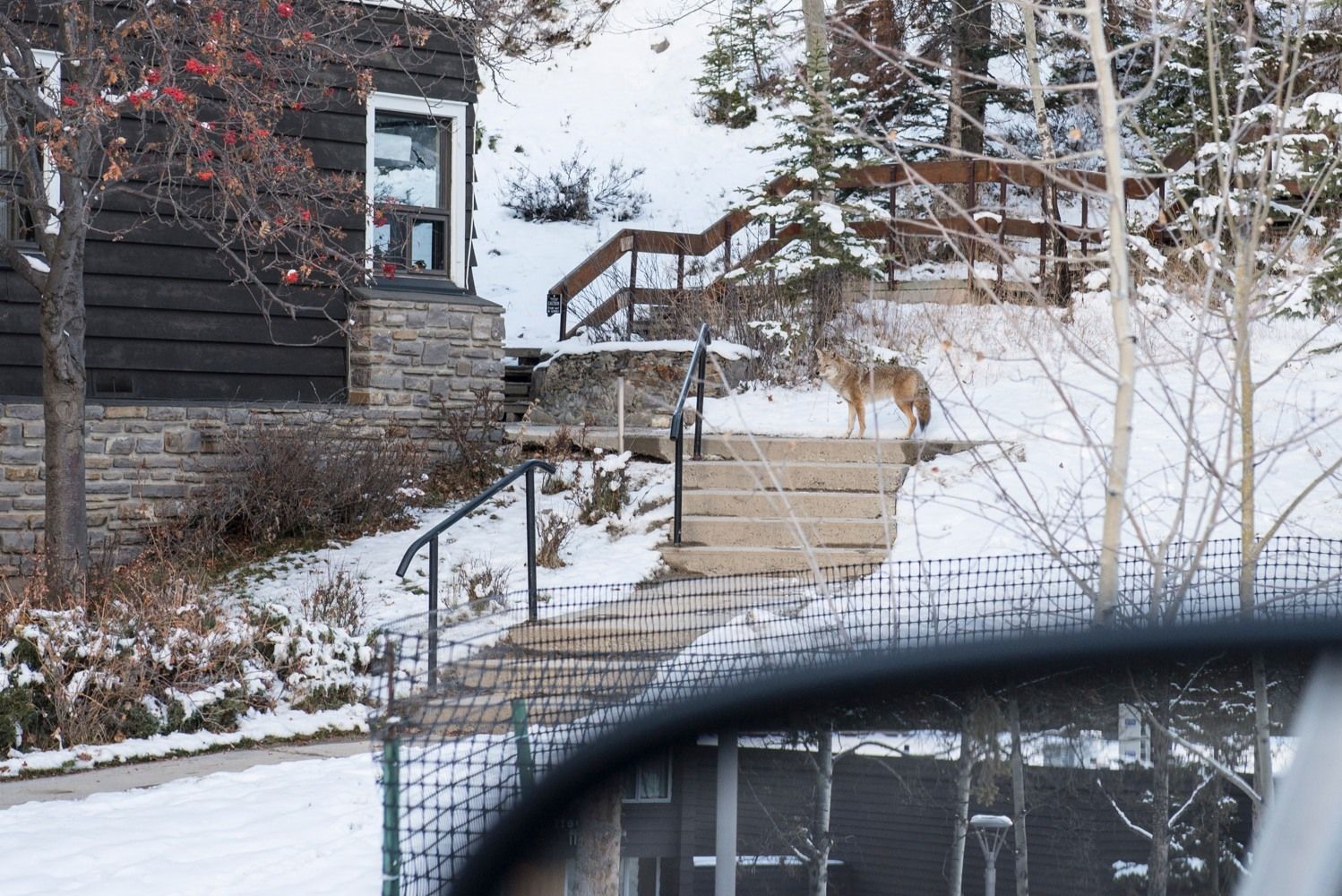
Coyote mating season (Source: Banff National Park, Facebook post)
Coyotes around the Bow Valley are entering their annual mating season, a period that wildlife officials say can bring increased daytime activity, heightened territorial behaviour and a greater risk of conflict with people and pets.
Parks Canada said mating season typically runs through late winter and early spring, when coyotes select and prepare den sites, the sheltered areas where they will give birth and raise pups, often under thick vegetation, fallen logs, rock outcrops, or man-made structures such as decks and sheds.
During this time, coyotes may range more widely through forested areas bordering neighbourhoods and the edges of town. Animals can also become more visible and more defensive of territory, particularly near potential denning areas.
“Throughout winter and early spring, coyotes begin selecting and preparing den sites,” Banff National Park said in a public advisory. “During this time, coyotes may be more visible in and around the Town of Banff, particularly forested areas bordering homes and the edge of town. They may also become more territorial, which can increase the risk of human-wildlife conflict.”
According to Alberta Environment and Protected Areas, coyote mating season in the province generally runs from January through March. Wildlife officials say this is when adult pairs establish and defend breeding territories, a behaviour that can lead to more vocalizations, increased daytime movement and a lower tolerance for other animals, including domestic dogs.
“In January and February, coyotes may gather in groups, looking for mates,” the province notes. “They tend to be more territorial and aggressive toward dogs at this time of year. Coyotes may try to entice your dog away and attack it to eliminate the threat.”
Parks Canada and the province both emphasize that pets are the most common trigger for conflict during the breeding season. Small dogs can be viewed as prey, while larger dogs may be perceived as competitors encroaching on territory. Wildlife managers say incidents are more likely to occur near natural cover, along travel corridors and in areas where food attractants are present.
Coyotes are highly adaptable predators and can be drawn to unsecured garbage, compost, and pet food, which can make up a significant portion of their diet and encourage them to linger near people.
To reduce the risk of encounters, Parks Canada is urging residents and visitors to secure all potential food sources, block access to spaces under decks and sheds that could serve as den sites, and keep pets closely supervised and on leash. People are also advised to stay at least 100 metres away from coyotes and never attempt to feed or approach them.
If a coyote is encountered at close range, Alberta’s guidance is to respond assertively. People should maintain eye contact, make themselves appear larger by raising their arms, use a loud, firm voice and back away slowly without turning their back or running. Small children and pets should be picked up immediately.
Parks Canada is asking the public to report coyotes in the Banff townsite that show concerning behaviour, such as approaching people or pets, denning in yards, lingering in busy areas, or appearing sick or injured, by contacting Banff Dispatch at 403-762-1470.
“Understanding seasonal wildlife behaviour helps keep Banff National Park and the Town of Banff safe for both people and wildlife,” the agency said.
Reply