- Bow Valley Insider
- Posts
- Canmore Takes First Step Toward Rethinking Downtown Parking
Canmore Takes First Step Toward Rethinking Downtown Parking
Council is reviewing how parking is required for new downtown projects

Bow Valley Insider
January 07, 2026
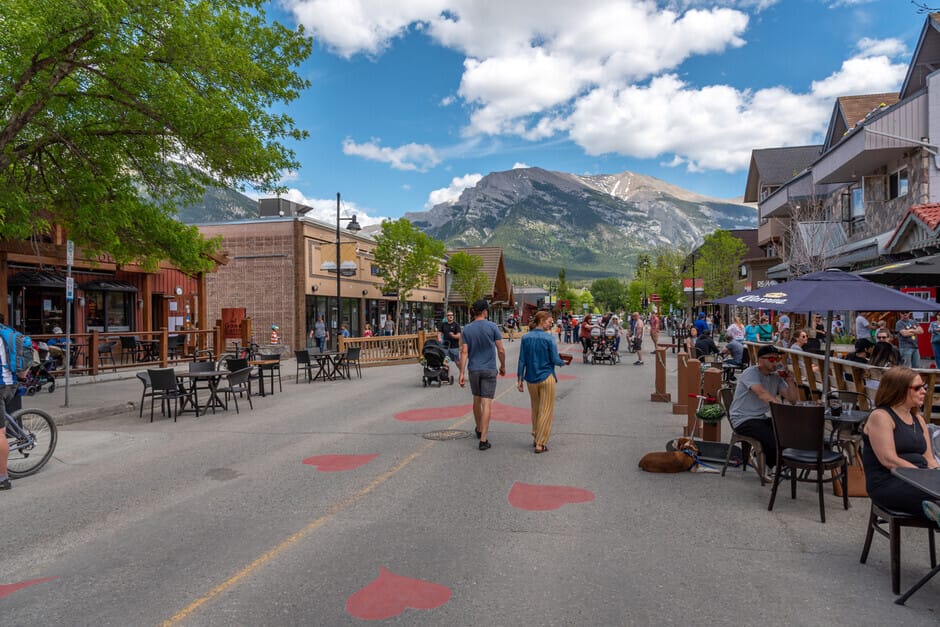
Canmore town council has taken a first step toward changing how parking is handled downtown, advancing a proposal that would give developers more flexibility.
The discussion took place at council’s January 6 meeting and centred on how parking is handled for new development downtown. When someone wants to build housing or commercial space, they are normally required to include a set number of parking stalls based on what they are building.
In some cases, the town allows developers to pay the municipality instead of building every required parking stall directly on their own property. Those payments can then be used toward shared parking or transportation solutions elsewhere.
Council is now considering expanding when that option, known as parking cash-in-lieu, can be used.
The proposed change is part of implementing Connect Downtown, the long-term plan adopted last summer to guide gradual change in the town centre over the next 25 years.
Town staff argued that downtown parking rules, as they exist today, can prevent redevelopment entirely.
“In many cases downtown, parking stall requirements are the insurmountable barrier,” Joshua Cairns, a senior planner with the Town of Canmore, told council.
Why parking has become a sticking point
Cairns explained that many downtown lots are small or physically constrained. Others sit near rivers or have limited access points. In those situations, meeting on-site parking requirements can be difficult or impossible, even for modest projects.
The proposed update would expand where the parking cash-in-lieu option can be used, allowing more residential and mixed-use developments within the downtown area to qualify.
“This is really important in walkable communities like downtown,” Cairns said, where parking requirements can outweigh what a site can realistically support.
Instead of forcing parking underground or onto already constrained lots, the policy would allow developers to contribute money toward shared parking or transportation solutions elsewhere.
Staff said those funds could help support future infrastructure such as off-site parking facilities, including intercept parking, which refers to parking lots located on the edge of town where drivers leave their cars and continue downtown on foot, bike, or transit.
Not a final decision on parking numbers or costs
No specific dollar amounts or parking space reductions were proposed or approved at the January 6 meeting.
Staff emphasized that the discussion was about policy direction, not final figures.
“This is an interim update,” Cairns told council, noting that a broader transportation planning process currently underway could result in additional changes to parking rules in the future.
Why it matters for housing and businesses
Staff framed parking flexibility as a key piece of unlocking downtown projects that might otherwise stall.
When parking requirements dominate what can be built, Cairns said, even projects aligned with community goals such as housing, walkability, or environmental protection may never move forward.
Allowing cash-in-lieu contributions, staff argued, does not eliminate parking. Instead, it shifts how and where it is provided, while generating funds for shared solutions rather than forcing every site to solve the problem on its own.
Council discussion remained supportive at first reading, with no councillors speaking against the proposal.
Mayor Sean Krausert described the moment as a shift from planning concepts to implementation.
“This is where it goes from concept to actual implementation guides for guiding the building,” Krausert said, calling it “exciting to see the plans go to that next step.”
What this does and does not do
Staff repeatedly stressed that the policy change would not force development or automatically reduce parking overnight.
It would create another option for qualifying projects in specific areas, subject to review and approval.
The intent, Cairns said, is to better match parking rules with how downtown actually functions, rather than applying one-size-fits-all requirements.
What happens next
Council voted unanimously to give the parking policy update first reading and move it forward as part of the broader Connect Downtown implementation package.
A public hearing is scheduled for February 3, 2026, where residents will have the opportunity to provide feedback on the proposed changes, including the parking policy update.
Council will consider that input before deciding whether to approve the changes as written or revise them.
Reply