- Bow Valley Insider
- Posts
- Canmore Property Values Rise Nearly 14%, Driven Largely by Market Gains
Canmore Property Values Rise Nearly 14%, Driven Largely by Market Gains
Most of the increase reflects rising home prices rather than new development, reshaping how taxes are shared across the town

Bow Valley Insider
March 22, 2026
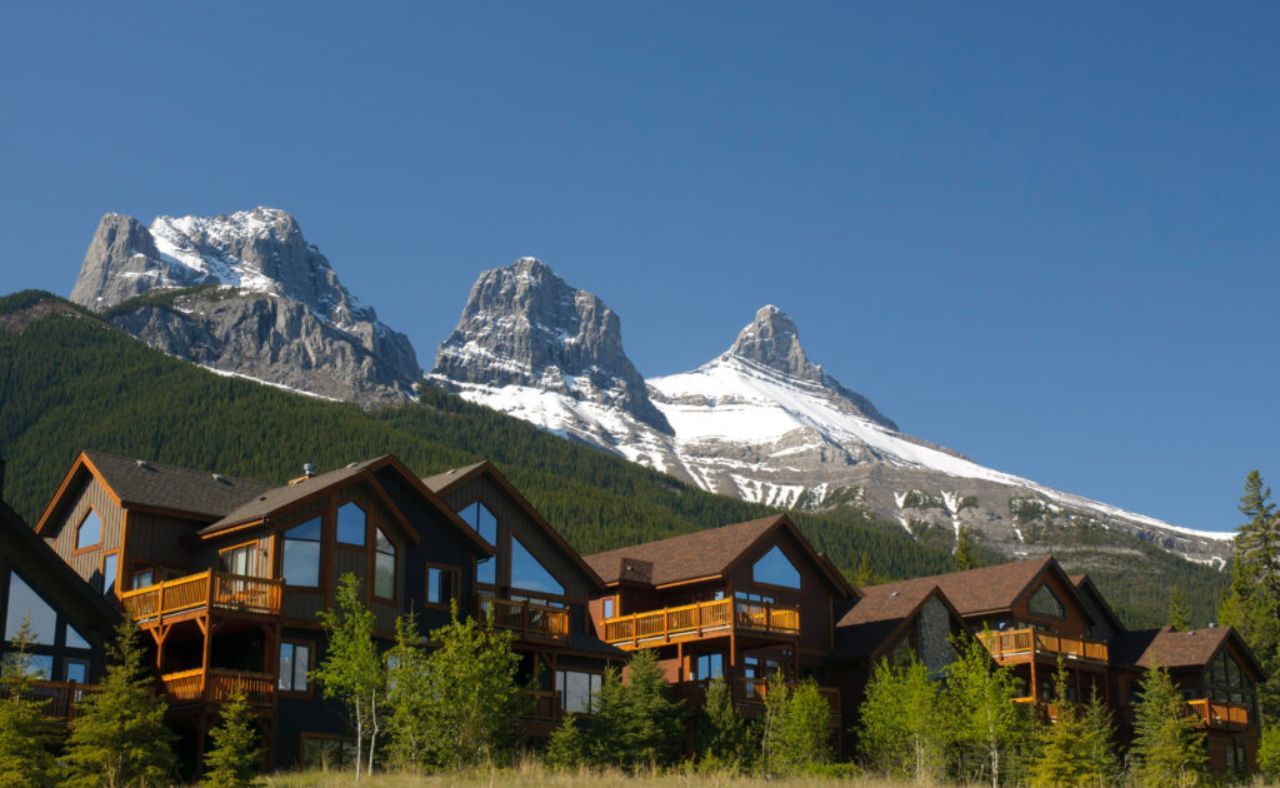
Canmore’s total property value rose sharply heading into the 2026 tax year, increasing by nearly 14%, with the town’s taxable assessment base growing from about $13 billion to more than $14.5 billion, according to a presentation to council on March 16, 2026.
Of the roughly $1.8 billion increase in assessed value, about $1.5 billion came from rising market prices, while only about $310 million came from new construction or improvements.
In simple terms, most of the increase is tied to how much properties are worth on the open market, not how many new properties were built.
Assessments are based on an estimate of what a property could sell for using data from comparable sales as of July 1, 2025.
Because of that, Deanne Bannerman, the Town of Canmore’s appointed assessor with Legassy Municipal Services, said assessments often feel out of sync with current listings.
“They represent the market from about eight and a half months ago,” she said.
Residential values rise fastest, especially detached homes
Residential properties saw some of the largest increases.
Overall, residential values rose by about 12.4%, with detached homes increasing by roughly 15.4% and condominiums by about 7.3%.
Bannerman said those increases are not uniform across the town, with different neighbourhoods and property types moving at different rates.
“Not every property in town is going to change by the same percentage,” she said.
Tourism properties see sharp rebound
One of the largest jumps came from Canmore’s tourism sector.
Hotels and other traditional visitor accommodation properties increased by an average of 27% this year, following a nearly 30% increase the year before.
The rise reflects a recovery from pandemic-era declines, when many properties were temporarily valued based primarily on their land rather than their income potential.
As tourism revenues returned, those properties shifted back to being valued based on their income again.
Redevelopment pressure reshaping property values
A key driver behind rising assessments is redevelopment pressure, particularly in older neighbourhoods.
Under provincial rules, properties must be assessed based on their “highest and best use.” This means the most valuable legal use of the land.
In Canmore, that often means older homes are valued primarily for what could be built there, rather than what currently exists.
“Purchasers are paying prices that reflect the redevelopment potential, not the contributory value of the existing improvements,” Bannerman said.
That shift is especially visible in areas near downtown, where older homes are increasingly being replaced with denser housing.
Zoning changes can significantly increase value
During the meeting, Councillor Wade Graham asked how zoning changes affect property assessments, particularly when a property is rezoned to allow more density.
Bannerman said the impact can be substantial.
“If we're talking about the difference between an R1 and R4… it's significantly higher value,” she said.
In plain terms, R1 zoning typically allows for single-family homes, while R4 allows for multi-unit buildings such as fourplexes.
“When it goes from an R1 to an R4… [the value is] more than doubling,” she said.
That increase reflects what developers are willing to pay for land that can support more units.
What rising assessments mean for taxpayers
Despite the sharp increase in property values, Bannerman stressed that higher assessments do not automatically mean higher overall taxes.
Instead, they determine how the tax burden is divided.
“Changes in the assessment due to market movement do not generate new revenue… they just redistribute taxation,” she said.
For example, a property that increased more than the town average may see a larger share of taxes, while one that increased less may see a smaller share.
Appeals process now open
Homeowners may want to review their assessment if the value seems out of line with similar properties, if details about the property are incorrect, or if the increase is significantly higher than the town average.
Bannerman encouraged property owners to start by contacting the assessor directly before filing a formal complaint.
“This period promotes transparency and allows for informal discussions with property owners… where we can make corrections,” she said, noting that formal complaints should be a next step if concerns are not resolved.
Complaints can address issues such as property value or classification, but cannot challenge the town’s tax rates or overall budget.
A growing tax base in a small town
The scale of Canmore’s property value continues to stand out.
The town’s total taxable assessment now sits at roughly $14.5 billion, placing it on par with much larger municipalities in Alberta such as St. Albert, Okotoks, and Lethbridge.
Mayor Sean Krausert said the comparison highlights just how high property values have climbed in the Bow Valley.
“That’s the value of all the property in our town… we’re actually on par with communities that are much larger than us,” he said. “That just goes to show the high cost of property in this valley.”
For Bannerman, the figures reflect both market demand and the town’s limited land supply.
For residents, the takeaway is more immediate. Property values are rising quickly, but what matters most is how those increases compare to others across the community.
Reply