- Bow Valley Insider
- Posts
- Canmore Prepares Livability Tax Compromise Following Talks With Province
Canmore Prepares Livability Tax Compromise Following Talks With Province
Proposed amendment would limit higher tax rate to non-Albertan second-home owners

Bow Valley Insider
January 04, 2026
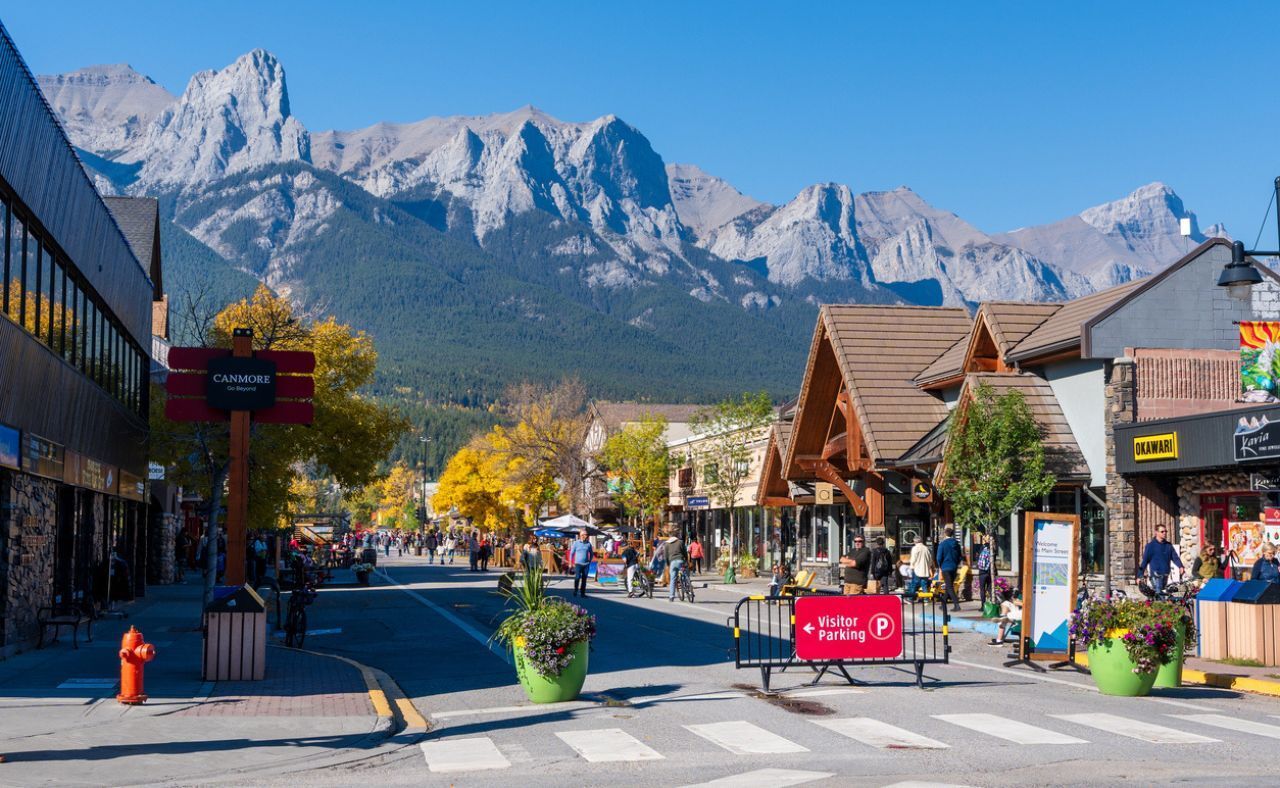
Canmore Mayor Sean Krausert is bringing forward a proposed amendment to the town’s controversial Livability Tax Program that would exempt Alberta residents from the higher tax rate applied to non-primary residences, according to a council agenda item set for discussion.
The proposed change, which will be debated at Canmore’s Jan. 6 council meeting, follows months of discussions between the Town of Canmore and the provincial government and reflects what Krausert has described as a compromise aimed at preserving funding for building non-market housing (homes with prices or rents kept below market rates) while aligning with new provincial policy direction.
“This is not something we entered into lightly,” Krausert said during a recent episode of the Canmorite podcast. “It was about, we have to do this, and we know that this will be hard for some, but it is in the best interest of the community as a whole.”
What council will vote on Tuesday
Council is not being asked to approve the final tax change this week. Instead, councillors will vote on whether to direct administration to draft amendments to the Livability Tax Program that would exempt Alberta residents from the non-primary resident tax rate and return with a finalized version before 2026 tax rates are set.
If council approves the direction, administration would prepare the revised program, taking into account both provincial legislation and pending court decisions, before bringing it back to council for final approval.
Why the Livability Tax exists
Canmore introduced the Livability Tax Program in 2024 as a way to generate revenue for building non-market housing by applying an additional 0.4% of a home’s assessed value to properties not used as a primary residence, which amounts to about $4,000 on top of the standard property tax for a $1 million home.
Town documents describe the measure as one of the few tools available under the Municipal Government Act to address what council has repeatedly called an existential housing crisis. Median assessed values for single-detached homes in Canmore now exceed $1.48 million, while the median condominium assessment is more than $814,000, placing home ownership out of reach for many workers.
A Bow Valley Regional Housing study estimates Canmore will need roughly 2,000 additional homes by 2031 and another 1,400 by 2041, most of which are expected to be non-market units provided by the municipality and its partners.
“If we put this cost on the taxpayers across the board, that’s over a 30% increase in your tax annually,” Krausert said on the podcast. “That works right against the affordability objectives we’re trying to achieve.”
Legal challenges and court rulings
The Livability Tax Program has faced sustained opposition from some second-home owners, including a court challenge.
In April 2025, the Alberta Court of King’s Bench ruled that Canmore was allowed to tax homes differently depending on whether they were a primary residence, but required the town to delay implementation until the 2026 tax year, giving property owners time to adjust how their homes were used.
“It’s been challenged in court and we won,” Krausert said. “But it also delayed implementation.”
That decision has since been appealed, with the Alberta Court of Appeal hearing arguments in December 2025. A ruling is still pending.
Provincial pressure and the mandate letter
While the courts affirmed Canmore’s legal authority, the political landscape shifted in fall 2025 when Premier Danielle Smith issued a mandate letter to Municipal Affairs Minister Dan Williams directing him to “develop and implement a strategy to protect Albertans from specialized municipal taxes directed at homes that are not a primary residence”
Krausert said the mandate letter did not end discussions between the town and the province but added a new constraint.
“Right from the start, [Minister Williams] said, ‘We have to do something,’” Krausert said on the podcast. “We don’t know exactly what the response will be, but it’s not sitting well with the government’s outlook.”
According to the council agenda, the proposed amendment would limit the higher Livability Tax rate to non-Albertan second-home owners, based on what the town describes as a reasonable assumption that Alberta owners use their properties more frequently and participate more in the community.
Acknowledging a funding gap
Both Krausert and town administration acknowledge that exempting Alberta residents would reduce revenue flowing into the Livability Reserve, which is earmarked for non-market housing.
“The gap has been acknowledged,” Krausert said. “We don’t know yet what fills it, but we will continue to talk to find ways to fill that gap.”
The agenda notes that no money will be spent from the Livability Reserve until funding is actually received and that no immediate budget adjustments are required.
Collaboration over confrontation
The town’s report makes clear that the province could impose changes unilaterally through amendments to the Municipal Government Act, but recommends continued collaboration instead.
“We’ve been working very well together,” Krausert said. “This is about meeting needs, not getting positional.”
Councillor Jeff Mah, who hosts the Canmorite podcast, described the amendment as part of a broader evolution rather than a retreat.
“We had limited tools, and we used the tool we had,” Mah said. “If the tool evolves but we still have what we need to fix our community, that’s what matters.”
What happens next
Council will debate the proposed direction at its Jan. 6 meeting. If approved, administration will draft the amended Livability Tax Program and bring it back to council ahead of finalizing 2026 tax rates.
Further discussions with the province are expected as both sides look for additional revenue solutions to support Canmore’s housing needs.
“This is one piece,” Krausert said. “There may need to be multiple tools. But the goal hasn’t changed.”
Reply