- Bow Valley Insider
- Posts
- How Canmore Is Growing Canada’s Next Generation of Olympic Biathletes
How Canmore Is Growing Canada’s Next Generation of Olympic Biathletes
Inside the high-performance program guiding young athletes from the Bow Valley to the World Cup circuit

Bow Valley Insider
January 29, 2026

Photo credit Bill Bain
On paper, biathlon is simple to explain: ski fast, then slow your heart down enough to hit five small targets. In reality, it’s one of the most demanding winter sports in the world, and in Canmore, it’s quietly producing some of Canada’s most promising future Olympians.
The Biathlon Alberta Training Centre (BATC), based at the Canmore Nordic Centre, has grown into what Biathlon Alberta describes as a leading high-performance training centre for biathlon in Canada. The program trains athletes aged 18 to 23 as they transition from youth and junior ranks toward senior national team competition.
The program was created in April 2011 to fill an important gap in Canada’s development system: the years between high school graduation and peak performance.
“Biathlon is unusual in how long it takes an athlete to reach their athletic potential,” said Malcolm McCulloch, a BATC athlete. “Most athletes don’t reach their peak endurance capacity until their late 20s.”
That timeline shapes how the BATC approaches the sport. Instead of pushing athletes to race constantly, McCulloch says the program focuses on keeping them healthy, motivated and in the sport long enough to reach their best years.
“The focus is keeping athletes in the sport for as long as possible to give as many athletes as possible the chance to reach their athletic potential,” McCulloch said.
Why Canmore draws top biathletes
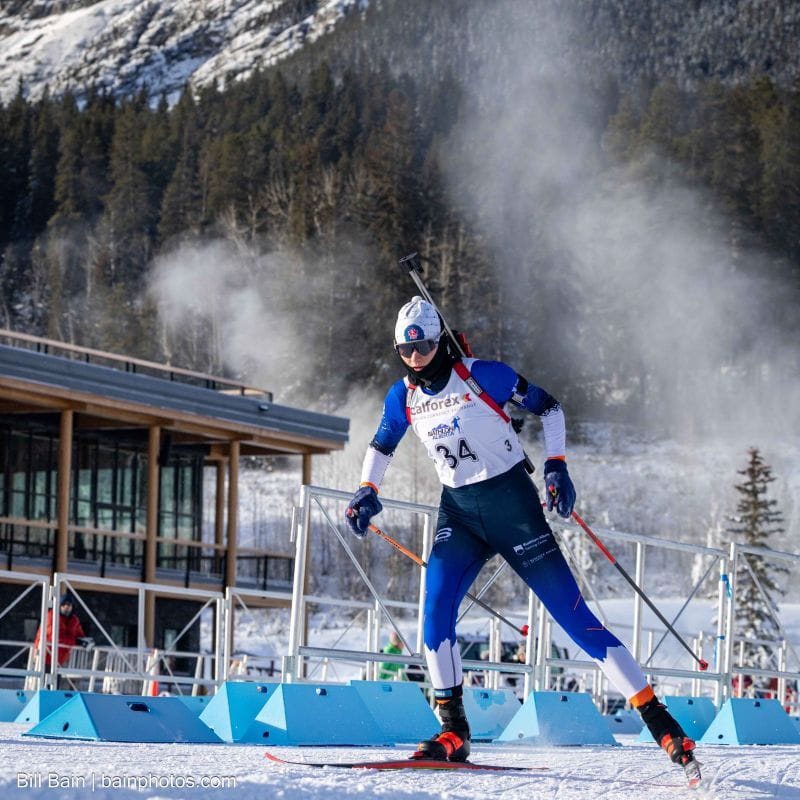
Photo credit Bill Bain
The advantage of training in Canmore starts with the venue. Alberta Parks describes the Canmore Nordic Centre’s biathlon range as a year-round facility used by both elite and recreational athletes.
That same venue also welcomes skiers, runners and families looking for a day outdoors. For BATC athletes, it means they train in a place that sits at the centre of Bow Valley life.
McCulloch called Canmore “the best facility in Canada” for the sport, pointing to the Nordic Centre’s year-round training options and Olympic legacy.
But the venue is only part of the picture. The BATC is built around a simple idea: give young athletes the training, competition experience and support they need in the years between high school and the senior national team.
From startup results to international success
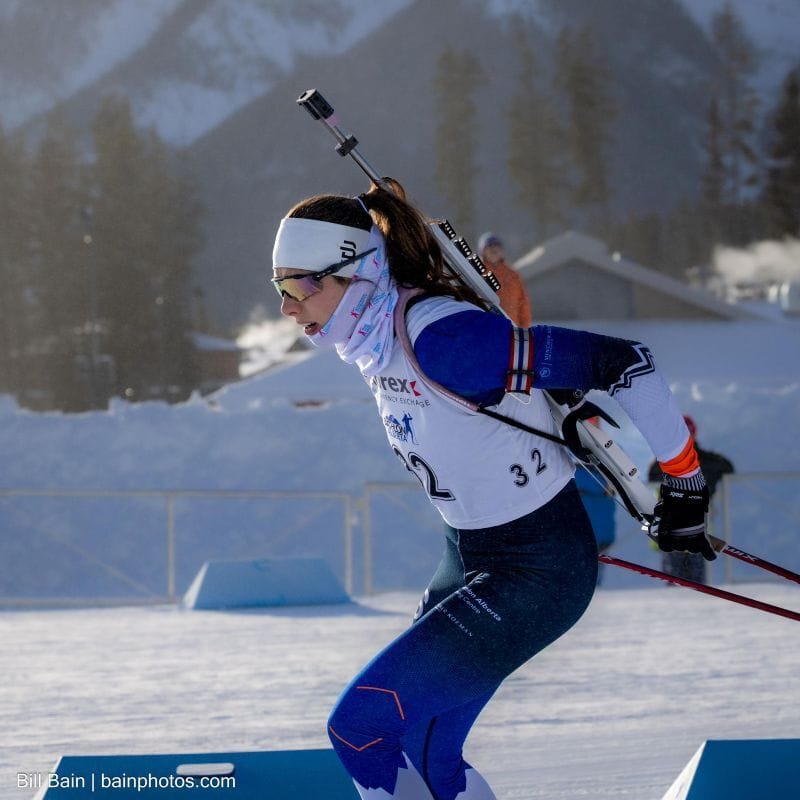
Photo credit Bill Bain
Over the past four years, BATC has worked to create what McCulloch calls a culture built on “professionalism, dedication and respect,” and he said the results are starting to follow.
“The founding goal of the BATC was to earn a podium finish and bring Canada up to the level of the historically dominant European nations,” he said.
That podium goal still stands. McCulloch said the team has been closing in, including a major milestone at the 2025 IBU Youth and Junior World Championships in Östersund, Sweden, where Canada finished fourth in the youth mixed relay.
This season, BATC athletes have posted standout results on the Junior IBU Cup circuit, including Luke Hulshof’s fifth-place finish. McCulloch said those performances show how quickly the program has progressed.
“This generation of athletes is proving it is possible for Canada to compete and contend on the world stage,” he said. “And the best is still to come as they reach their peak performance years.”
McCulloch said the program has about 20 athletes this season, with turnover each year as some advance to senior ranks and others move on outside the sport. He said almost all have already represented Canada internationally this winter.
A season built in trimesters
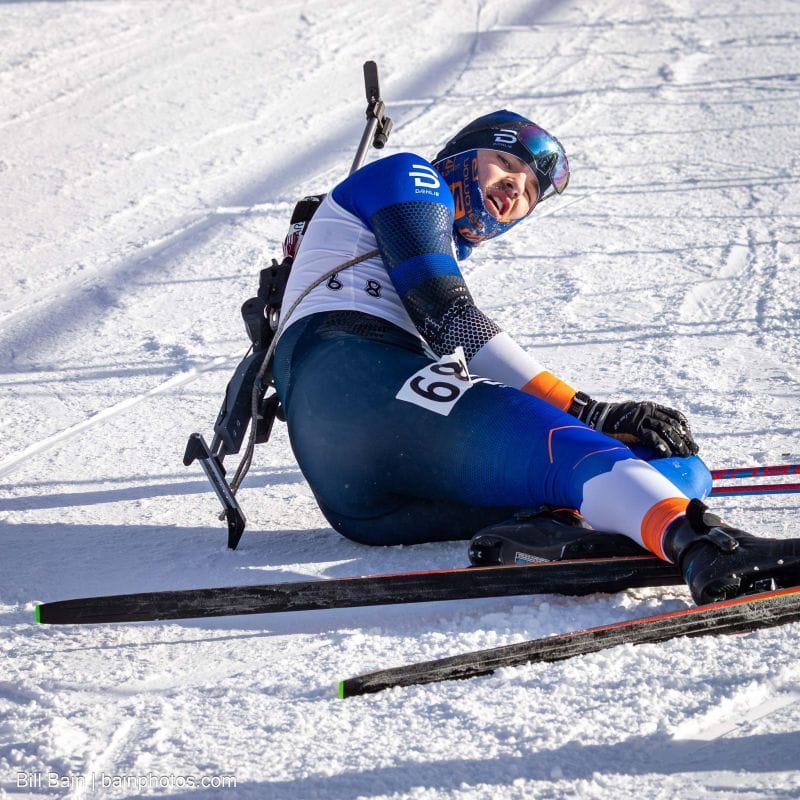
Photo credit Bill Bain
For BATC athletes, the year is divided into two main phases: training season and competition season.
Training runs from May through September, with summer camps designed to expose athletes to different environments and training variables, including altitude, venue variety, technical skill development and race preparation.
Competition season runs from October through April and is split into three trimesters. McCulloch said results from one trimester help determine which athletes compete on which international circuit next.
There are three major levels in biathlon’s international structure: the World Cup, the IBU Cup, and the IBU Junior Cup.
“The World Cup is primarily senior national team members,” McCulloch said. “The IBU Cup is a mix of senior and developing athletes, and the Junior IBU Cup focuses on emerging talent.”
More than a team: an athlete-led organization
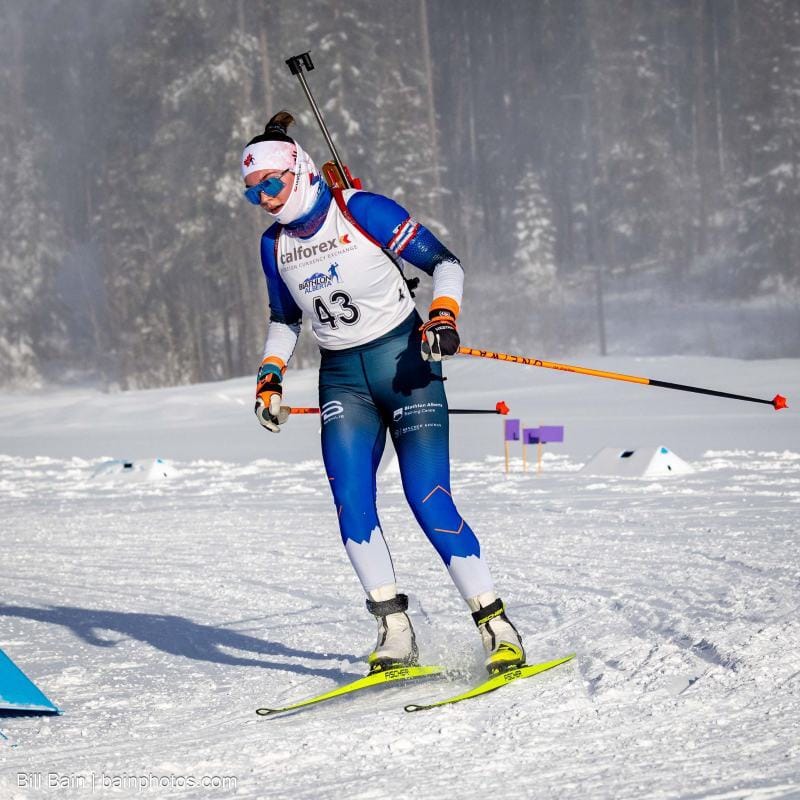
Photo credit Bill Bain
What sets BATC apart from many development programs is what happens when athletes step off the snow.
Because biathlon is a smaller sport in Canada compared to other winter sports, McCulloch said it doesn’t always come with the same “resources and scaffold” that allow athletes to focus exclusively on training and racing.
Despite being known for individual results, he describes biathlon as “very much a team sport,” requiring athletes to work together, both on and off the course, to keep the program moving.
That reality has shaped BATC’s athlete-led structure.
McCulloch said athletes take on roles within the organization through committees that help manage key functions of the program. Those committees include sponsorship and fundraising, social media and marketing, equipment and apparel management, and community development and communications.
“These duties are in addition to the part-time jobs that athletes work to finance their sport journeys, their training schedules, and in some cases their university course loads,” said McCulloch.
For him, the principle is simple. Athletes don’t just join the team to race, they’re expected to improve the program itself.
“One of the key tenets of being on the team is leaving the team in a better position than when they joined,” he said.
McCulloch said Biathlon Alberta believes these roles also build transferable skills that last beyond sport.
“Learning how to apply skills that athletes use in training and competitions, resiliency, accountability, dedication, respect, in other settings is foundational to developing well-rounded human beings,” he said.
Committee work can also expand athletes’ professional networks, which McCulloch said becomes increasingly important when athletes transition out of competitive sport and into their next chapter.
What’s next this season
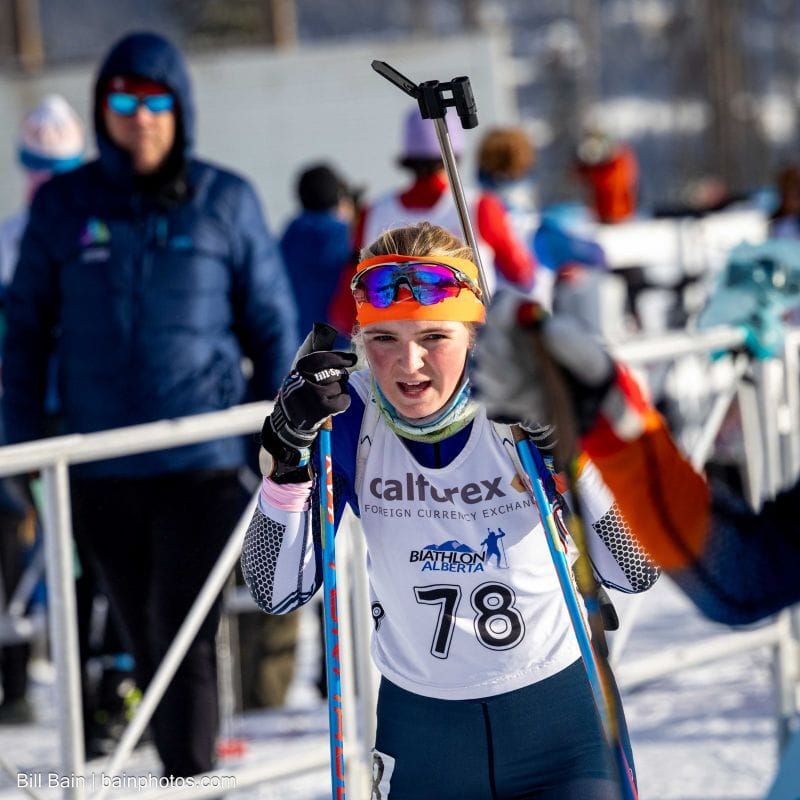
Photo credit Bill Bain
The next stretch of BATC’s season is packed, with athletes spread across international tours and major championships.
McCulloch said 13 athletes are set to compete at the World Junior and Youth Championships, while four athletes will race on the IBU Cup circuit during the second trimester, which runs through late February and early March.
Moira Green, one of Canada’s rising biathlon athletes, is scheduled to compete on the World Cup circuit later this winter, McCulloch said, before the team heads into a European tour in Norway and closes the season at Canadian National Championships in Canmore at the end of March.
McCulloch said Green is also Canada’s female Olympic alternate for the 2026 Winter Games, and he believes BATC’s wider success this year points to longer-term Olympic potential.
“The success of the BATC this year has proven that many of these athletes are on track to represent Canada at the 2030 Olympic Winter Games,” he said.
Building visibility and bringing the community in
While BATC’s priority is high-performance development, McCulloch said the program also wants to make biathlon more visible in Canada, and that includes strengthening community engagement through events and partnerships.
Try-biathlon programming at the Canmore Nordic Centre offers one direct entry point for locals and visitors, introducing participants to basic technique and range training at the Olympic legacy venue.
“Our team is very grateful for the opportunity to live and recreate in Canmore,” McCulloch said. “And we are eager to work, live, and be a part of this community.”
Competitively, BATC is still chasing the breakthrough it believes would mark a defining moment for Canadian biathlon: an international podium finish for both a male and female athlete, a goal that McCulloch said is “14 years in the making.”
“The founding competitive goal for the team still remains and has never been closer to being achieved,” McCulloch said. “We are confident this is our season.”

Reply