- Bow Valley Insider
- Posts
- Can You Idle Your Car in Cold Weather in Canmore or Banff? We Checked the Bylaws
Can You Idle Your Car in Cold Weather in Canmore or Banff? We Checked the Bylaws
A community Facebook post claimed winter changes everything. The bylaws say otherwise.

Bow Valley Insider
December 22, 2025
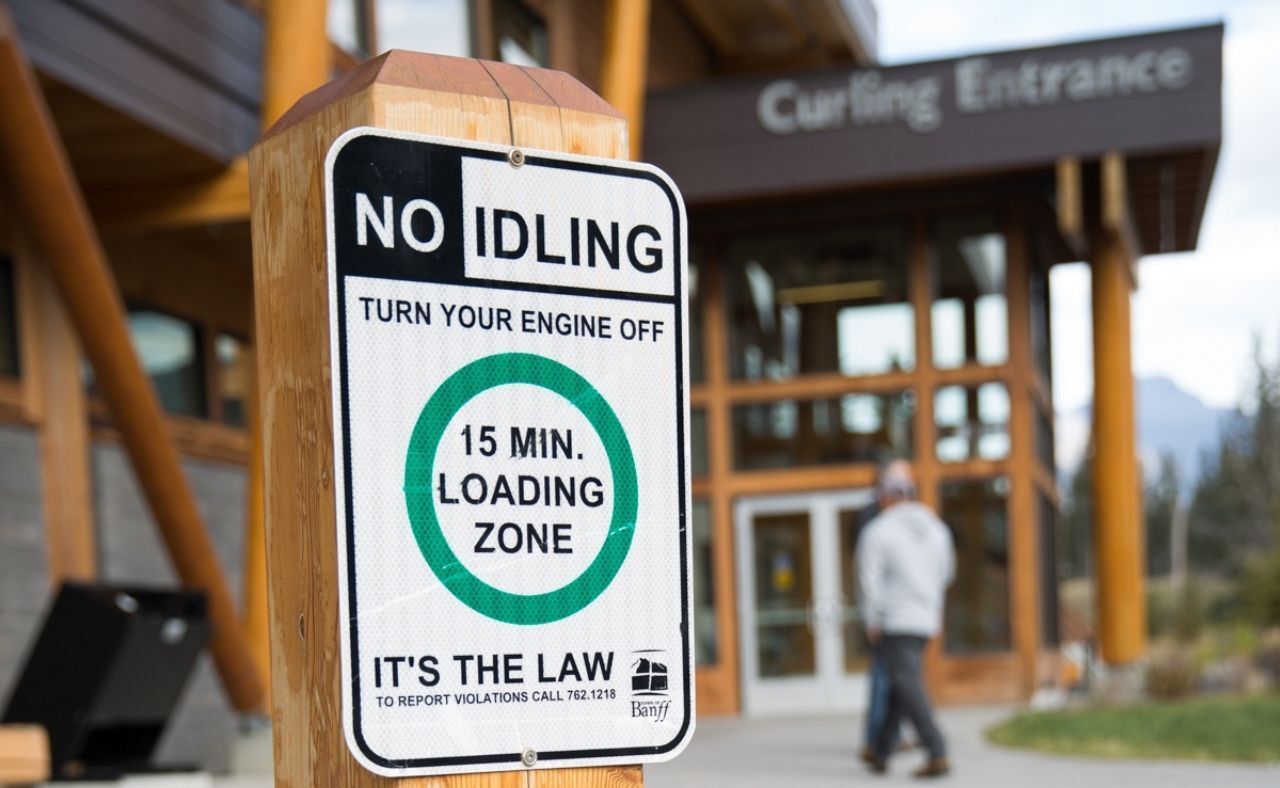
A Facebook post this week asked a question that pops up every winter: “Is it legal to keep your car running in a parking lot for over 10 minutes?” More than 50 comments poured in. Some said it is “perfectly fine.” Others insisted it is illegal. One person argued that Canmore is “idle free.” Someone else said extreme cold creates an exemption. And at least one commenter offered a full joke legal code involving arrests and incarceration at 10 minutes and 1 second.
So we dug into the actual bylaws in Canmore and Banff to settle the question: Can you idle your car in cold weather in the Bow Valley?
Short answer for both towns
No, there is no cold weather exemption in either Canmore or Banff.
The rules apply the same at minus five, minus fifteen, or minus thirty.
Here is what the bylaws really say.
Canmore’s Idling Rule
Canmore’s Traffic and Road Use Bylaw limits idling for all vehicles. If your vehicle is parked or standing still with the engine running for more than five minutes, you are violating the bylaw. The rule applies on public roads and in public places. There is no reference to winter conditions or temperature-based exceptions.
Enforcement: The bylaw includes a set fine that starts at $45 if paid within seven days and increases afterward. Peace officers can issue violation tags or tickets. Enforcement is complaint-based and discretionary, but the rule exists and can be applied.
Exemptions that do exist: Emergency vehicles, tow trucks, municipal and utility vehicles and trucks with refrigeration units. None of these are tied to weather.
Simple version: In Canmore, if your vehicle is parked and idling for more than five minutes, it is illegal, even when it is cold.
Banff’s Idling Rule
Banff regulates idling through the Road, Sidewalk, and Trail Use Bylaw. It does not set a time limit. Instead, it flatly prohibits commercial motor vehicles from idling at a standstill anywhere in town. That includes delivery trucks, buses, and commercial fleets.
There is no mention of private vehicles in this section, so the idling rule does not apply the same way it does in Canmore. Banff focuses on the types of vehicles that create the highest emissions and noise.
Important to note: Banff does not regulate idling for private vehicles. There is no time limit and no idling restriction for passenger cars under the current bylaw.
This is where a lot of confusion comes from. Banff often promotes “idle free” messaging around schools, rec centres and busy areas, but those are policy reminders, not enforceable law. Only the commercial-vehicle prohibition is ticketable.
Enforcement: Banff uses a set fine of $80 or $55 if paid early. Multiple offences can be issued if a commercial vehicle continues to idle after the first tag.
Exemptions: Similar to Canmore’s list. Emergency and utility vehicles are allowed to idle when necessary to perform their work.
Simple version: Banff prohibits idling for commercial vehicles. Private vehicles are not given a specific time limit, but there is no winter exemption for commercial fleets.
What about cold weather?
A common claim in the Facebook thread was that extreme cold overrides the rules, either for safety or common sense. One person wrote that “health and safety of occupants take priority,” while another said local bylaws “usually” allow longer idling during cold spells.
The bylaws in the Bow Valley do not support that. Neither Canmore nor Banff includes:
a temperature threshold
a winter allowance
a clause for warming up engines
an exception for babies, pets, or sleeping toddlers in car seats
This does not mean officers ticket everyone during a cold snap. It means the rules remain the same, and enforcement is discretionary.
What about your driveway?
Another debate in the thread centered on whether idling rules apply on private property. The Canmore bylaw applies to public roads and public places. It does not reference driveways. Some commenters argued you “can get a ticket” for idling on your own property. That is not supported by the bylaw language.
Parking lots are more complicated. A town-owned lot is enforceable. A privately owned lot may not be, depending on jurisdiction and signage. In practice, enforcement usually focuses on public roads.
So is warming up your car illegal?
Not necessarily. A cold start with one or two minutes of engine cycling does not violate Canmore’s limit. It is the extended periods of parking-and-idling that run past the five-minute mark.
Modern vehicles generally require far less warm-up time than older engines, which is why many municipalities have moved to idling limits.
Why do these rules exist?
Both towns reference idling limits in their environmental and sustainability policies. The goals include:
reducing unnecessary emissions
lowering fuel waste
cutting noise in residential and commercial areas
improving local air quality
Banff’s strategy targets commercial fleets because they produce the highest impact.
The takeaway
Canmore: Idling while parked for more than five minutes is illegal. No cold weather exemption.
Banff: Idling is prohibited for commercial vehicles. No cold weather exemption. Private vehicles are not given a formal time limit.
Whether residents follow it is another question. The Facebook thread made it clear that idling is as much a cultural debate as a legal one. Many people warm their vehicles for comfort. Others see idling as unnecessary or environmentally wasteful.
Reply