- Bow Valley Insider
- Posts
- Banff’s Transit System Is Now Alberta’s Third Largest. Can It Keep Up?
Banff’s Transit System Is Now Alberta’s Third Largest. Can It Keep Up?
A fast-growing system now faces rising demand, fixed capacity, and no new buses for 2026.

Bow Valley Insider
December 08, 2025
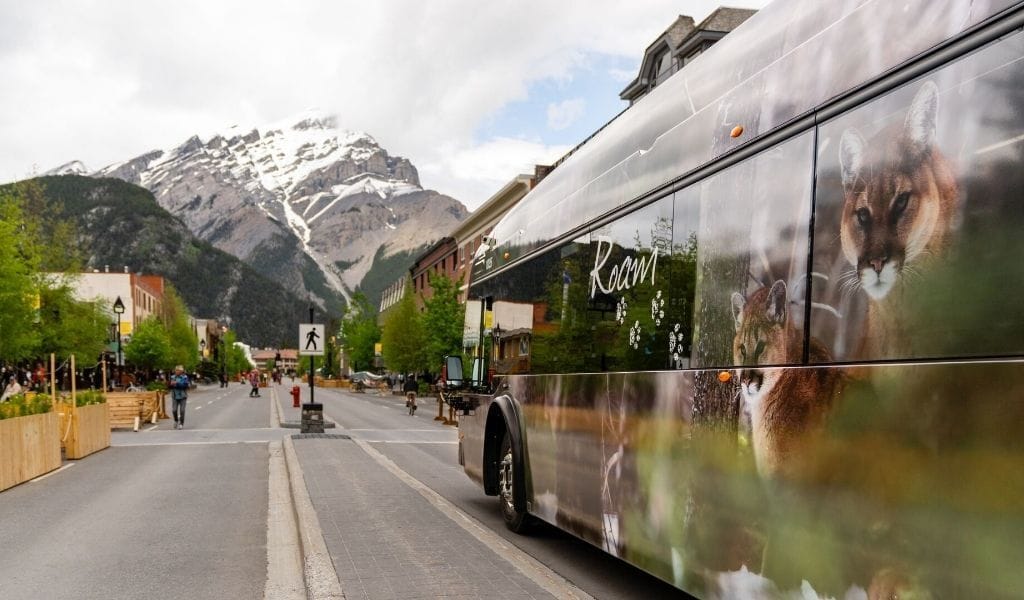
Roam Transit has grown so quickly that it is now Alberta’s third largest transit system behind only Calgary and Edmonton. That was one of the first points raised in Banff council’s annual transit service review on December 2, and it shaped much of the discussion that followed. Ridership is rising, visitor traffic is shifting, and the buses that keep Banff moving are absorbing more demand every year.
This year, Roam carried about 2.9 million riders throughout the Bow Valley, a jump of 12% from 2024. About 1.8 million of those trips occurred on Banff’s local routes. Route 3 between Canmore and Banff added another 361,000 riders.
The town estimates this is equivalent to removing about 3,400 cars from the road each day during the busiest months. Those numbers matter because they have reshaped how people move through Banff.
During the meeting, staff described how traffic delays at the Bow River bridge have changed. “An hour and a half was the maximum we ever saw,” one staff member said. “And now we are down to more like… six minutes or so.” The town emphasizes that transit has become an essential service for residents and one of the most effective tools for reducing congestion during high visitation.
Capacity strains are showing
Much of the council discussion focused on how close the system is to its practical limits. Banff’s local routes “are operating at capacity throughout the majority of the summer months.” Although the town has added buses in recent years to reduce overcrowding, ridership continues to rise, straining storage and maintenance.
Route 1 illustrates the pressure. It is Banff’s primary in-town route, running year round between downtown and Sulphur Mountain and serving major destinations including the Banff Gondola, Upper Hot Springs, and the hotel district along Banff Avenue.
In summer, Route 1 operates every 17 minutes. Once fall arrives, that service drops to 25 minutes. Staff told council this reduction creates noticeable gaps at a time when October visitation remains high. They propose keeping the summer frequency for about eight extra days each year through Thanksgiving.
Even with these adjustments, staff acknowledged that the system must navigate next summer without expanding its fleet.
No New Buses for 2026
The most sobering moment in the review came during a discussion about fleet procurement. Staff told council that timelines that once ran 12 to 18 months have stretched significantly, and the industry has not recovered. “We have not seen the procurement improve much at all… we are not expecting any new vehicles for next summer,” one staff member said.
COVID-era supply chain disruptions reshaped bus manufacturing, forcing companies to consolidate production and rely on build-to-order systems rather than producing inventory in advance. As staff explained, manufacturers have “had to modify how they build buses.” Canada now depends on two active builders, New Flyer and Nova Bus, both of which face long lead times.
The timing is difficult. Council repeatedly referenced the expected return of the Canada Strong Pass next summer, which is likely to increase visitor volumes again. With demand rising and no new buses arriving in 2026, Banff will enter its busiest months relying entirely on the existing fleet.
A winter route to fill long-standing gaps
One of the clearest changes on the table is a proposed winter route connecting the Banff Centre, the Fenlands recreation centre, the train station, and Banff Avenue from October to mid-May. The proposal uses buses that are underutilized in winter and responds to ridership patterns that have grown sharply in the off-season. According to the service review, winter ridership from October to April is up 163% since 2014 to 2015.
The financial plan shows support from institutional partners. Banff Centre has committed to contribute $38,000 in 2026, rising to $55,000 in 2027 and $57,000 in 2028 should the route be approved.
Visitor Pay Parking has become the funding engine
A recurring theme in this year’s review is where the money is coming from. Every transit service level request for 2026, including the winter route, the Route 1 extension, new signage, and transit stop improvements, is funded through the Visitor Pay Parking reserves.
Town documents show that visitors now cover much of the cost of running the system. Hotels purchase transit passes for their guests, campgrounds pay Roam to shuttle visitors to trailheads, and other partners fund specific movements. The shift has allowed Banff to increase service without drawing from local taxation.
Planning for the future
The long-term capital plan outlines a system that will eventually require a larger fleet, expanded storage, and more maintenance space. Staff told council that the aim is not to replace the current facility but to add another one so the system can operate more reliably and handle peak-season loads.
For now, the town is making smaller, targeted adjustments: extending high-frequency service into October, adding a winter route to fill service gaps, and using parking revenue to pay for most improvements coming in 2026.
The broader question is how long Banff can rely on incremental changes. Ridership is climbing faster than anticipated, visitor patterns are shifting, and the coming summer will arrive without new buses. The system works, but it is working hard, and council will soon need to decide how to match transit capacity to the town’s continued growth.
Reply