- Bow Valley Insider
- Posts
- Demand for Banff’s E-Bike Rebates Is 3-4 Times Higher Than Expected
Demand for Banff’s E-Bike Rebates Is 3-4 Times Higher Than Expected
More than 800 e-bikes have been purchased through the program since 2022, with $435,913 paid out in rebates, funded entirely by visitor pay parking revenue

Bow Valley Insider
March 15, 2026
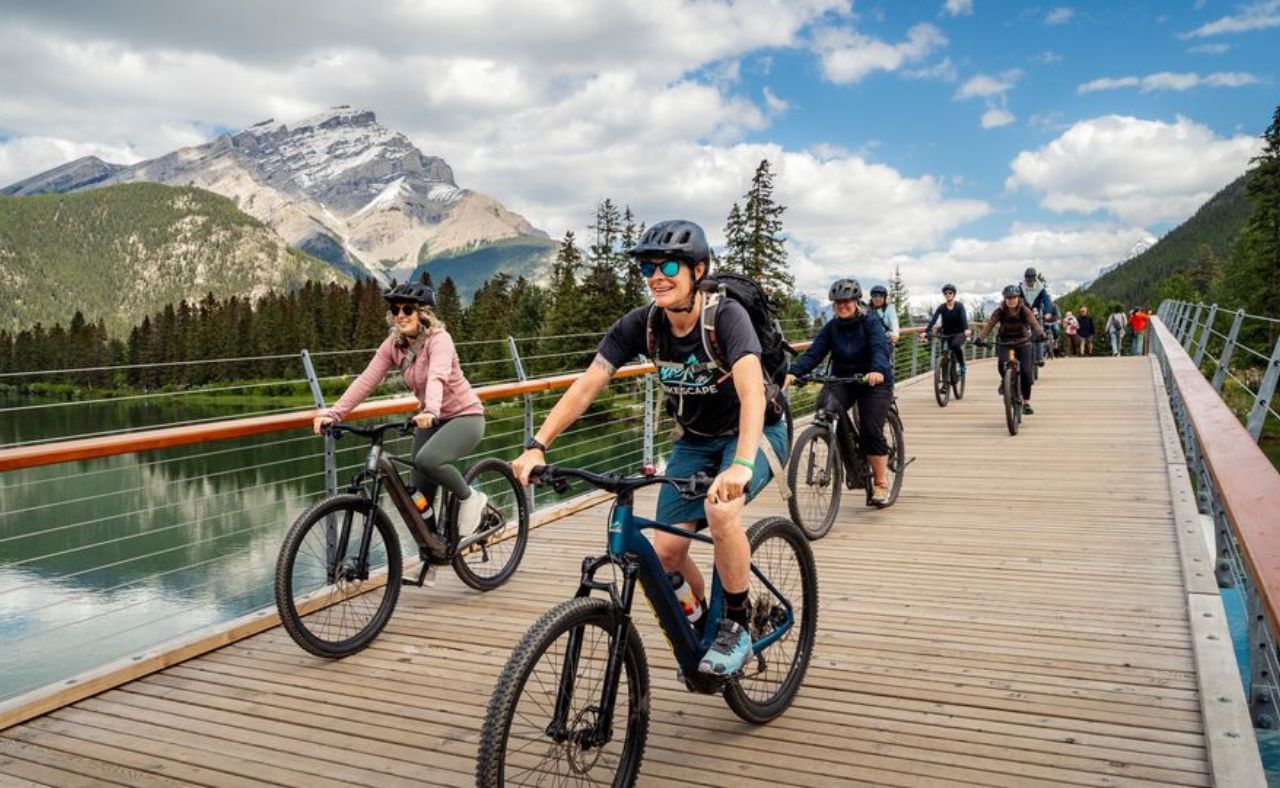
Banff’s e-bike rebate program has proven far more popular than the town anticipated when it launched four years ago, with participation running three to four times higher than early forecasts and hundreds of residents opting to swap car trips for electric pedal power.
A council briefing presented Jan. 27 shows the program has helped fund 826 e-bikes since 2022, with $435,913 paid out in rebates to residents.
Demand has continued to grow each year. In 2025 alone, 261 rebates were issued, representing more than $133,000 in funding.
Town officials say the popularity reflects both falling e-bike prices and the realities of getting around Banff.
“E-bikes are making life easier and more affordable for Banff residents,” said Jason Darrah, the town’s director of communications and marketing. “They help people avoid the challenges of parking and traffic, and they make it practical to get around town without relying on a vehicle.”
Funded by parking revenue
The program is funded entirely through Banff’s visitor pay parking system, which generates about $6.5 million annually. The rebate program currently has a budget of about $120,000 per year, a relatively small share of that revenue.
Residents who purchase an eligible e-bike can receive 50% of the purchase price up to $500, with higher rebates available for low-income households through the Banff Access Program.
The rebates are part of the town’s broader environmental incentive program, which also includes rebates for items like heat pumps, efficient appliances, rain barrels, and energy audits.
But the e-bike rebate has quickly become the most popular incentive the town offers.
Prices falling, demand rising
Town staff say changes in the global e-bike market have helped fuel the surge in demand.
Council documents show the average price of an e-bike has dropped significantly since 2022, lowering the barrier for residents considering switching from car trips to bike travel.
At the same time, Banff’s geography makes e-bikes particularly appealing.
For residents living in hillside neighbourhoods, electric assist makes it much easier to climb steep streets or carry groceries home, turning what might once have been a difficult ride into a practical daily commute.
The town also sees interest from workers who do not own a vehicle or who want to reduce fuel costs.
“We see demand from people who don’t have a car at all, or from others who prefer leaving their vehicle parked,” Darrah said.
Program changes and safety rules
The program has evolved since its launch.
In late 2024, council added a requirement that bikes qualify under recognized safety certifications, which test electrical systems and battery safety.
The town also expanded eligibility to include ex-rental e-bikes sold by Banff businesses, after residents expressed interest in buying used fleet bikes when rental shops refresh their equipment.
Those bikes tend to be well maintained and allow residents to purchase higher-quality e-bikes at a lower price.
Town exploring third-party administration
The program’s success has also created an unexpected challenge: administrative workload.
Processing hundreds of rebate applications each year has taken up significant staff time, prompting council to explore handing management of the program to a third-party organization.
Town staff have invited Community Cruisers, a Banff cycling nonprofit that already runs bike repair and cycling programs in town, to submit a proposal to administer the rebate program.
If approved, the organization would manage applications and reporting under a contract capped at about 10% of the program’s annual budget.
Town officials say the goal is to maintain the program while freeing up staff to focus on broader climate and transportation priorities.
Part of a bigger transportation strategy
Banff views the rebate as one piece of a larger effort to reduce reliance on cars in the national park community.
Revenue from visitor parking will also help fund an upcoming car-share program, expected to launch later this year.
With Banff’s population constantly turning over, roughly a third of residents change every five years, and town officials expect demand for alternatives like e-bikes to remain strong.
As Darrah puts it, the program’s success ultimately reflects a simple reality of life in Banff.
“For many people here, an e-bike just makes getting around easier.”
Reply