- Bow Valley Insider
- Posts
- Banff Approves Targeted Plan to Reduce Elk Deaths Along the Railway
Banff Approves Targeted Plan to Reduce Elk Deaths Along the Railway
Trains killed at least 163 elk in Banff between 2005 and 2017, according to Parks Canada records.

Bow Valley Insider
December 25, 2025
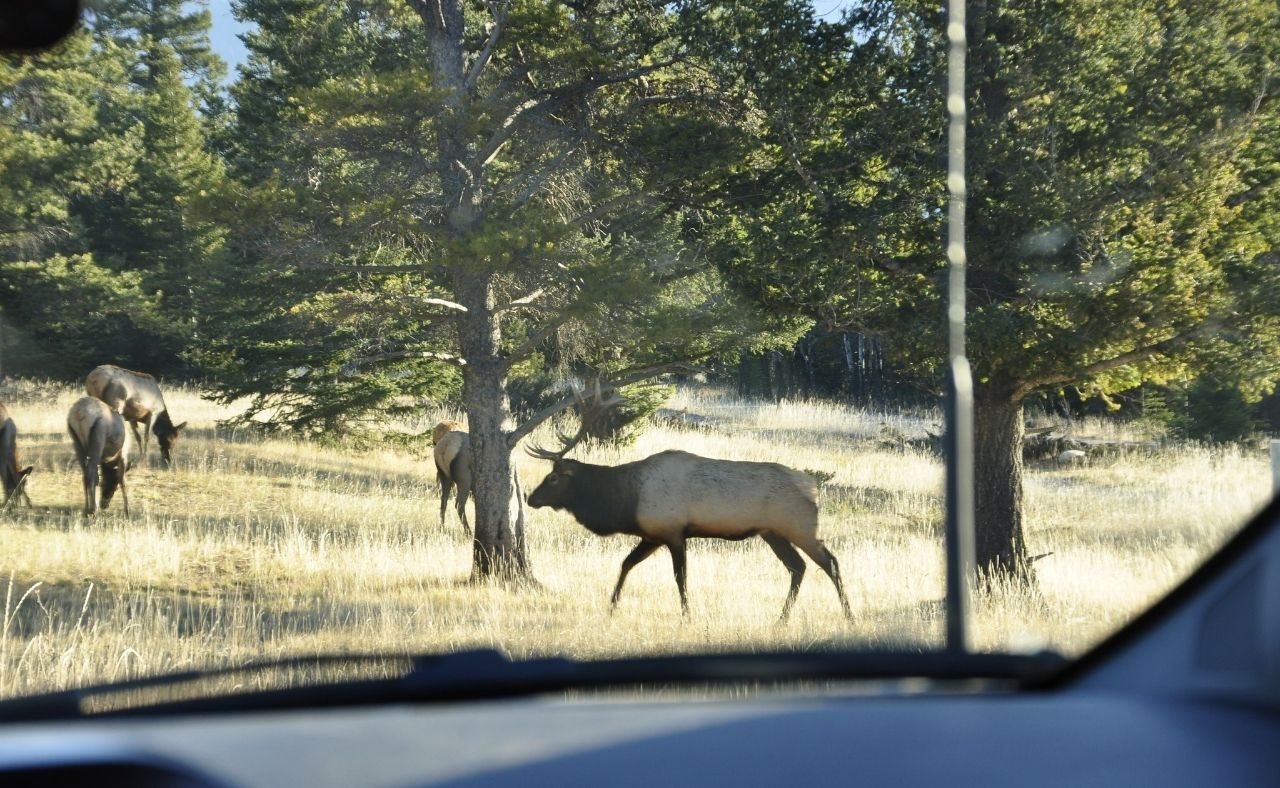
For decades, Banff has been held up as a global example of how infrastructure can coexist with wildlife. Along the Trans-Canada Highway, a network of wildlife crossings, fencing and mitigation measures has dramatically reduced animal deaths, the result of years of coordinated investment between Parks Canada and transportation agencies.
Along the railway that cuts through town, the picture has barely changed.
At a town council meeting on Dec. 9, Banff officials approved a modest but targeted proposal aimed at addressing that imbalance: thinning vegetation along a small stretch of railway-adjacent land to reduce elk–train collisions, a recurring source of wildlife mortality in the townsite.
The project, approved unanimously by council, would see vegetation thinned on roughly 0.93 acres of Town-owned land near the industrial compound, adjacent to the CPKC rail corridor. The work would be carried out in partnership with Parks Canada and funded through the Town’s environment reserve at a cost of $20,000 every five years, beginning in 2027.
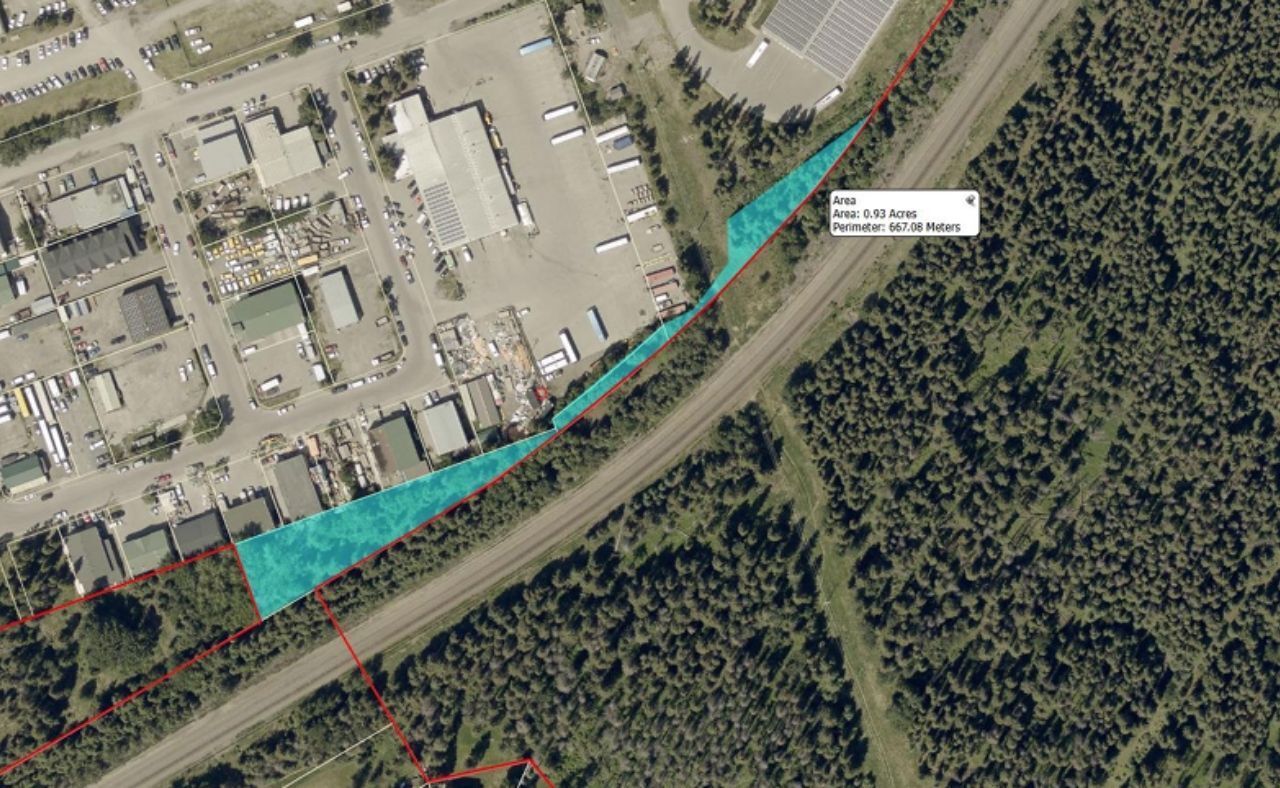
Aerial map showing the approximately 0.93-acre stretch of Town-owned land along the CPKC railway near Banff’s industrial compound where vegetation thinning is proposed to reduce elk–train collisions.
“This is a human–wildlife coexistence issue in town, which is elk mortality along the railway,” Darren Enns, Banff’s director of planning and development, told council as he introduced the funding request.
Enns framed the proposal by contrasting two transportation corridors with very different outcomes. Wildlife mortality along the Trans-Canada Highway, he said, has dropped to minimal levels after more than a decade of highway twinning and mitigation investments, including wildlife crossings that have become internationally recognized. Along the railway, by contrast, collisions have remained relatively constant.

Wildlife mortality along the Trans-Canada Highway (top) declined sharply following decades of mitigation measures, while deaths along the railway (bottom) remained relatively constant over the same period, highlighting the gap in rail-specific wildlife interventions.
“There have been very few capital projects to mitigate wildlife collisions on the railway,” Enns said. “They are not decreasing or increasing. They’ve just stayed fairly consistent over time.”
That disparity, Enns explained, prompted staff to ask what could realistically be done within Banff’s town boundary, particularly as conversations continue around future passenger rail service and its potential impacts on wildlife.
Working with Parks Canada field staff, the Town focused on vegetation management as one practical intervention. The concept, Enns said, is grounded in how elk respond to approaching trains.
“I like to call it a runaway lane for elk,” he told council. “As a train comes down on a herd of elk, elk need somewhere to go. They scan the tracks on either side, and if they see dense vegetation, they won’t enter that. They’ll instead run down the tracks.”
Thinning vegetation, he said, can create clearer escape routes off the rail corridor, reducing the likelihood that animals flee along the tracks rather than away from them. Parks Canada has already used similar approaches in and around the Banff townsite, Enns added.
Research in transportation ecology broadly supports that logic. Studies examining wildlife collisions along roads and rail corridors have found that dense vegetation near transportation routes can limit animals’ ability to detect oncoming vehicles and restrict lateral escape paths. By improving sightlines and movement options, vegetation management can reduce the likelihood of animals lingering in high-risk corridors. While much of that research has focused on roads rather than railways, wildlife managers apply the same principles to rail corridors, particularly where fencing or crossings are not feasible.
The proposed thinning would take place near an area identified by Parks Canada as a collision hotspot, where dense vegetation, rail infrastructure, and nearby development create a wildlife chokepoint. Town documents note that deferring the project would likely result in continued elk deaths.
Between 2005 and 2017, Parks Canada recorded 416 wildlife deaths caused by trains in Banff, including 163 elk, underscoring the persistent risk rail corridors pose to large mammals in the townsite.
The proposal is not without caveats.
During the council discussion, Counillor Ledwidge raised concerns that, he said, were echoed by wildlife experts he had spoken with. Much of the existing collision research, he noted, focuses on bears rather than elk. Clearing understory vegetation could also improve habitat and attract more elk to the area, potentially increasing risk rather than reducing it. In some cases, thinning has also altered ground conditions in ways that increase wildfire risk.
“This is not a standalone solution,” Ledwidge said, adding that effective mitigation often requires a suite of measures, such as fencing, alongside habitat management.
Enns did not dispute those points. He emphasized that the project is intentionally narrow in scope and would not move forward without Parks Canada’s involvement.
“This is a very small sliver in the broader context of railway wildlife mortality,” he said. “But it’s something we can do within our own town boundary.”

Trains pass through Banff along the CPKC railway, a corridor where wildlife deaths have persisted despite decades of mitigation along nearby highways.
The project would be structured as a partnership between the Town and Parks Canada, with Parks expected to provide matching resources and coordinate with CPKC, which owns and operates the rail line. While CPKC conducts its own vegetation clearing for operational purposes, Enns noted that those efforts are focused on train movement rather than wildlife outcomes and can sometimes have unintended consequences, such as creating berms that further impede animal movement.
Councillors ultimately viewed the proposal as consistent with Banff’s broader human–wildlife coexistence strategy and complementary to other initiatives, including FireSmart fuel reduction work near the industrial compound.
Mayor Corrie DiManno said the proposal builds on earlier steps taken through the Human-Wildlife Coexistence Roundtable, including changes to bylaws around fruit trees and waste management. “I see this as an extension of us keeping that plan alive,” she said.
At $20,000 every five years, the cost was described as nominal relative to the potential benefits and would be funded through the environment reserve rather than new taxes.
After discussion, council voted unanimously to recommend funding the vegetation thinning program as part of the Town’s 2026–2028 operating budget.
For Banff officials, the decision reflects a pragmatic approach to a problem that remains largely unresolved at a larger scale.
Decades of investment have shown that wildlife mortality can be dramatically reduced where mitigation is prioritized. Along the railway, that work has barely begun.
Reply