- Bow Valley Insider
- Posts
- Survey: Albertans Support Small Number of All-Season Resorts, But Not Unchecked Growth
Survey: Albertans Support Small Number of All-Season Resorts, But Not Unchecked Growth
A new provincial survey shows 73% support for resort development, rising above 80% when strict environmental safeguards are in place.

Bow Valley Insider
January 10, 2026
A new provincial survey suggests Albertans are broadly open to the idea of building a small number of all-season resort communities on Crown land, but only under strict conditions that put environmental protection, limited scale, and public oversight ahead of rapid growth.
The All-Season Resorts Survey, fielded by telephone in May 2025 with 803 respondents across the province, found strong support for tourism as a tool for economic diversification, with 90% of Albertans agreeing that expanding the tourism sector would help reduce reliance on oil and gas. 73% supported the development of a limited number of all-season resorts on Crown land, provided the projects are “responsible and sustainable.”
Support, however, was highly conditional. 84% said they would be more likely to support resort development if it were designed to have the least possible impact on the environment, and 83% said support increased if Crown land were kept under long-term lease rather than sold. Roughly three-quarters said their support depended on strict limits, including keeping total land disturbance below 0.1% and approving fewer than ten resorts province-wide.
Affordability also emerged as a defining theme. Interest in Alberta-based resort options was highest among those most priced out of British Columbia, including renters and lower-income households, with support reaching 80% among households earning under $40,000 annually and 75% among Albertans aged 18 to 34.
The survey paints a picture of cautious openness rather than enthusiasm for unchecked development, a “yes, but only if” approach rooted in stewardship of public land and a desire to keep the benefits of tourism accessible to average Albertans.
A Streamlined Approval Framework
That public mood now sits alongside a new legislative framework, the All-Season Resorts Act, which aims to streamline approvals for resort development and create a single-window regulator to oversee proposals. How well that framework can deliver the environmental safeguards, affordability, and public oversight Albertans say they want is now at the centre of a growing debate.
Vanessa Gomez, press secretary to the Minister of Tourism and Sport, said the province sees all-season resorts as part of a broader strategy to grow tourism while maintaining environmental protections.
“All resort proposals must follow Alberta’s environmental laws, including assessments for wildlife, water use, and land impact, as specified by the Public Lands Act, Water Act, and Environmental Protection and Enhancement Act,” Gomez said. “Each proposal is reviewed on a case-by-case basis, including consideration for cumulative impacts, ecological sensitivity, and land-use compatibility.”
Gomez said the government is taking what it describes as a phased approach, beginning with three established resort areas that already have decades of recreational use, rather than opening the door to widespread new development across the Rockies.
“Alberta is taking a thoughtful, phased approach that begins with three established resort areas that have over 50 years of recreational use,” she said. “This ensures stability and responsible growth while creating space for future opportunities.”
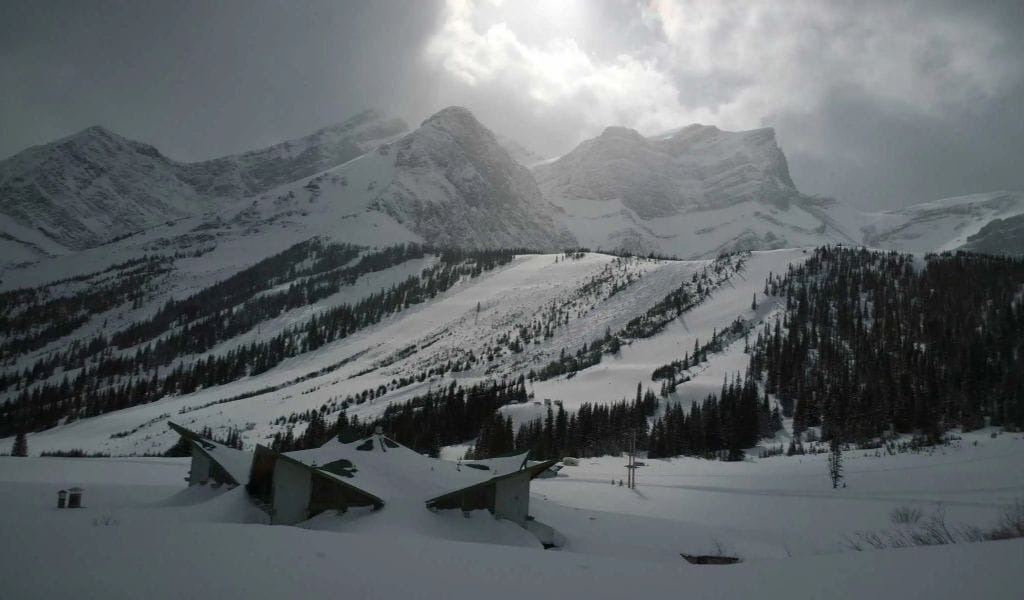
Those initial areas are Castle Mountain, Fortress Mountain, and Nakiska, all of which have long histories as recreational or ski destinations and are now the first candidates under the province’s all-season resort framework.
Limits, Location, and Affordability
The survey tested public reaction to a scenario in which fewer than ten all-season resorts would be approved province-wide, with strict limits on land disturbance. When paired with those constraints, support climbed into the low- to mid-80% range across regions and age groups, closely matching the 84% who prioritized minimizing environmental impact and the 83% who favoured long-term Crown land leases.
On affordability, Gomez said the province expects future proposals to include a range of price points and experiences.
“Each project proposal will offer a wide range of offerings including accommodation options, pricing structures and activities so that Albertan families and visitors can visit and have more ways to enjoy their backyard,” she said.
The survey suggests that demand is particularly strong among those who feel priced out of British Columbia’s resort communities. 69% of Albertans said they would like to see similar all-season destinations in Alberta, rising to 74% among renters and more than 80% among lower-income households.
Where those resorts might be built remains undefined. Gomez said development would be limited to lands formally designated under provincial policy.
“Resorts may only be built on private land or on public land that has been designated as an all-season resort area,” she said, adding that the designation criteria are set out in the publicly available All-Season Resorts Policy.
Environmental Safeguards and Oversight
The Act also establishes a new regulatory structure intended to accelerate complex, multi-agency approvals.
“Under the All-Season Resorts Act, a new one-window regulator for all-season resorts has been established, ensuring a clear, efficient, and streamlined approach to these large and complex initiatives,” Gomez said. “Each proposal must go through public engagement and consultation with Indigenous communities, environmental review, and a regulatory decision before receiving approval.”
For Sarah Elmeligi, NDP MLA for Banff-Kananaskis, the survey results underline how much public confidence depends on the strength and consistency of those safeguards.
“During debate for the All-Season Resorts Act, we proposed three amendments that would strengthen application and approval processes,” Elmeligi said. Those amendments would have required all proposals to conform to existing regional land-use plans, complete environmental impact assessments comparable to other industrial developments, and formally consult with municipalities and the public.
“All of those amendments were rejected by the Government,” she said. “As it stands now, the Minister has the power to sign off on resorts or require any of the above as he or she sees fit. That kind of decision making being left up to the Minister alone is inappropriate and doesn’t provide predictability or consistency for the industry.”
Cumulative Impacts, Wildlife, and Water
Elmeligi said the concern is not only individual projects, but the cumulative effects of multiple developments across sensitive mountain landscapes.
“The regional land-use plans speak to the need to assess cumulative effects for developments and should really be the starting point for this conversation,” she said. “Addressing cumulative effects, or even understanding them, is very complex. It requires working together collaboratively to understand what they are, how they can be mitigated, and how people can work together to do that.”
Questions of enforcement and capacity also loom large, she added.
“I think the existing framework is strong enough and I think our existing regulations are good too, although there is always room for improvement,” Elmeligi said. “I think the biggest gap comes in enforcement, which can be lacking due to capacity issues in the public service, or other reasons.”
Wildlife, water, and climate resilience, issues not directly tested in the survey, are central to public concern in mountain communities, she said.
“It’s important to know what wildlife species are being impacted and how they are using the land,” Elmeligi said. “When it comes to what wildlife or habitat considerations should be top of mind, I’d say all of them.”
On water, she said the most basic question must be answered before any major resort infrastructure is approved: “Is there water available to do this without impacting the health of the watershed and downstream users? The answer should be based in science and aquatic monitoring information.”
First Nations Partnerships and Public Consultation
The survey found that between 81% and 89% of Albertans said they would be more likely to support all-season resorts if they created opportunities for First Nations to invest and participate in the tourism economy.
Elmeligi said meaningful participation requires more than procedural consultation.
“Partnership and consultation standards provincially need to be more meaningful and impactful,” she said. “First Nations need to have input into decision making, not just asked what they think about an idea. Ideally, we would be braiding knowledge and worldviews to truly think about development planning through a reconciliation lens.”
Gomez said consultation with Indigenous communities, municipalities, and the public will be built into future planning and designation processes, with details to be released as specific projects move forward.
“Consultation and engagement will occur with the public, including area residents, municipalities, Indigenous communities and stakeholders directly impacted by the proposed resort development,” she said, pointing to open houses, town halls, and surveys as potential tools.
Economic Case and Pressure on Existing Parks
The government’s economic case is ambitious. Gomez said the province is working toward a $25-billion tourism economy by 2035, and that the three initial all-season resort areas alone are projected to create 24,000 jobs and generate $3.6 billion in GDP and $4 billion in visitor spending over the next decade.
Those figures align with what the survey found to be the most persuasive benefits, including year-round employment, which drew support from 89% of respondents, and keeping Albertans vacationing in-province. Reducing pressure on Banff, Lake Louise, and Jasper was also widely supported, with about 84% saying it would make them more likely to back resort development.
Elmeligi said easing congestion in existing parks will require more than simply adding new destinations.
“There is no magic bullet here,” she said. “We can manage tourism to the Bow Valley strategically and there are many ways to do that,” pointing to regional management plans, regenerative tourism strategies, and ongoing public consultations as essential pieces of the puzzle.
A Conditional Mandate
Ultimately, the survey suggests Albertans are not opposed to growth, but wary of losing control over how public land is used. They support tourism development, but only when environmental limits are firm, cumulative impacts are understood, and decisions are made transparently, with meaningful public and Indigenous involvement.
“I am glad that we have an all-season resorts act,” Elmeligi said. “I’m just disappointed that the act doesn’t guarantee the process will be fair, involve thorough assessments, or involve the people most likely impacted.”
Between the province’s push to streamline approvals and the public’s insistence on strong, enforceable safeguards, the future of all-season resorts in Alberta now rests on whether the regulatory system can deliver what the survey makes clear Albertans expect: development that is limited, accountable, and anchored first in the long-term stewardship of Crown land.
Reply