- Bow Valley Insider
- Posts
- 16-Year-Old Sets First-Ever Bow Valley World Fishing Record
16-Year-Old Sets First-Ever Bow Valley World Fishing Record
Ryder Humphries landed two record-setting bull trout on the Bow River in Banff within five days, marking the first world record in the region

Bow Valley Insider
April 16, 2026
A 16-year-old angler from Saskatchewan has officially set two world records for bull trout on the Bow River in Banff National Park, marking the first time the International Game Fish Association (IGFA) has recognized a world record from the Bow Valley.
Ryder Humphries landed two 70-centimetre bull trout over a five-day period in November 2025, earning both the all-tackle length and all-tackle length junior world records for bull trout, according to the IGFA.
Humphries’ catches were made using artificial lures, a paddle tail on a jighead and a Krocodile spoon, and were recorded under IGFA international angling rules, which require the fish to be hooked, fought, and landed by a single angler using equipment that meets IGFA specifications.
“The two bull trout records set by Ryder Humphries on the Bow River in Banff in late 2025 are currently the only approved IGFA World Records from the Bow Valley or Banff region,” said Shelby Stephenson, marketing manager for the IGFA.
The Bow River, one of Canada’s most heavily fished and closely managed waterways, has not previously produced an IGFA-recognized world record, underscoring the rarity of the achievement.
The only other active IGFA world record in Alberta is a 79-centimetre all-tackle length walleye caught at St. Mary’s Reservoir in 2015, underscoring how uncommon such recognitions are in the province.
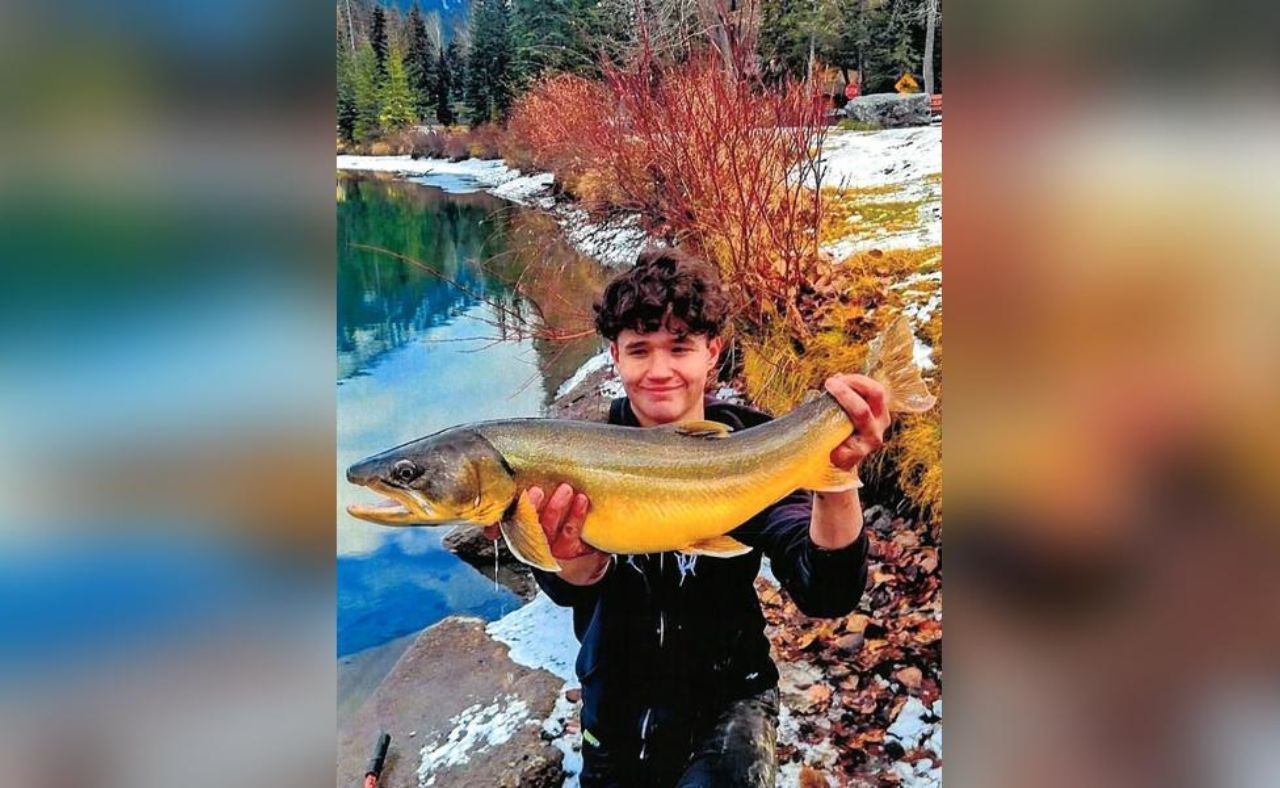
Ryder Humphries (Source: International Game Fish Association)
Stephenson said Humphries’ records stand out even in a sport where some anglers deliberately pursue multiple records.
“The fact that Humphries secured records in two separate categories within days of each other on the same river speaks to both the preparation he brought to the water and the quality of the fishery itself,” she said. “It is the kind of outcome that dedicated anglers work toward for years, and it does not happen by accident.”
Under IGFA rules, length-based world records must meet strict criteria designed to ensure consistency and conservation. Fish must be measured at the site of capture using an official device, with the snout pressed against a fixed stop and the length recorded to the tail in centimetres.
“All fish submitted for IGFA All-Tackle Length World Records must be measured at the site of capture using an official IGFA measuring device, with the fish's snout touching the nose stop and measurements taken from the most forward part of the snout to the rear center edge of the tail,” Stephenson said.
She added that a catch must exceed the existing record by at least two centimetres to stand alone, while fish within that margin are recorded as ties.
In addition to measurement requirements, anglers must submit a complete application package, including photographs of the fish on the measuring device, the angler with the catch, and the rod, reel and line used. Fish submitted for length records are only eligible for that category and must be released alive after measuring.
“Length-record fish must be released alive and swimming under their own power. They are not eligible for weighing or submission in any other record category,” Stephenson said.

Reply